Since we had gone to the Puy de Fou night show the evening before, and the theme park does not open until noon, Celia and I recently found ourselves with time to kill in Toledo on a Saturday morning.
Our first stop was the Santa Fe Roberto Polo collection, which hosts the Centro de Arte Moderno y Contemporáneo de Castilla-La Mancha. This is a huge ancient church complex featuring Roman ruins, gorgeous, intricate ceiling paneling, and a beautifully delicate chapel, which is mixed with ridiculous modern art pieces that only add to the beauty of the old pieces and underscore the stupidity of the modern ones.
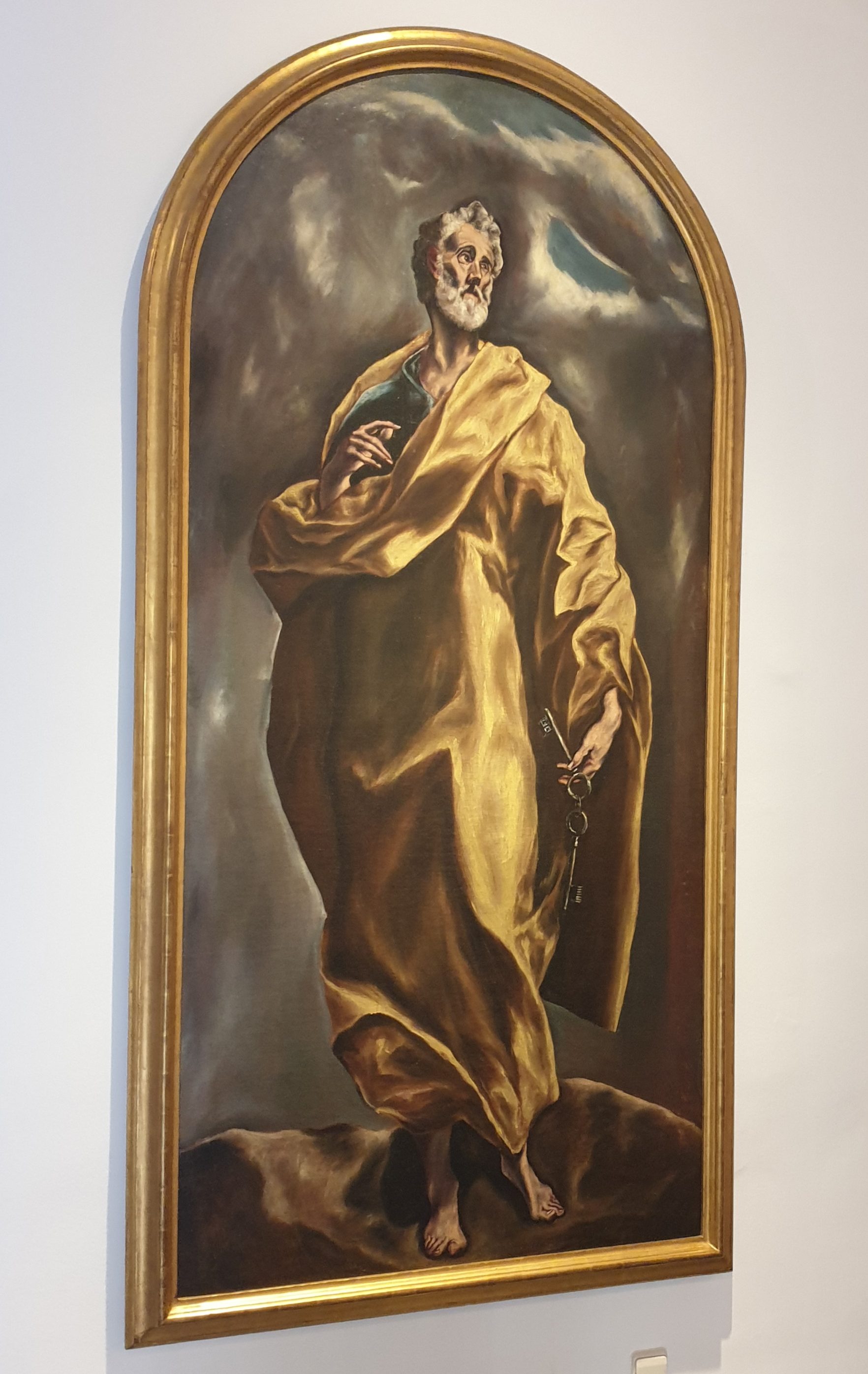
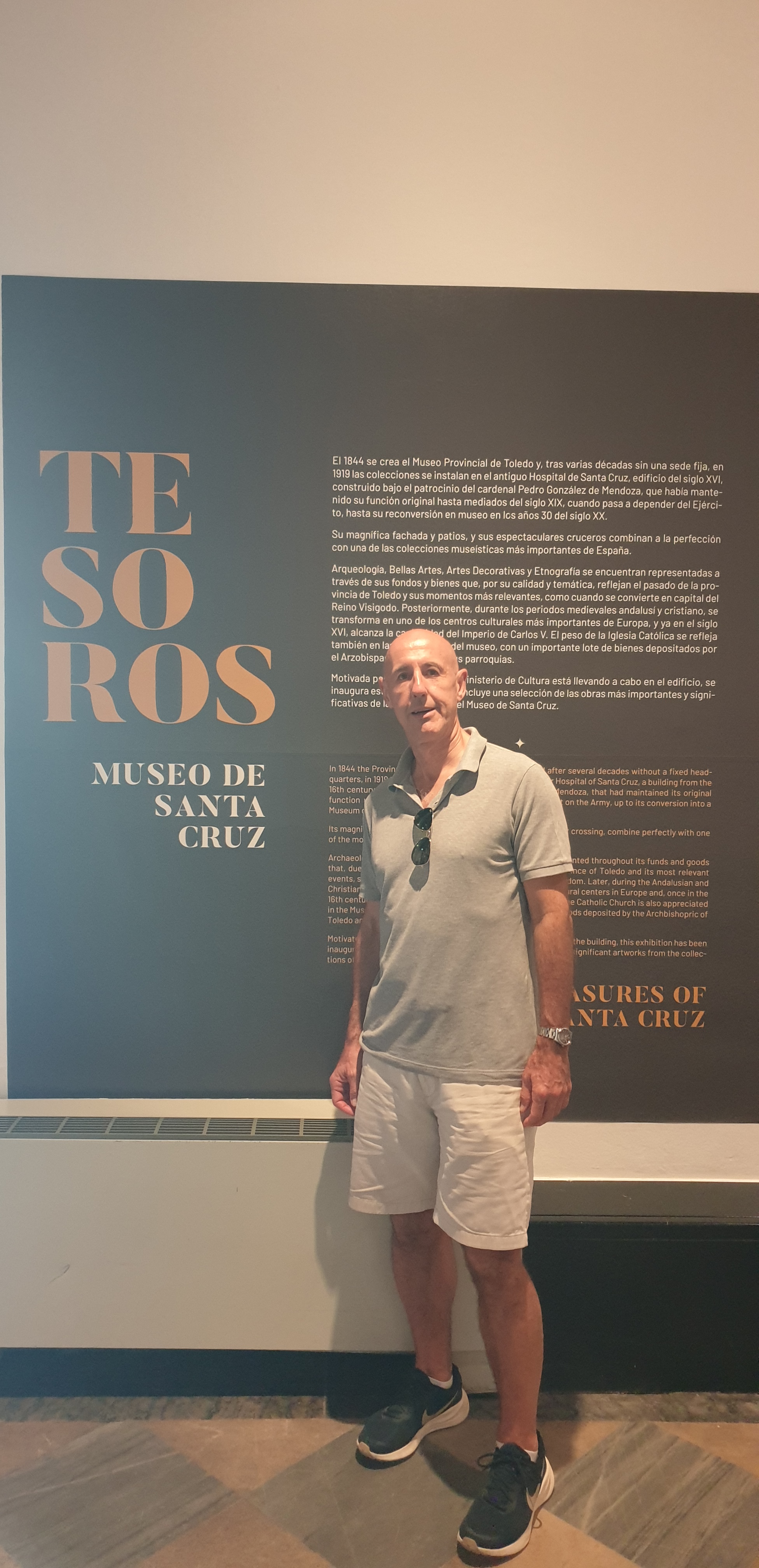
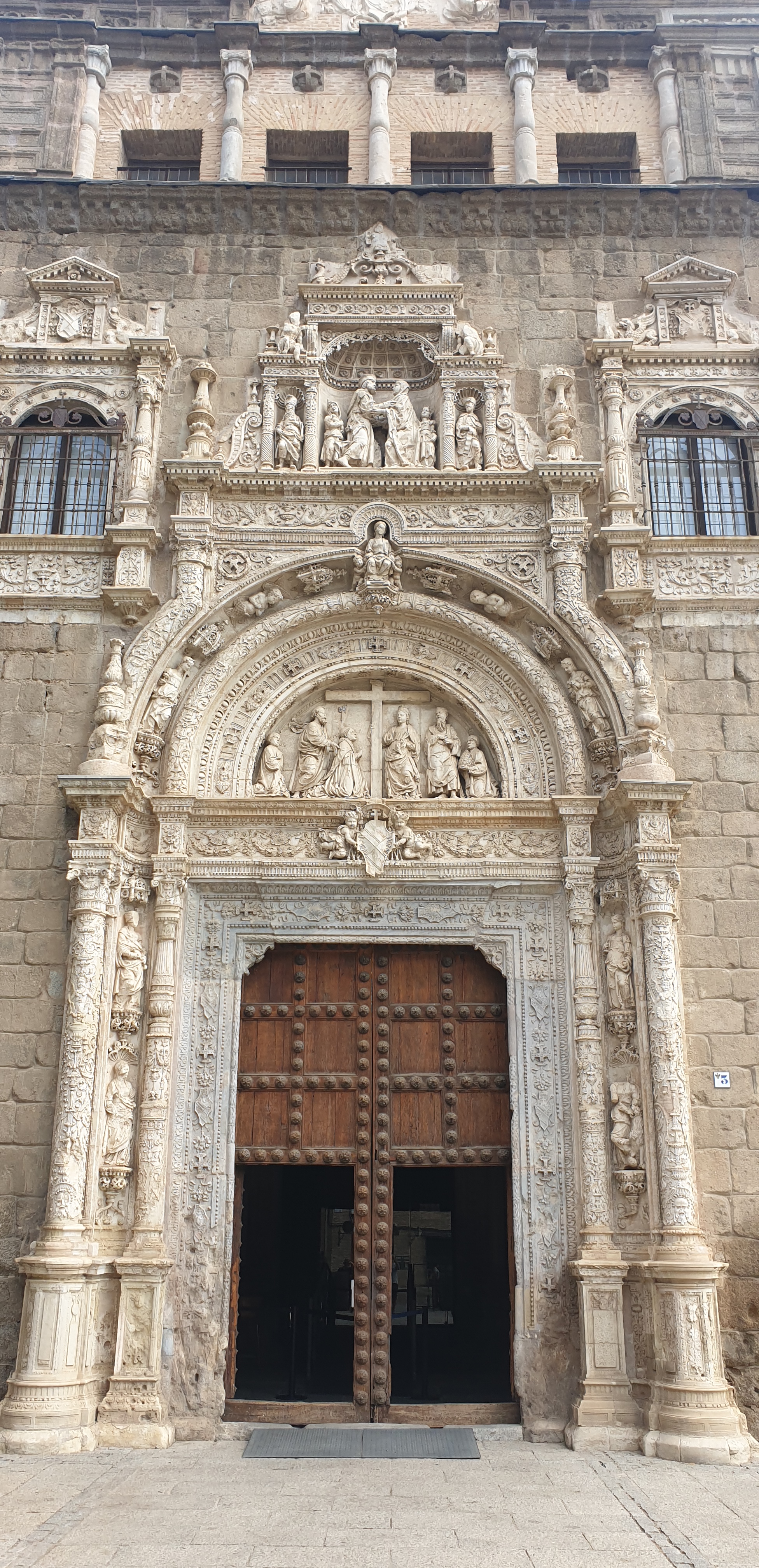
From there, we turned the corner to the Santa Cruz Museum, an astonishing Renaissance structure that once housed the late medieval Children’s Hospital. To our surprise, there was a phenomenal exhibit of fairly random pieces, including a feared pre-Roman falcata sword. But the real star of that exhibit was an El Greco painting of St. Peter, where I had a bit of a Stendhal moment —amazing!
From there, we had time to walk across Zocodover Square, almost down to the Cathedral, before turning up on Trinidad Street to the Capilla de la Inmaculada Concepción for a moment of quiet contemplation and meditation (did you know that you should be meditating?). This chapel has perpetual adoration, which means that it is open 24/7 for people to pray. It is a quiet oasis in the tourist frenzy that is Toledo.
After that, we had to get back to the car to head out to Puy de Fou for a hot, blistering day of fun. You can read about that here.
The amount of mind-blowing, beautiful, culturally enriching things you can do in Toledo is almost limitless. That Saturday, that is what we came up with.
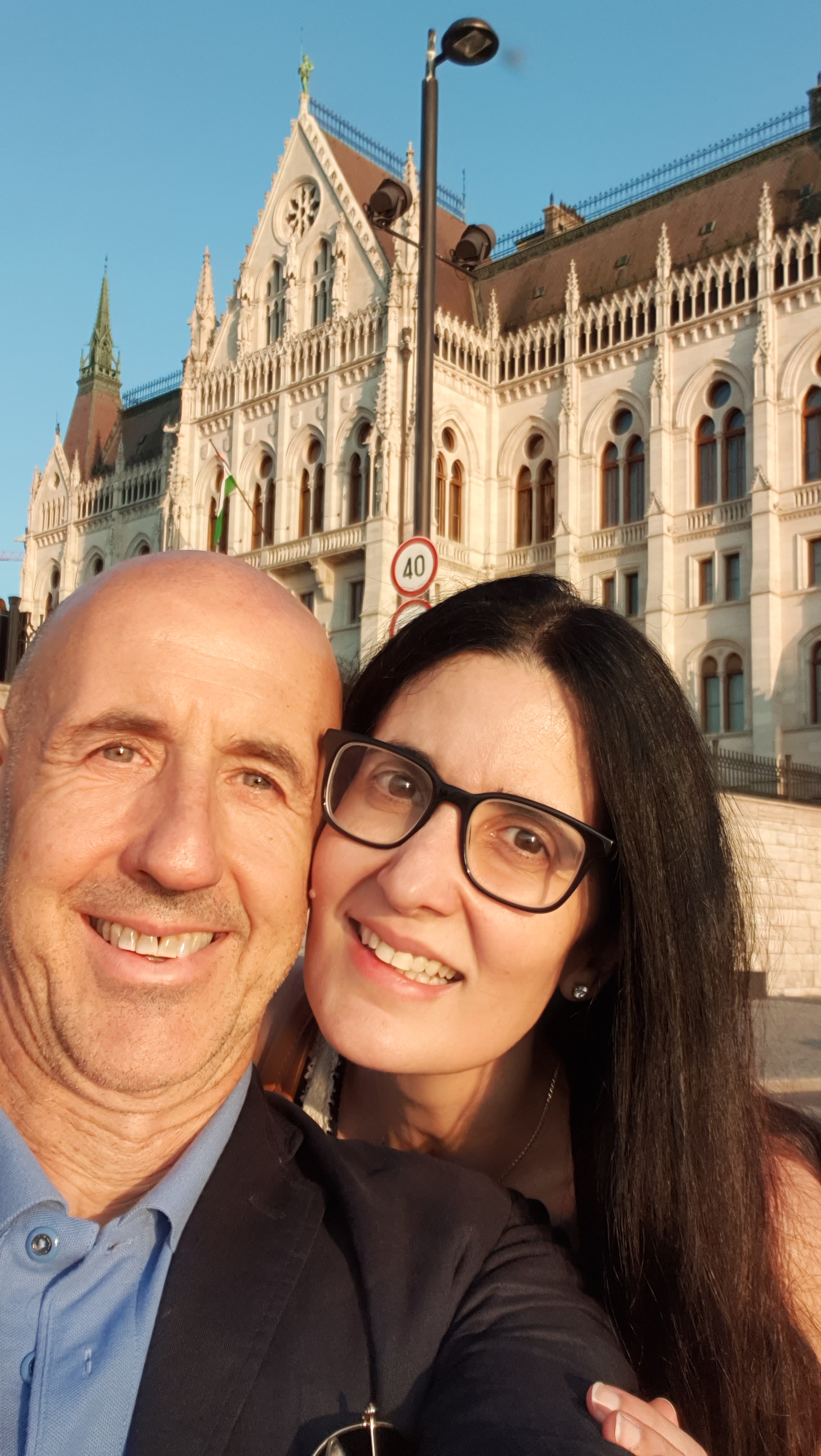
Budapest had long captivated me, and I have been fascinated by Hungary’s history, geography, culture, food, and people for many years. Well, I finally had the opportunity to go this summer for a few days. I loved every minute of my visit!
Celia and I stayed at the Alice Hotel, an old, restored palazzo on elegant Andrássy Avenue, a couple of blocks from City Park.
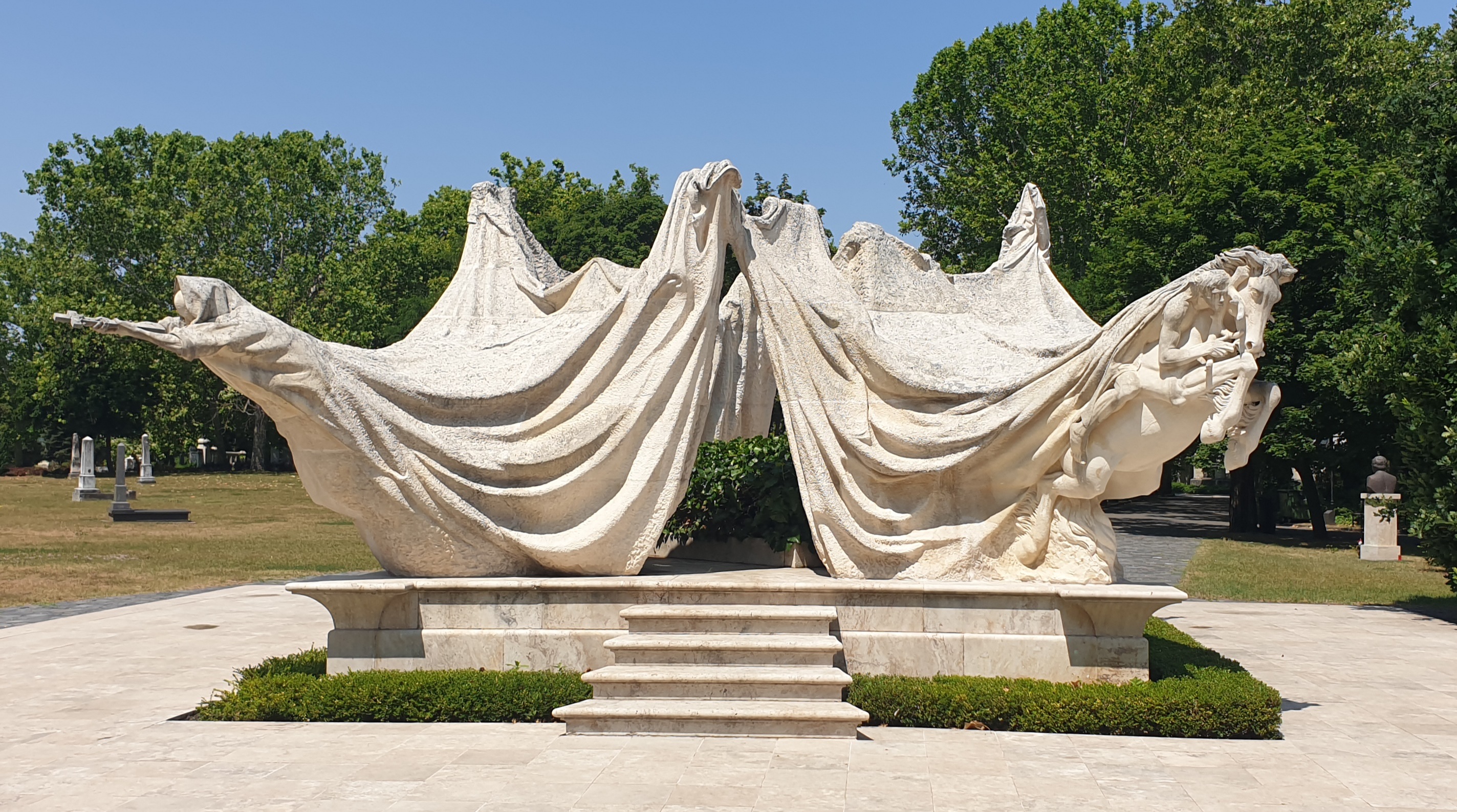
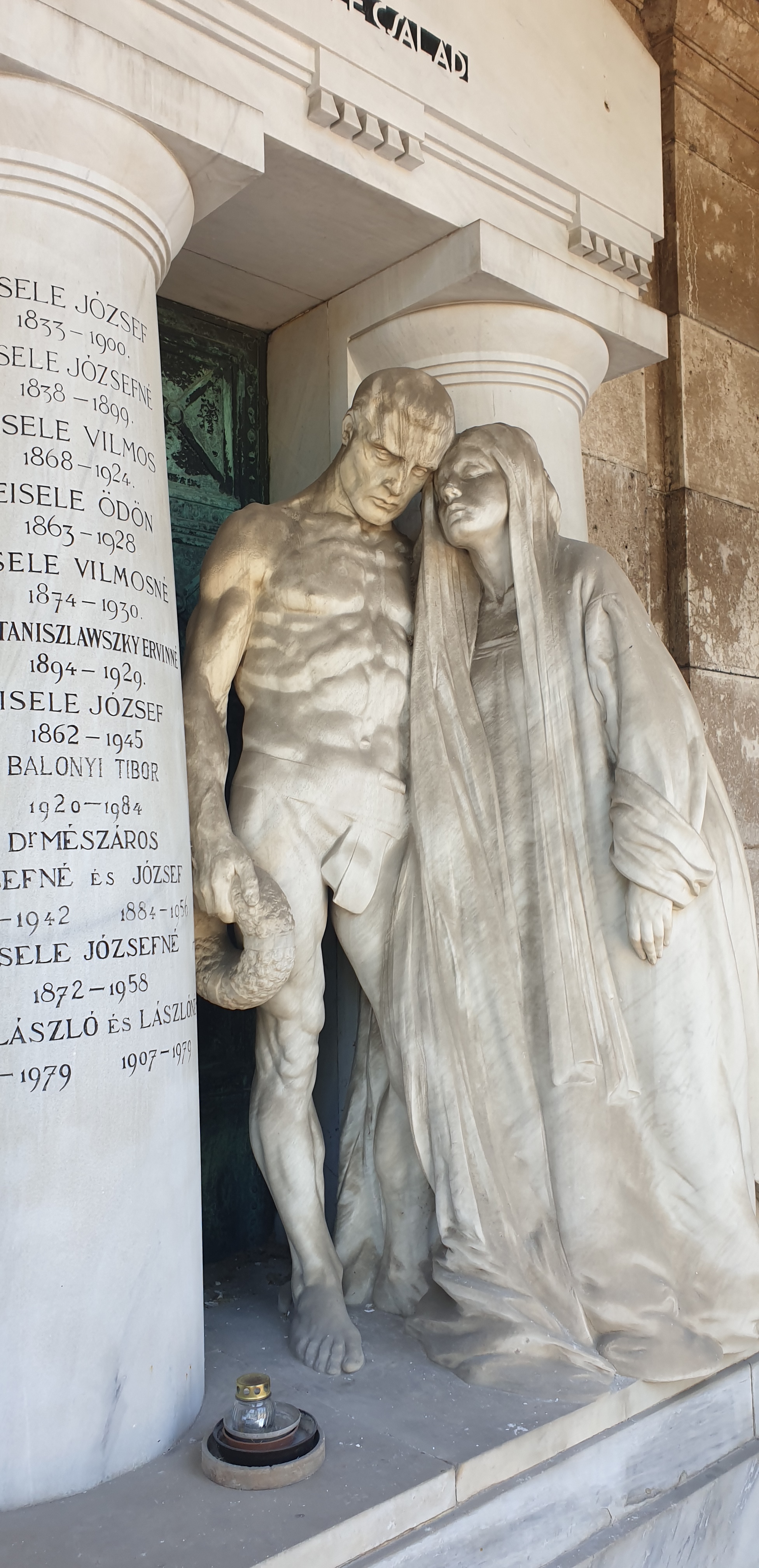
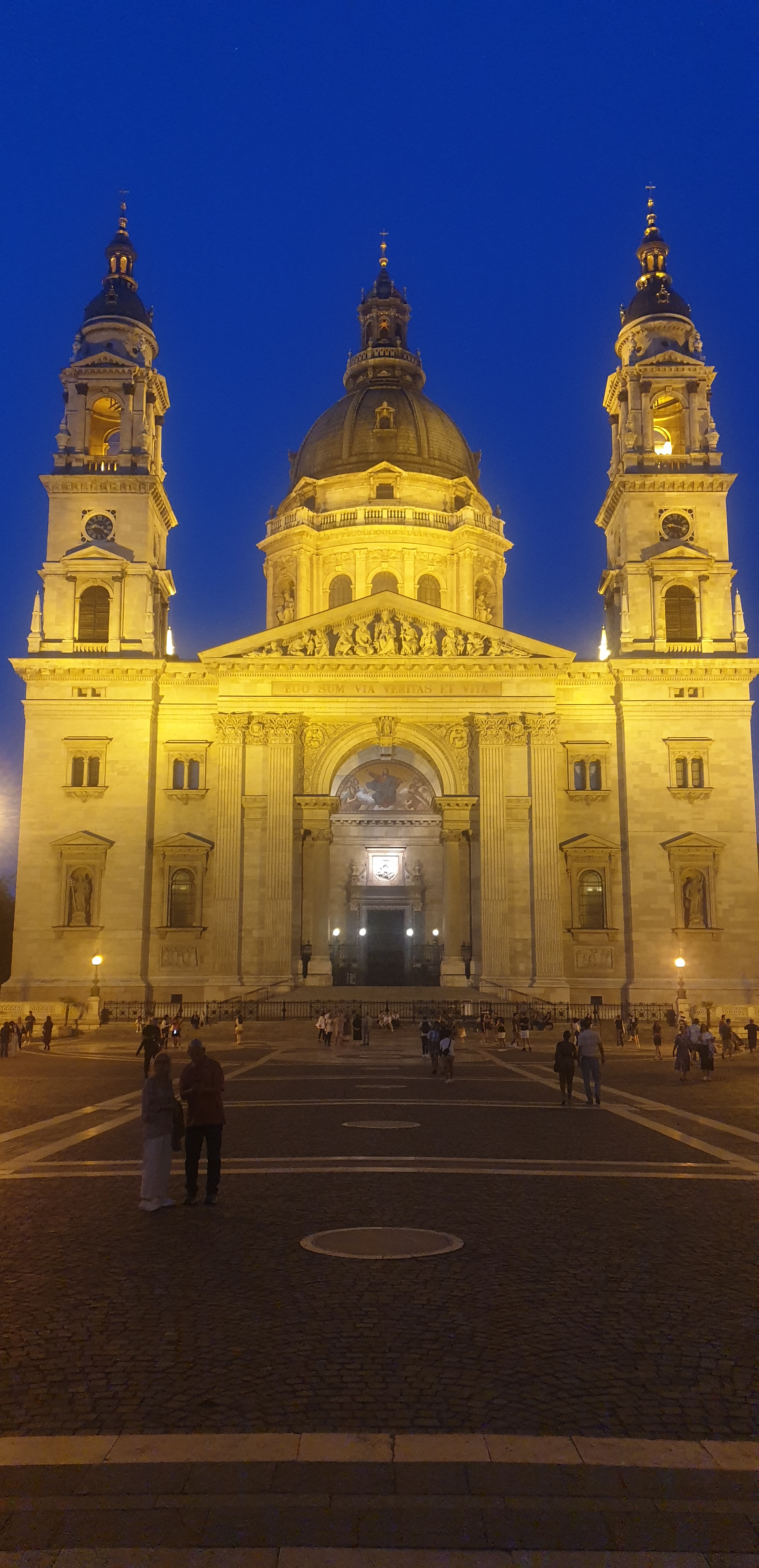
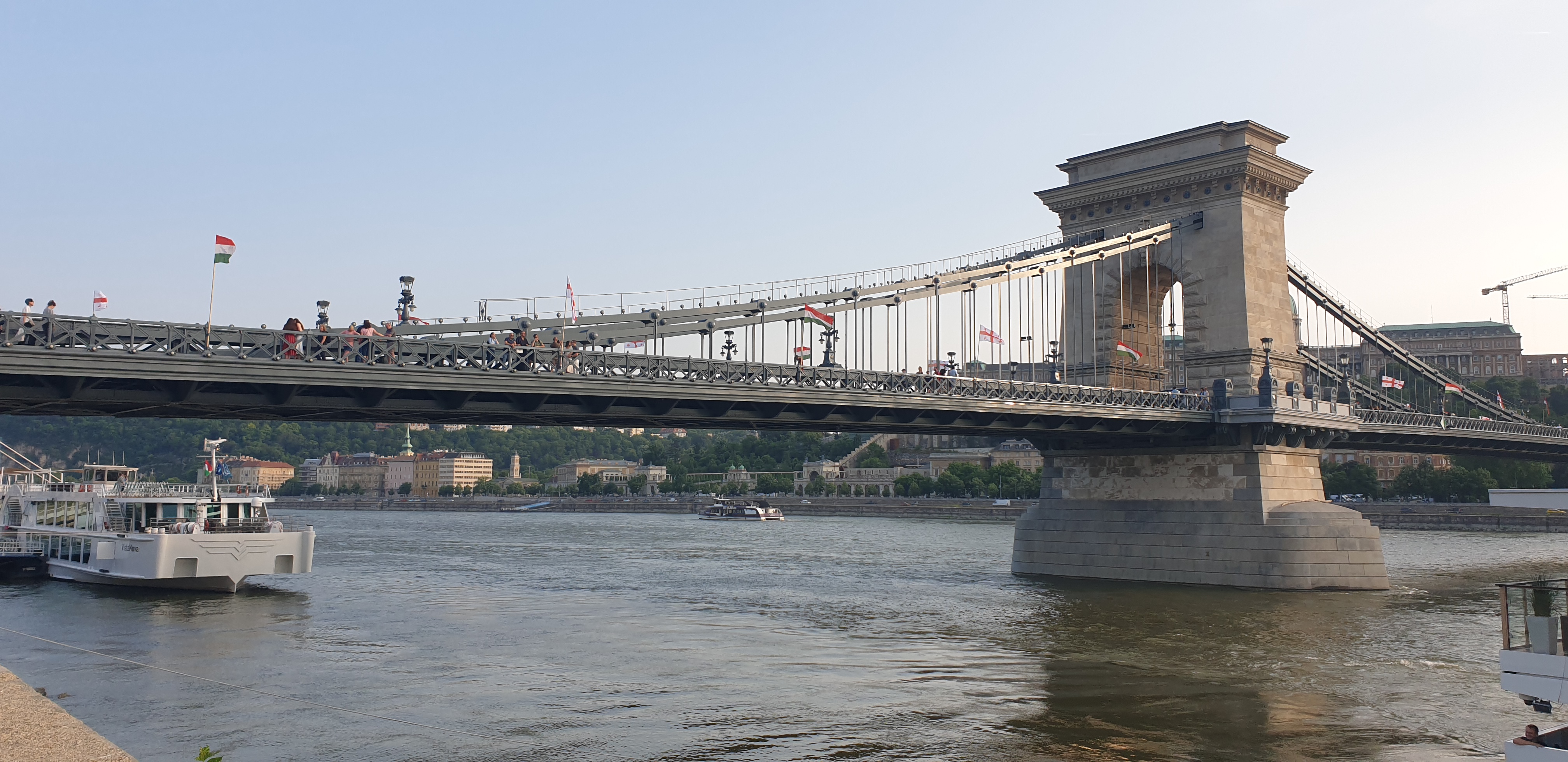
Yes, we visited all the obligatory sites: Parliament, Royal Palace, St. Stephen’s (and St. Stephen’s hand), St. Matthias, the Fisherman’s Bastion, the market, the funicular, the Synagogue, the cafés, Margaret Island, the baths, etc., etc. But more importantly, we explored further: the Cemetery, which is amazing, the different neighborhoods, walking and exploring both Buda and Pest, sneaking into university buildings, and having coffee with the locals at neighborhood cafés. This is where you get to know the country, its people, and its culture. And it is beautiful.
We ate with the Budapesti: Goulash, chicken paprikash, sausages, funnel cakes, palinka, all the pickled foods you can think of, including the tiny peppers that look like innocent baby tomatoes and then blow a hole in your skull because it is the spiciest thing you will ever eat, etc., etc.
We returned to the cathedral one evening for an awesome organ concert which featured Mozart, obviously Budapest’s treasured child, Liszt (who also lived in Madrid for a stint), and of course, Bach, including the Toccata and Fugue as the grand finale!!
We became great users of the subway / public transport system which includes the oldest subway in continental Europe (London was first).
Probably one of the most moving moments for me was walking along the Danube and tripping (metaphorically) with the “Shoe Memorial,” bronze sculptures of shoes lined up along the Danube in remmeberance of when the Nazis shot jews into the river —having ordered them to take off their valuables and shoes beforehand.
Overall, it was an amazing experience, and I highly recommend a visit.
My first visit to the South was likely New Orleans in the mid-1990s. And it was love at first sight: history, architecture, music (which I write about here), food, and as they say nowadays: the vibe. It has been a love story ever since.
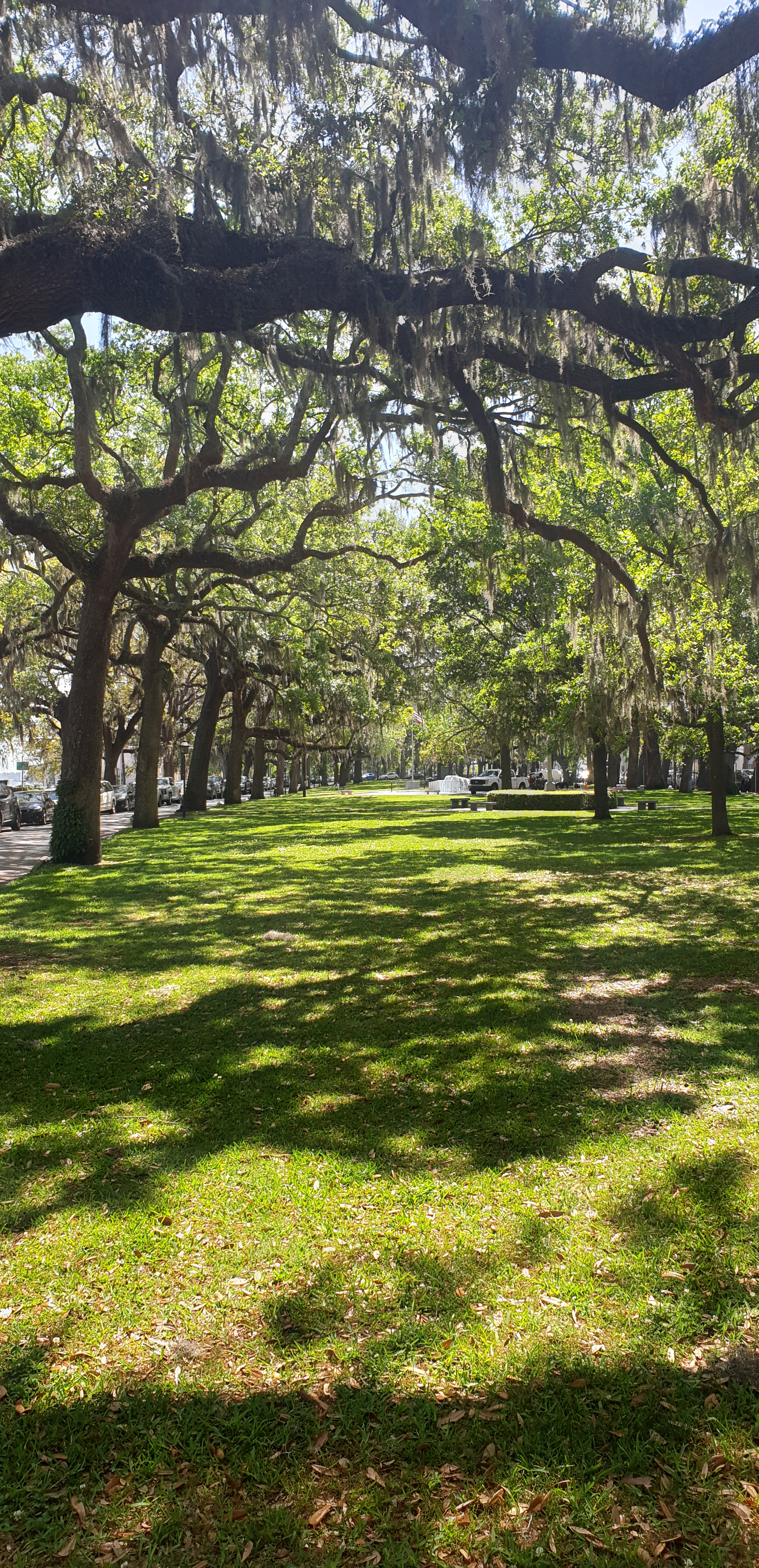
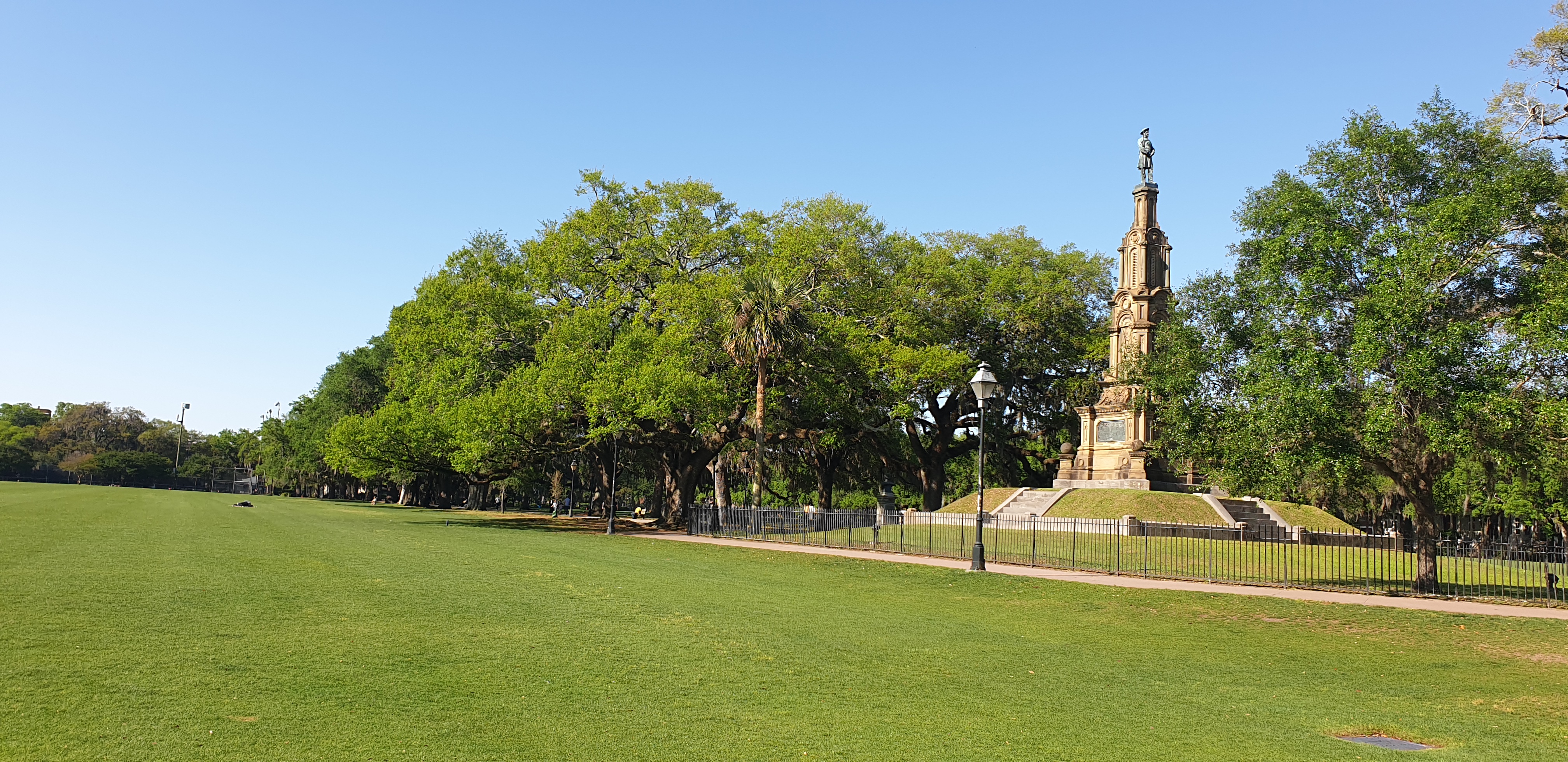
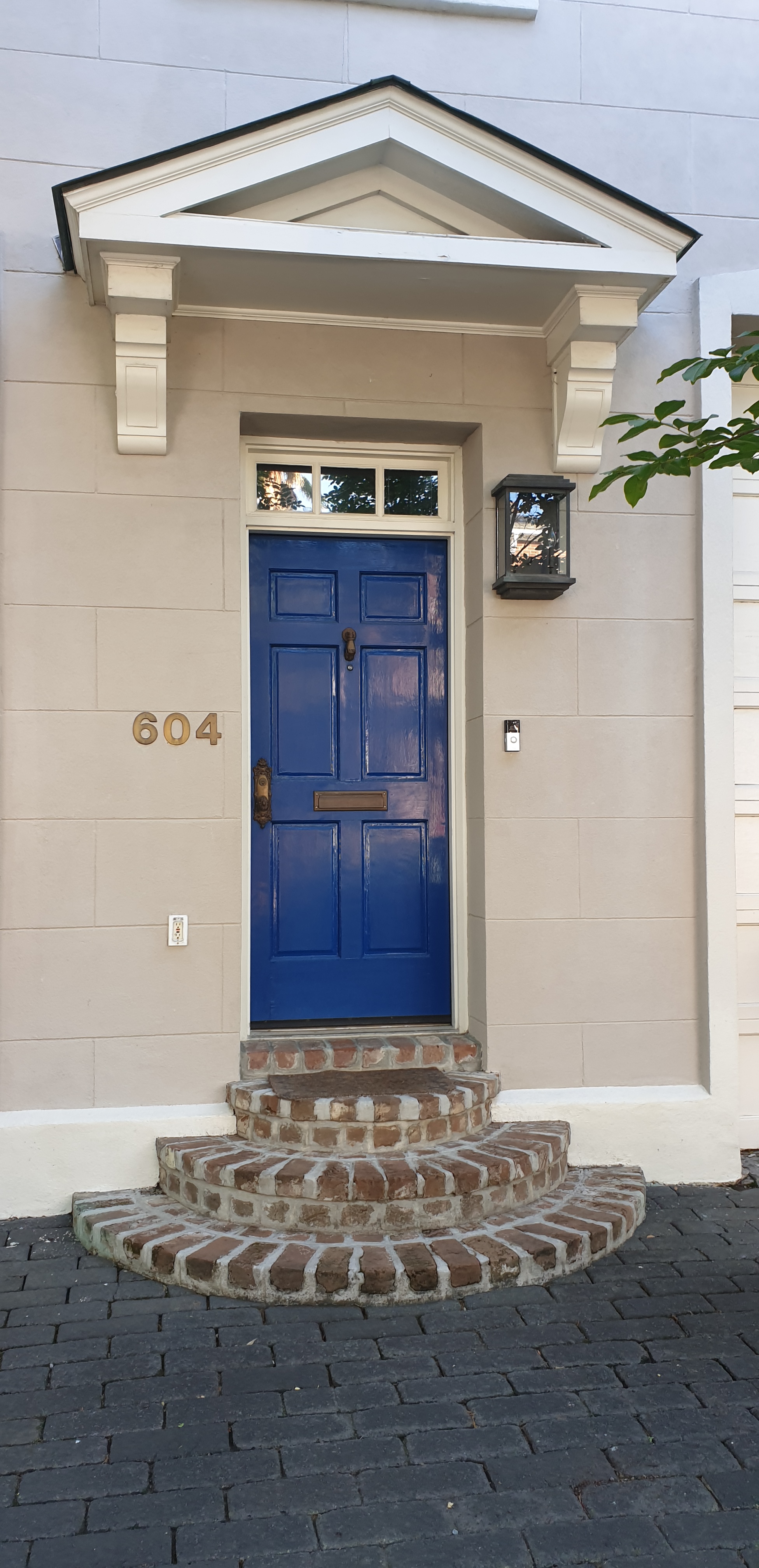
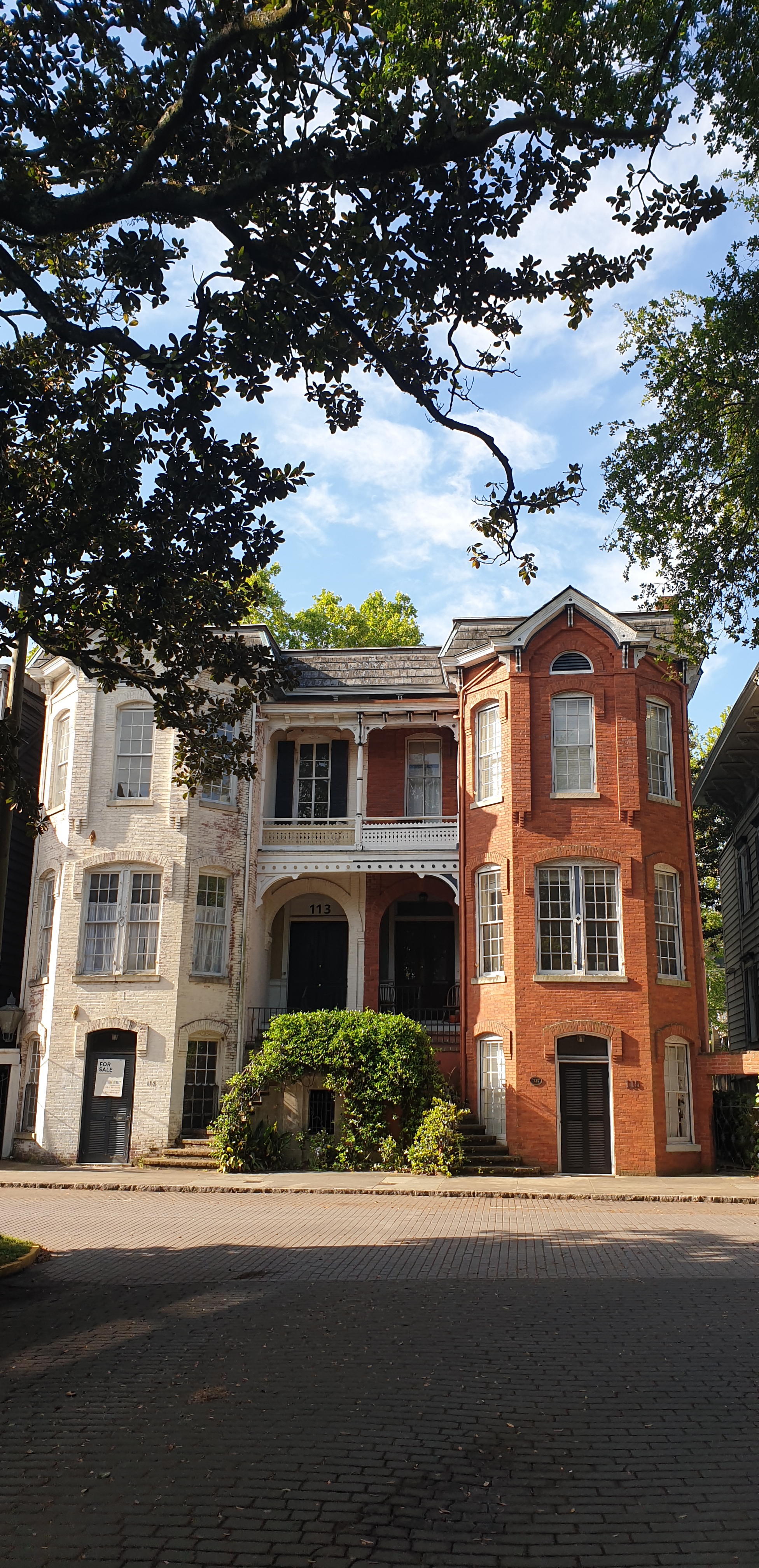
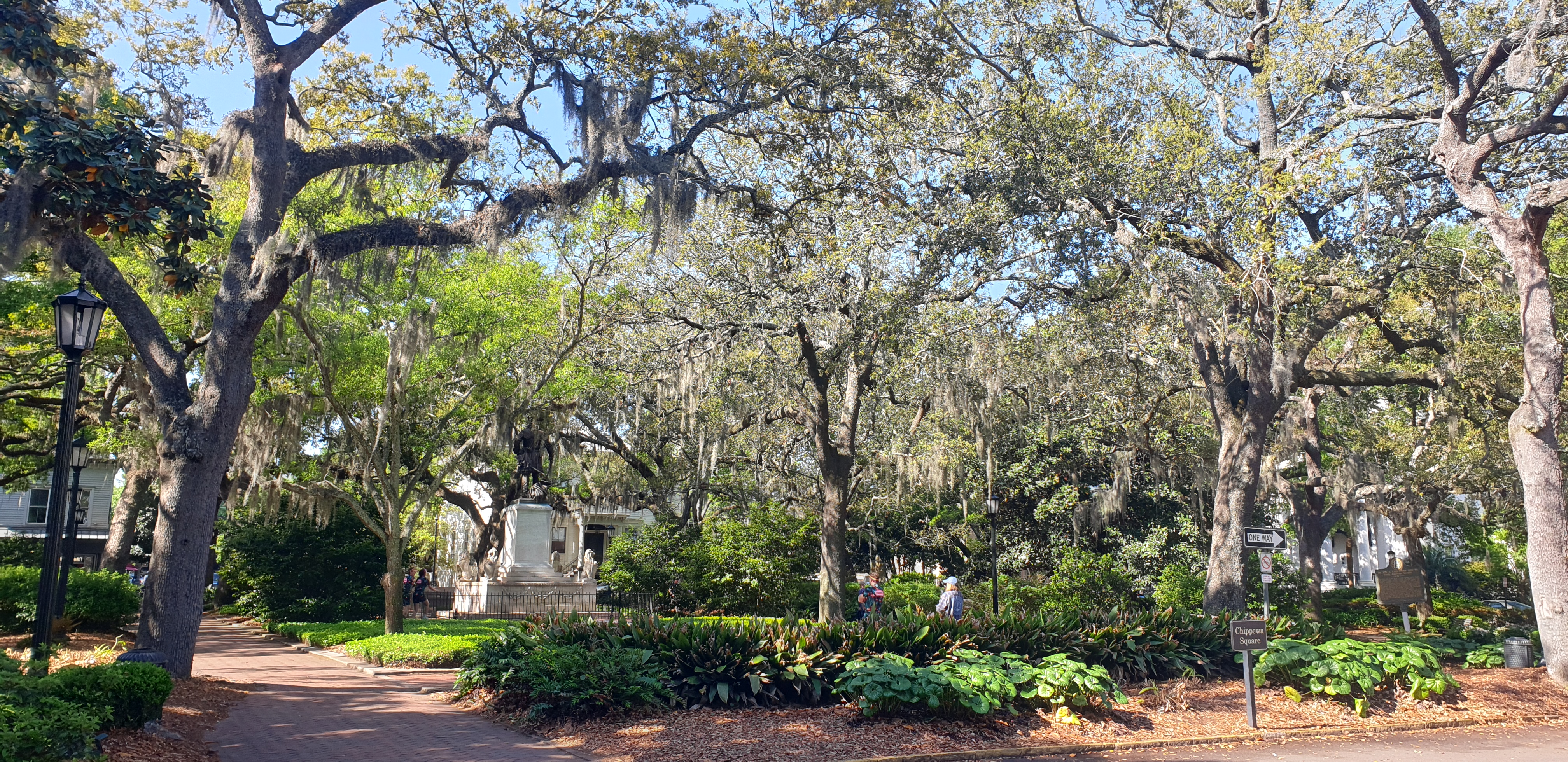
With the excuse of attending a conference in Savannah, Georgia, I spent some time exploring this enchanting city! I loved it! Architecture ranging from colonial to Georgian, Federal, Greek Revival, Gothic Revival, Victorian, Italianate, and Second Empire. Great southern gastronomy, cathedral, a beautiful series of squares, built to “cut” fires, which were common in the 19th Century, make for a city that is a living arboretum, with the characteristic Spanish moss hanging from old oaks.
Like all old cities in the Southern US, Savannah must contend with its history of slavery, which was the labor that worked the cotton that made the city so prosperous. One of the elements that helps the city work through that aspect of its history is the Savannah College of Art and Design SCAD, as well as other universities that bring young talent from around the world to make the city a thriving, broad-minded, humanistic organism and give it a healthy mix of quirkiness and artsy to the serious and conservative history.
Yes, the city suffers from overtourism, but that is part of the price most cities must pay for fame nowadays. The fact that they allow open alcoholic beverages on the street does not help, as it attracts all kinds of tomfoolery from partygoers.
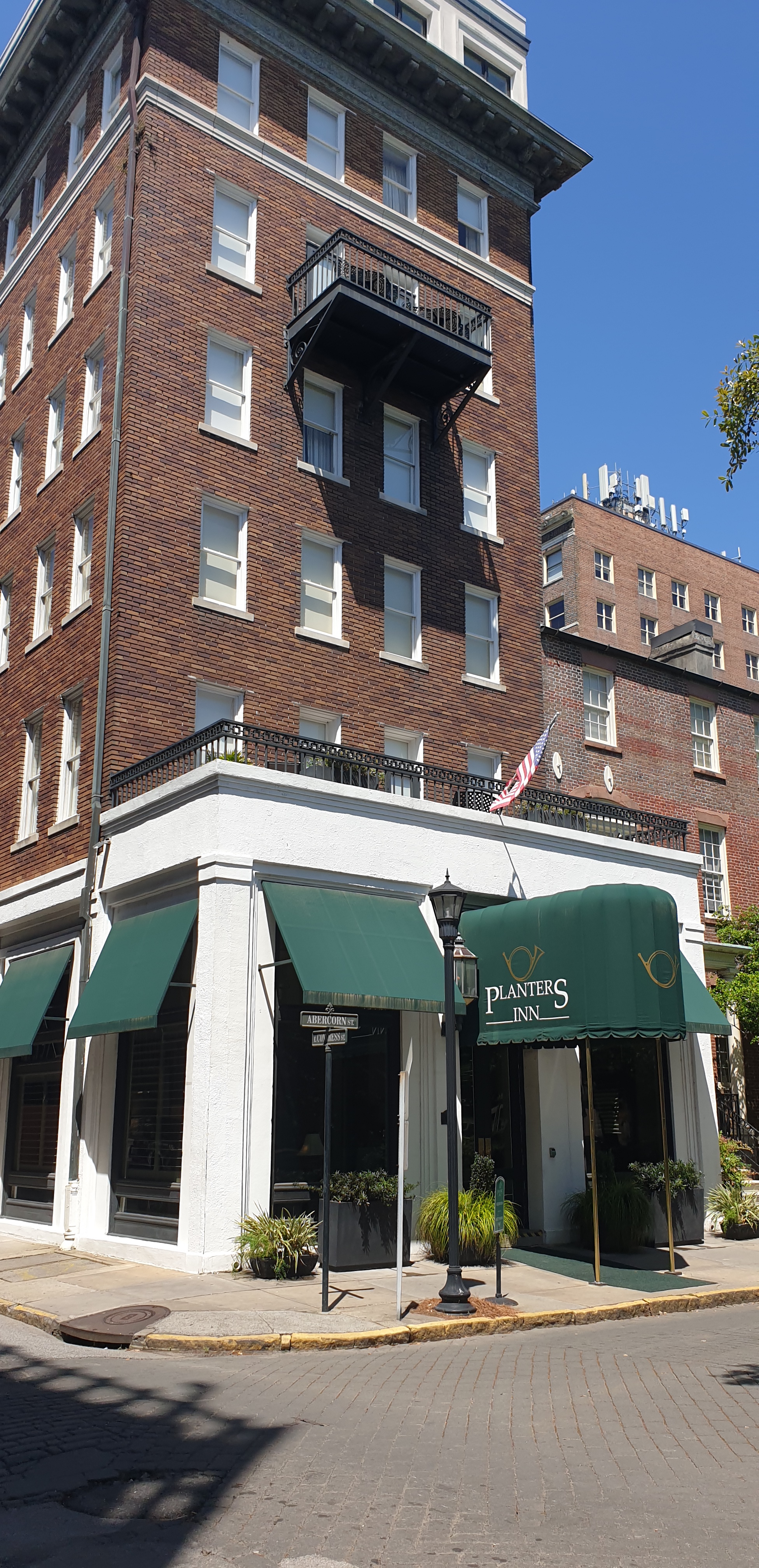
I stayed at the Planters Inn, a cute -if a little in need of renovations- hotel in the historic downtown Reynolds Square, which is perfect for walking around this very walkable city.
I could go on and on. If you are planning to explore the South, you must have Savannah on your list. You are welcome.
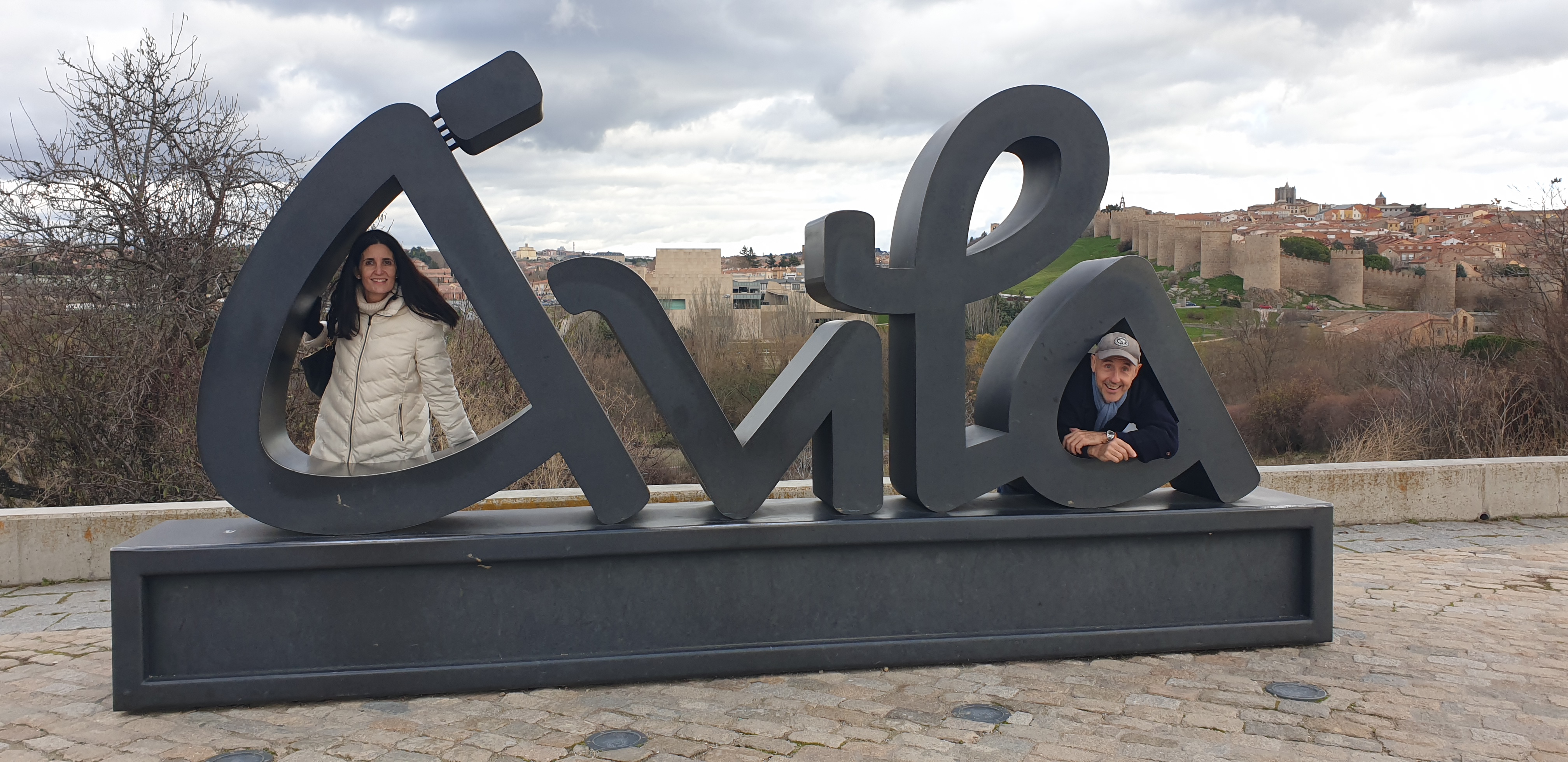
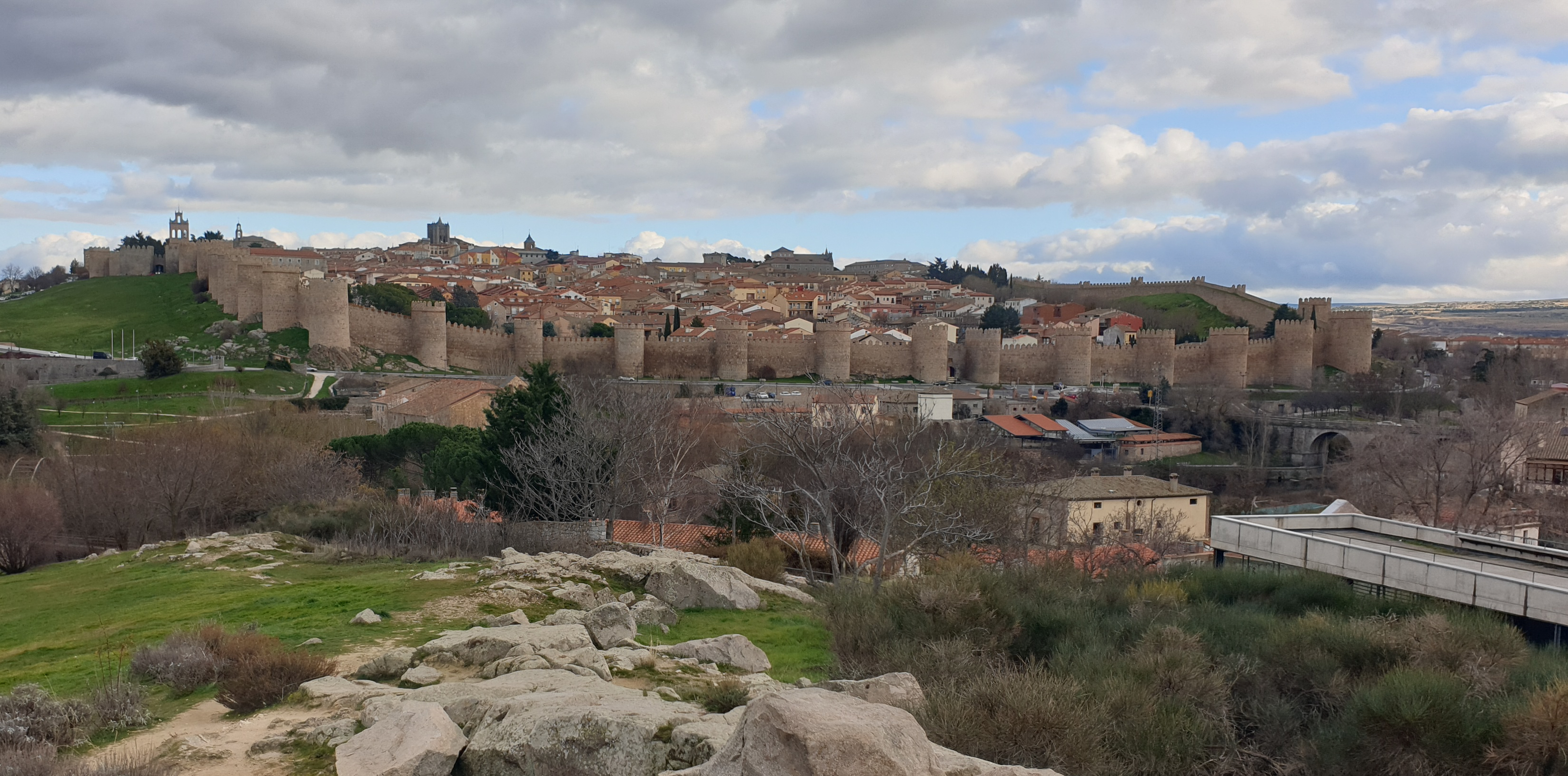
If you are Catholic, you probably know Ávila from Saint Teresa. Otherwise, you might know this city because of its history, Medieval wall, or its sweets. Avila is a UNESCO World Heritage site and it is less than two hours North of Madrid, and a great and recommended visit.
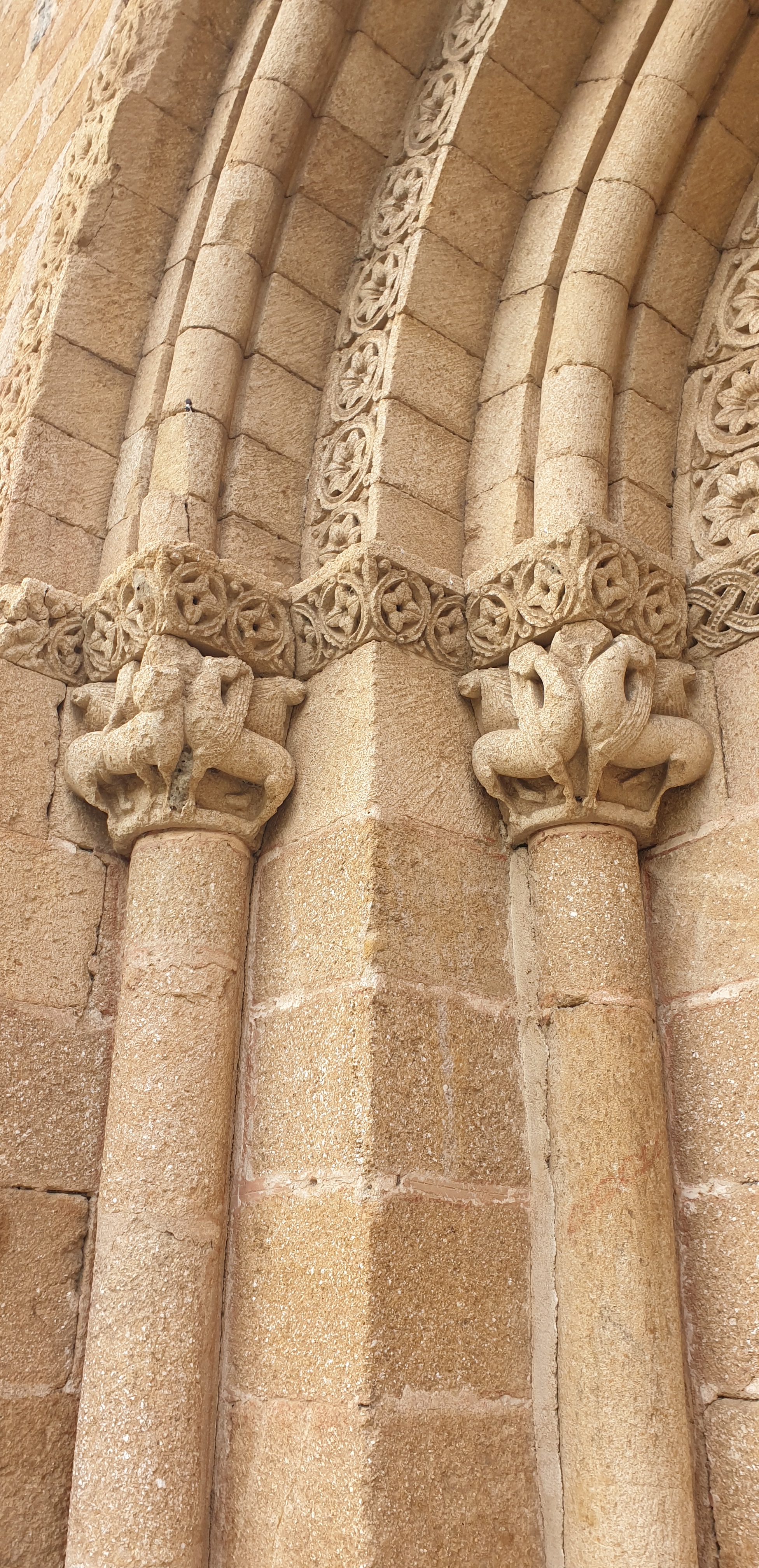
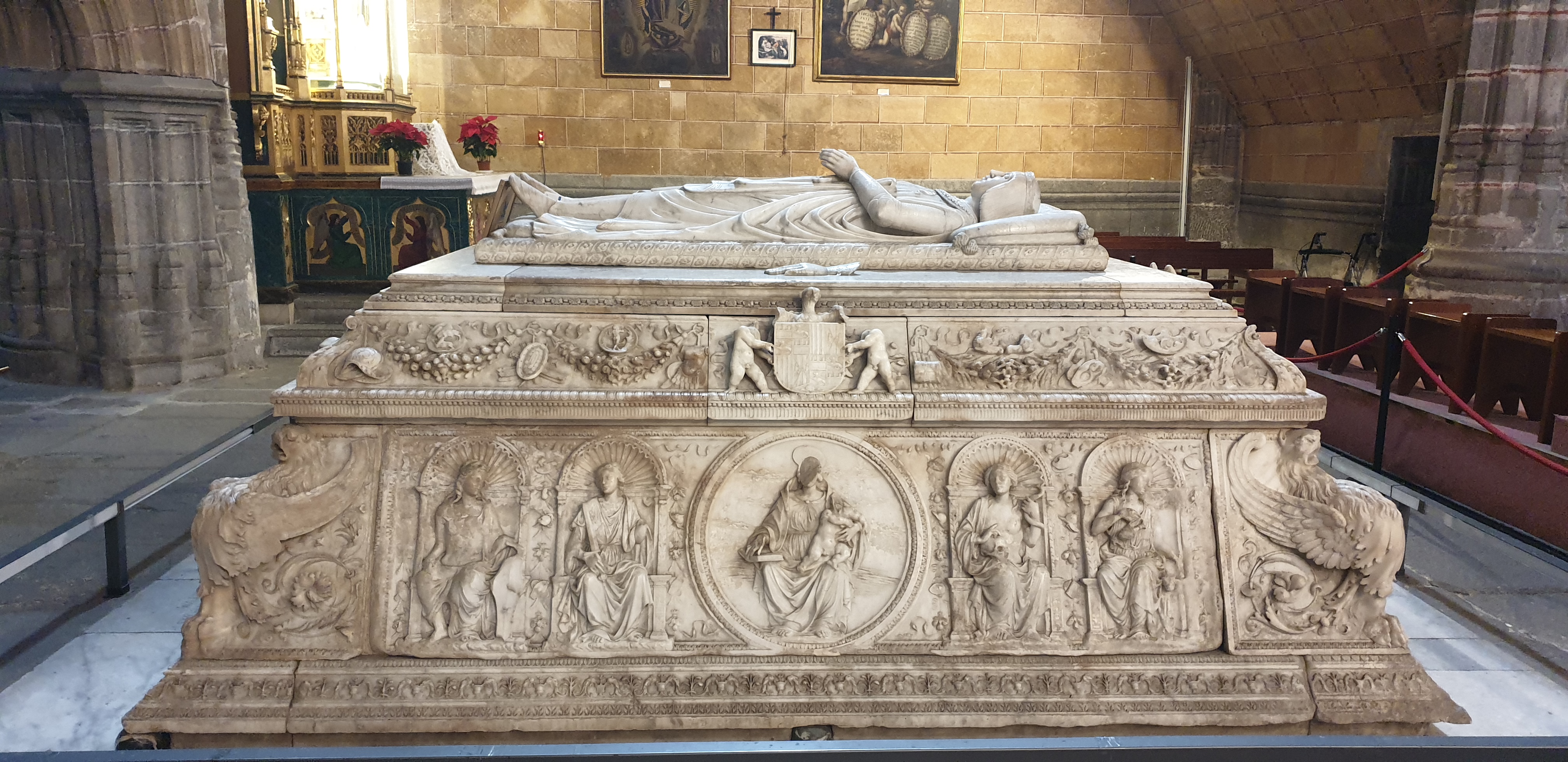
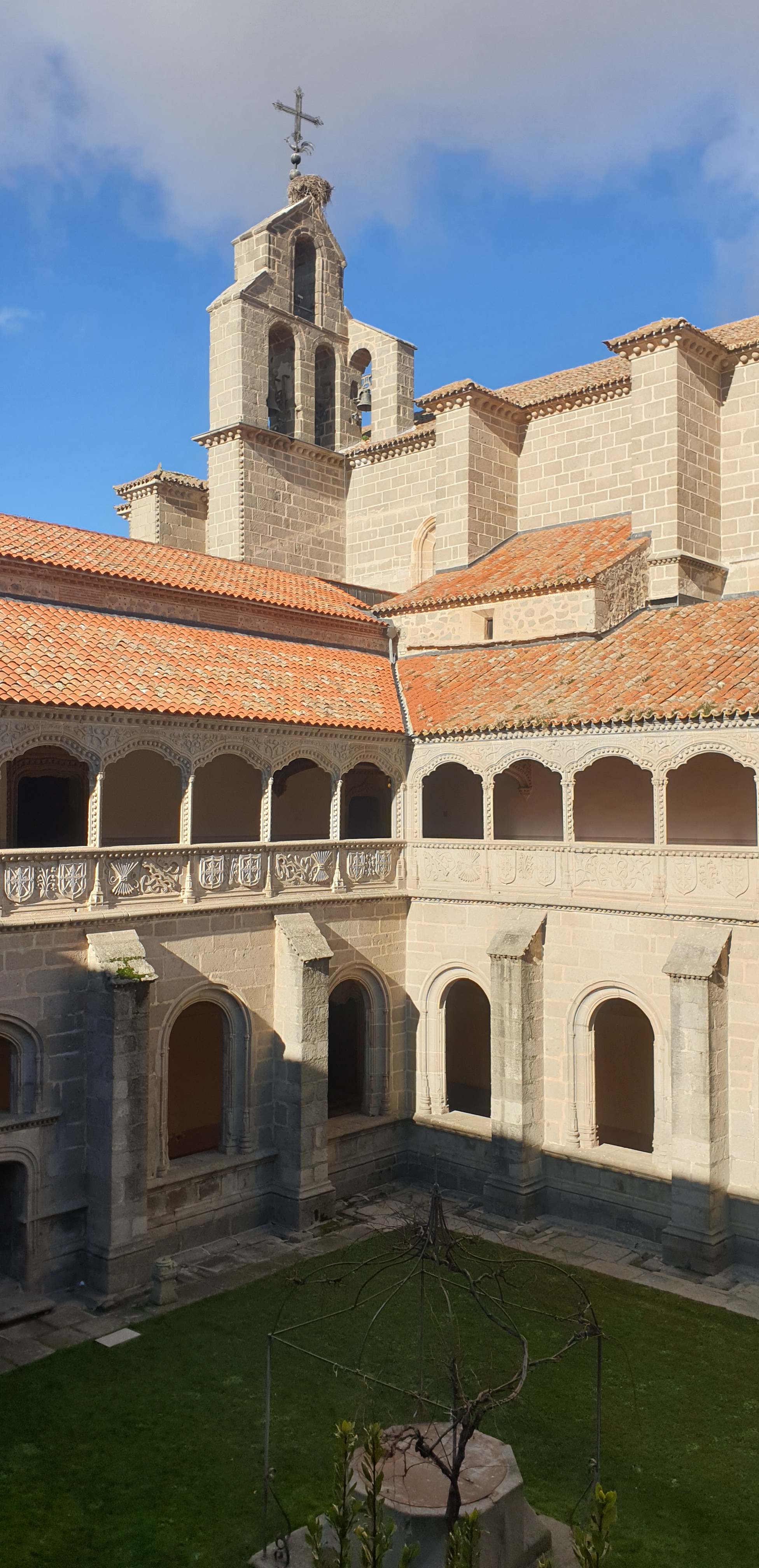
It had been a long time since I visited this city, but I recently had a getaway with Celia. We took the train from Madrid, which was an adventure, having to change trains in El Escorial. We hit the city running, visiting El Real Monasterio de Santo Tomás straight from the train station. Sto. Tomas has one of the purest Gothic churches in Spain with an altarpiece by Berruguete, possibly the most famous Spanish artisan in this field, it also houses the tomb of the Infante Juan, Ferdinand and Isabella’s teenage son, three beautiful cloisters, etc.
We had the traditional steak for lunch and explored Saint Teresa’s home, now turned into a chapel -although they have kept her original room! We toured the Medieval wall, one of the finest in Europe, the Gothic cathedral, St. Teresa’s convent, all the beautiful little streets, sweet shops, and many palazzos, and squares. Since the visit was during Christmas, we got to see a few amazing Nativity scenes as well.
So, although Toledo and Segovia are better known day trips from Madrid, Ávila is in a remarkably close third position.
John Irving’s A Prayer for Owen Meany is a wonderful book which I read many years ago, (I worked out with John Irving once, but that is for another post). A line stuck with me through the years because I identify with it:
“That looked neat!” my cousin Simon would say; Simon loved to fall – he skied to crash.”
I identify with that line because that is how I ski (skied, there is not much snow in subtropical Florida). If at the end of a ski run, I have not fallen, I have not pushed myself enough. Not that I am a great skier, I am not. Snow is usually and hopefully nice and soft to fall on, so it is a bit easier to push oneself.
All this to say that you should push yourself beyond your comfort zone.
I was recently asked by my students to read at their graduation ceremony.
This is not like when I read at my little neighborhood parish in Madrid on Sunday mornings with max a hundred people in attendance. This was a packed, huge church with about a thousand people, four bishops, and all my colleagues and superiors. Despite much practice, I was nervous.
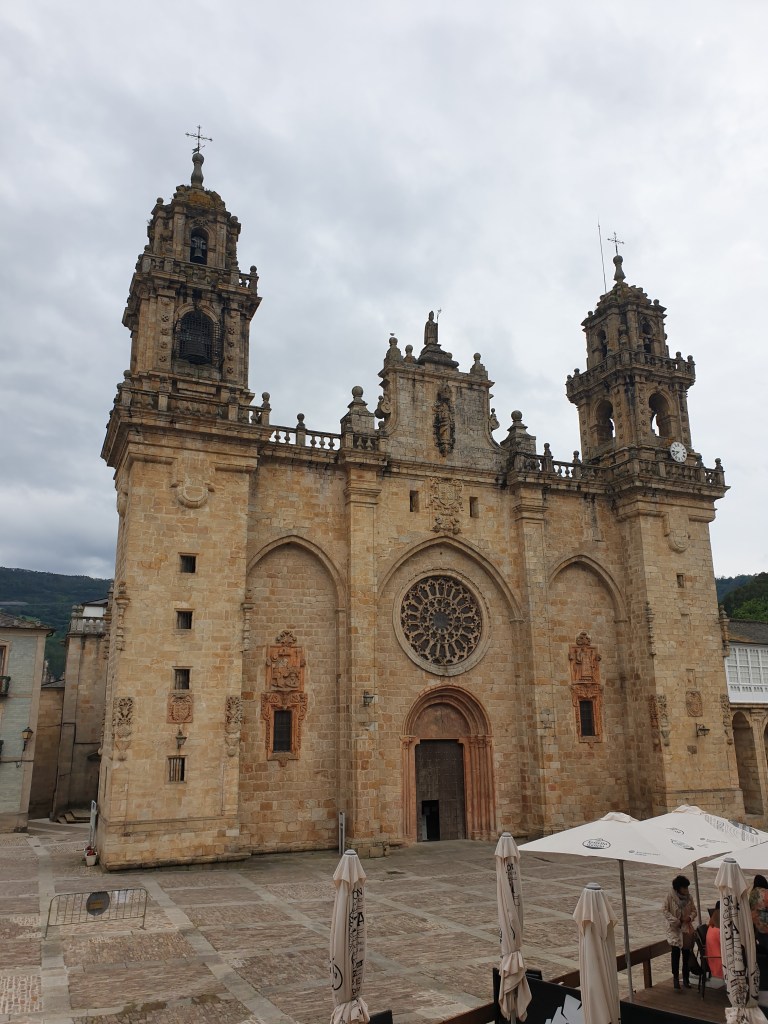
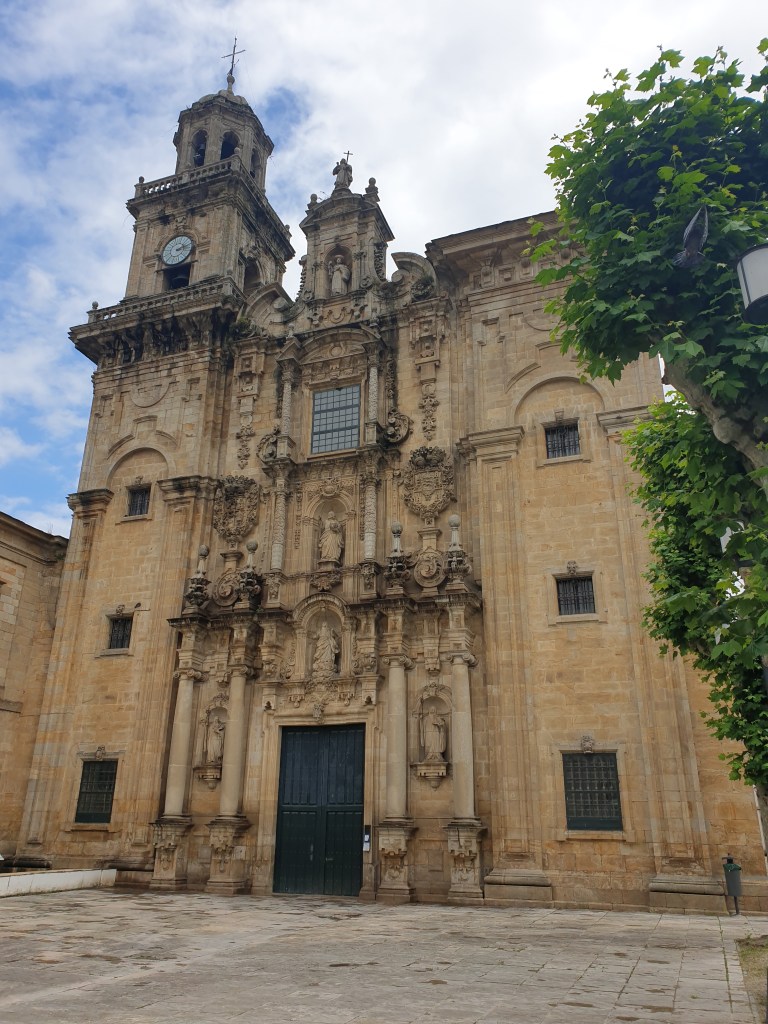
During my second Camino, before mass at the massive, fortified cathedral of Mondoñedo I was approached by the sacristan who explained how their tradition was to have pilgrims do the readings, never mind that I was wearing flipflops, shorts and a t-shirt (there is no formal attire for the Camino). One cannot -or should not- say no to such a request, so I read. After a long day of walking and meditation, it was an honor to read and I was deeply moved, and it was very emotional (yes, I cried).
So when you get a chance to push yourself out of your comfort zone; skiing or reading in front of many people, or whatever it might be, say yes, it will make you a better, stronger, humbler person.
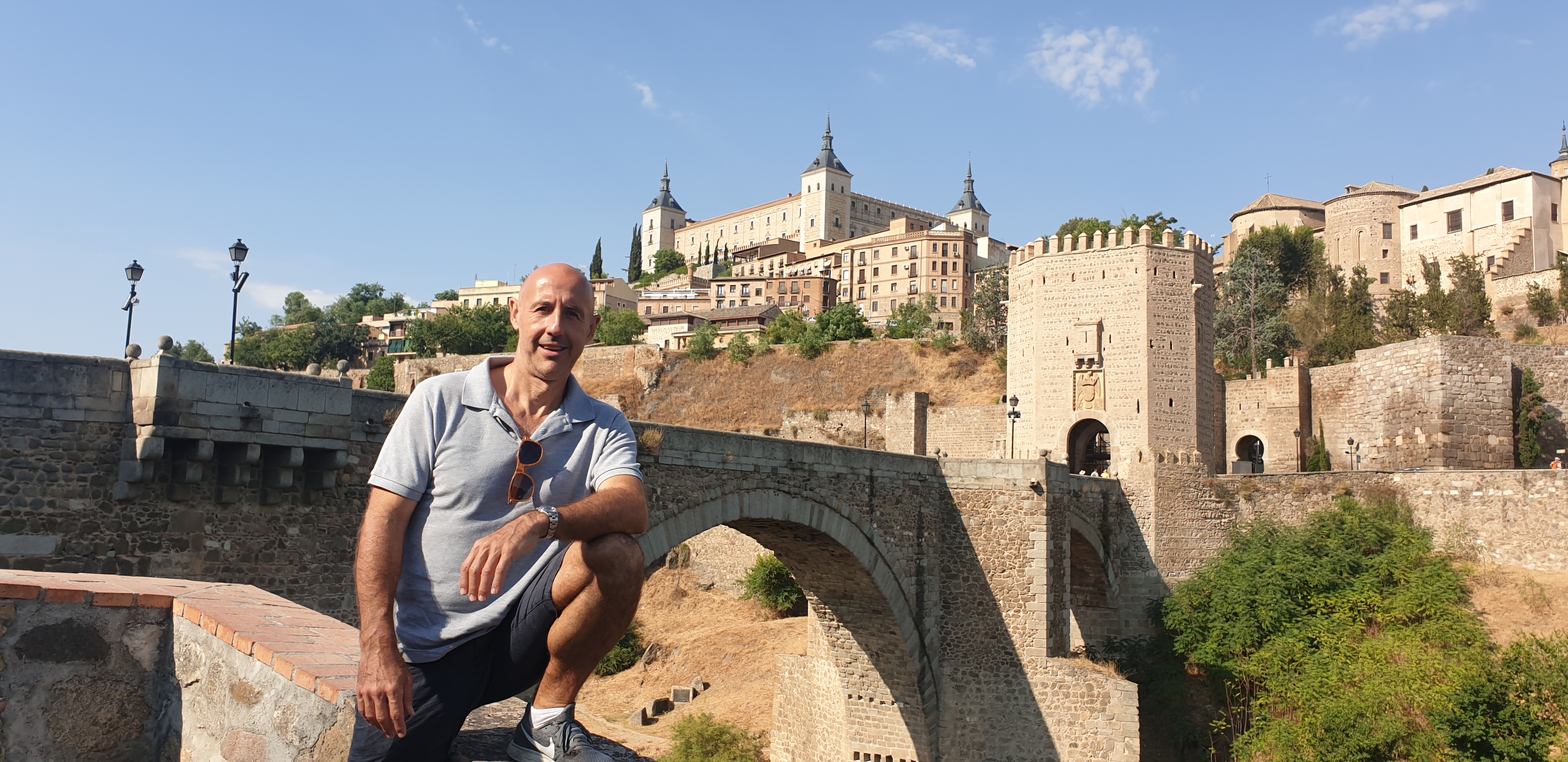
One of my dearest childhood friends is a top art and antiquities restorer (I have mentioned him before here). This year he invited me to spend the day with him in Toledo where he had to supervise the restoration of a bridge his company is working on. Little did I know that the bridge was just the opening act of the day:
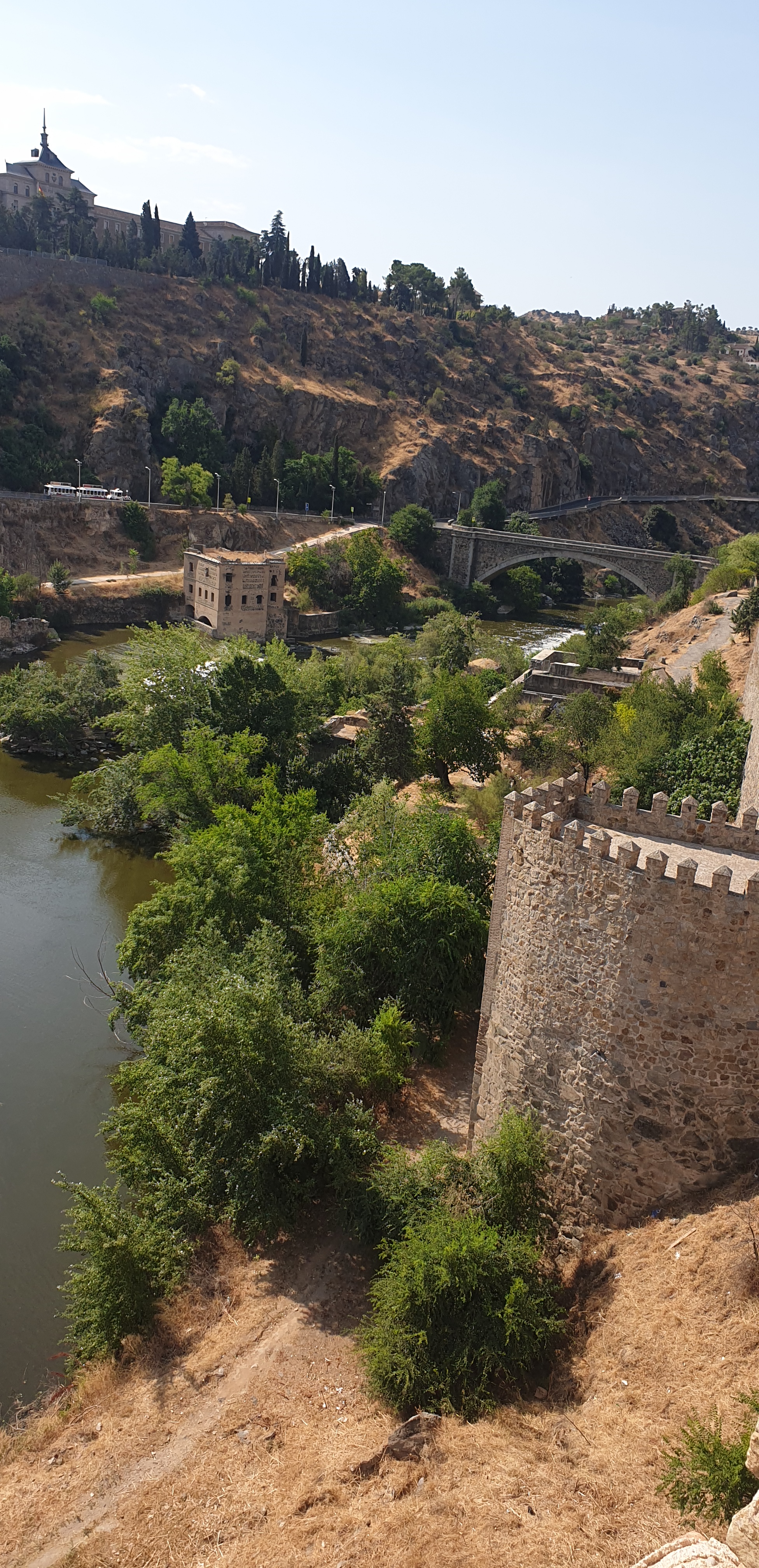
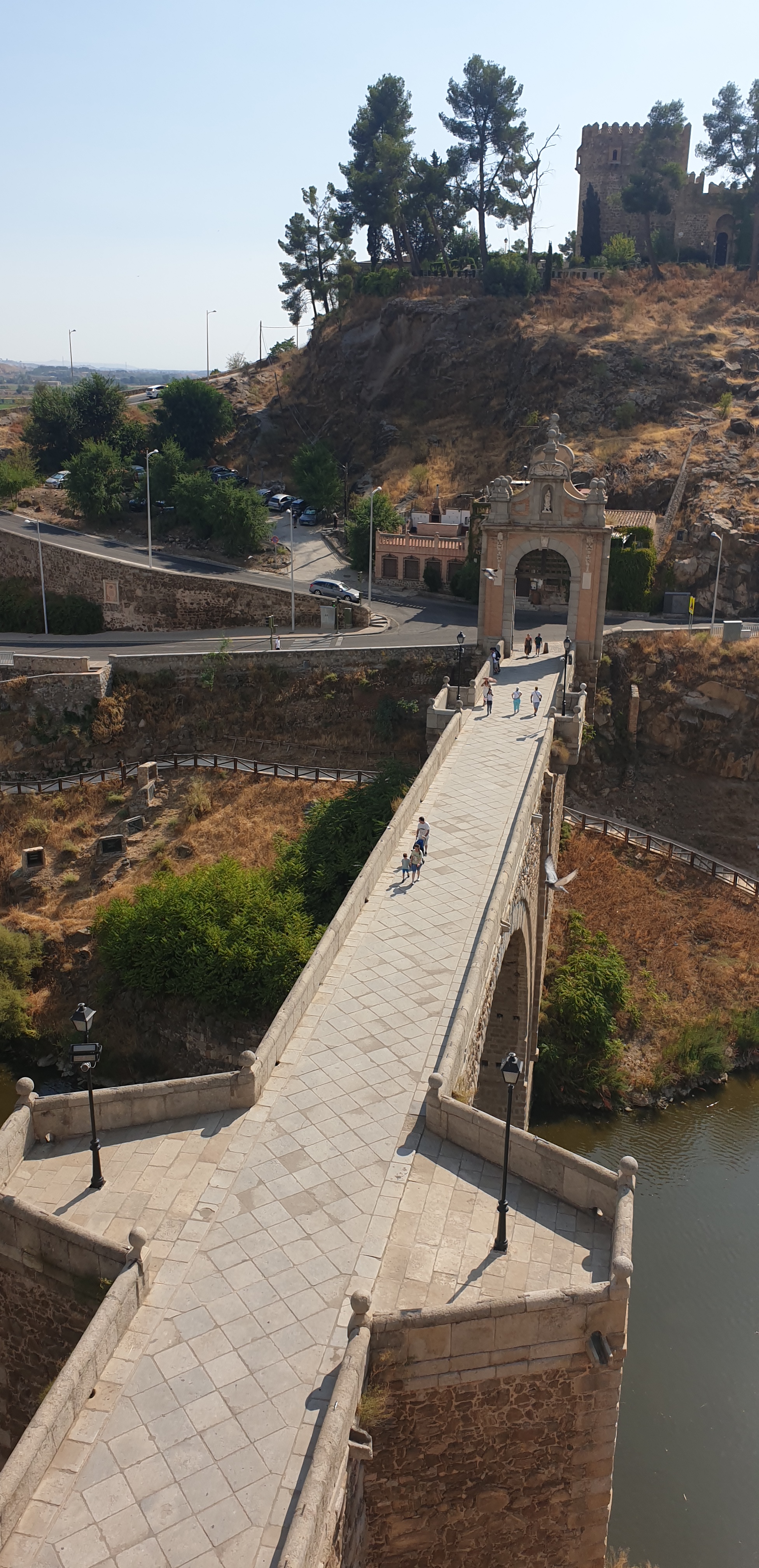
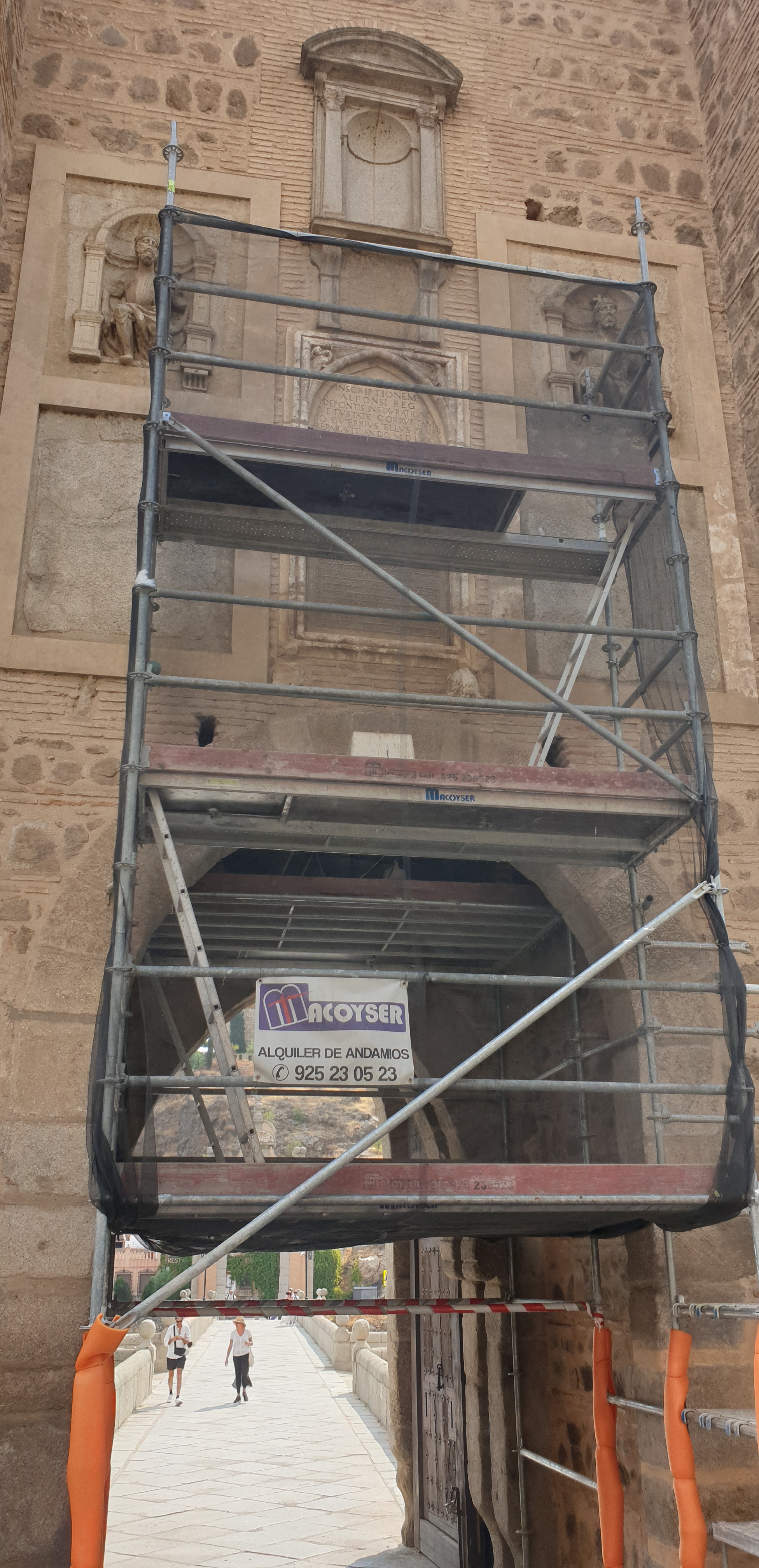
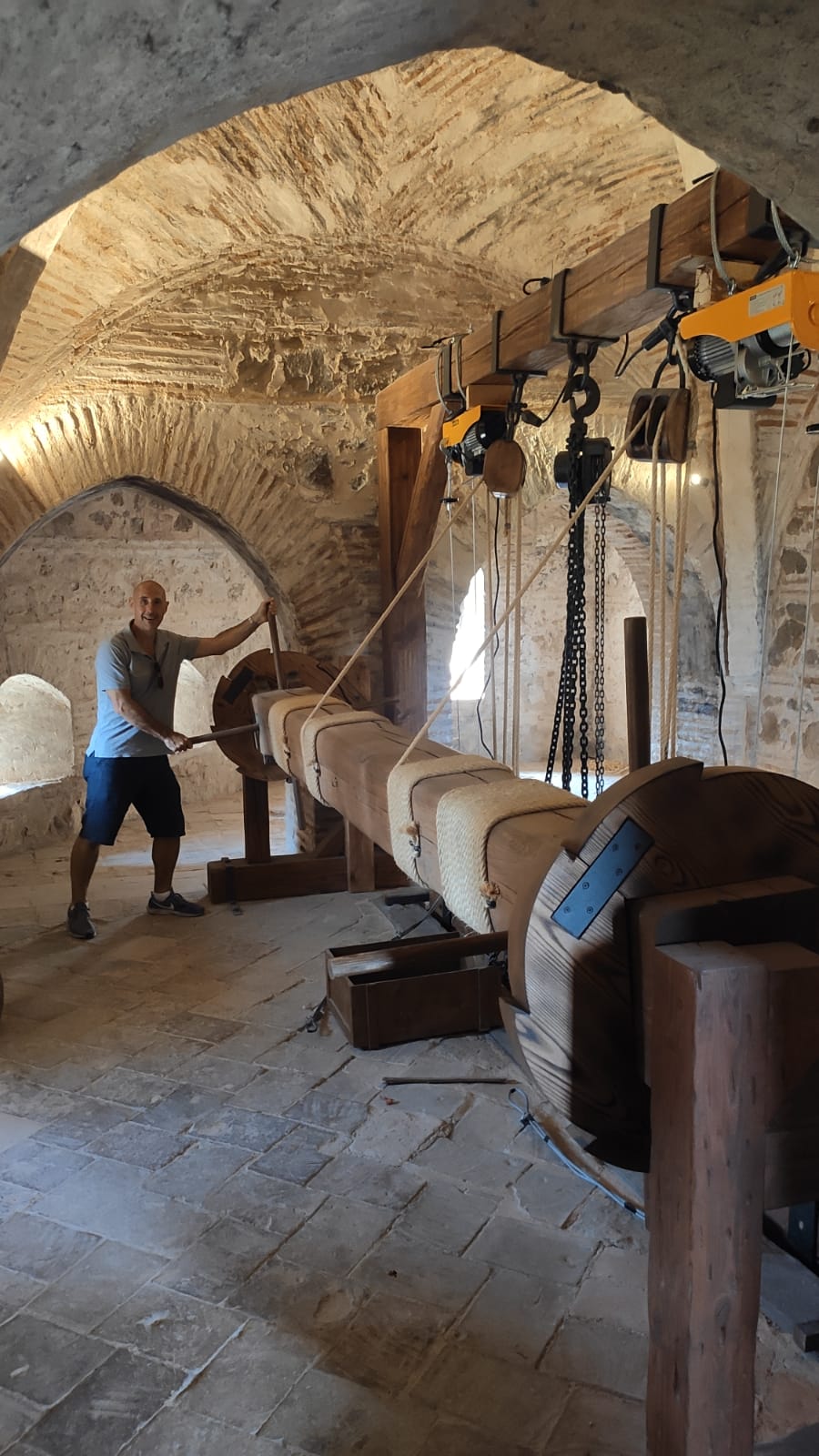
Our first stop was the bridge Tracer is restoring. The Puente de Alcántara started life as a Roman bridge before going through different modifications and updates. The medieval Order of Alcántara fortified it and protected it, giving it its current name -which is ironic since alcántara is bridge in ancient Arabic, so the bridge of bridge! Jaime’s company is working on the medieval tower, their work is impressive, but what really struck me was the formidable views from the top of the towers.
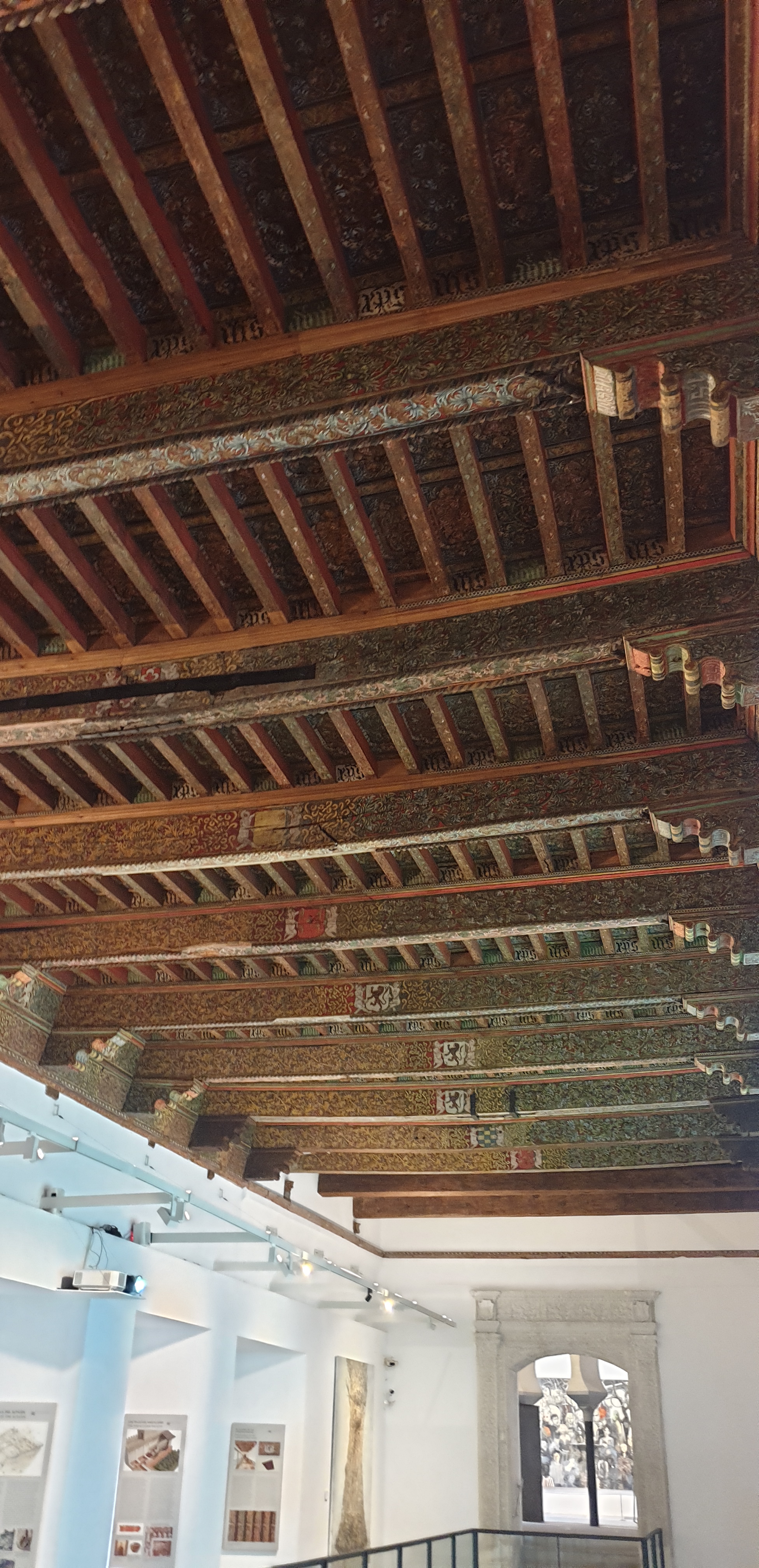
From there Jaime showed me a couple of churches -side by side- he worked on years ago: Santa Fé and Santa Cruz. In them we saw intricate Moorish arches, a beautiful, coffered ceiling, gorgeous renaissance entryways and staircases, a vaulted medieval ceiling, on and on, oh and some silly modern art that really showcases ancient workmanship!
But Jaime’s ace up his sleeve, his piece the resistance was taking me to the Cathedral where his old friend Jesús, the head of maintenance, gave us a very private and incredibly special tour.
Now, I have been to the Cathedral of Toledo a bunch of times, I have shown it to student groups, visiting friends, I even took some photos there for my dear professor Dominguez a few years ago. But this was beyond my wildest expectations, we barely stopped at the “regular” stuff other than for Jesús to point out some unique feature of whatever it was we were looking at.
We started by taking the elevator (the first one installed in Toledo) to the second floor of the Cathedral’s cloister, there we saw queen Isabella’s apartments, some excellent views, and we learned about the two falcons they have just adopted to deal with the pigeon issue.
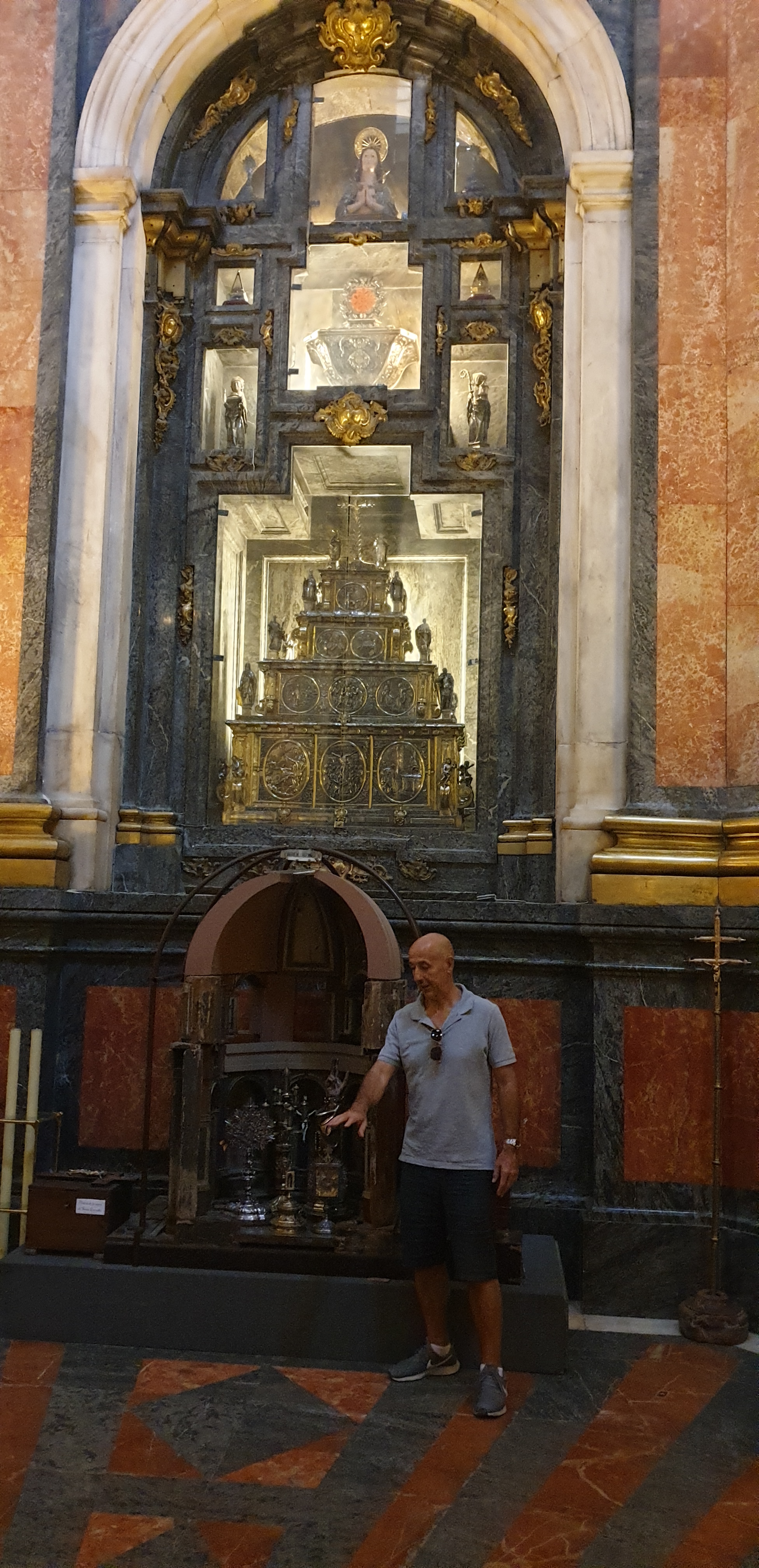
Then we walked around the cathedral with Jesús pointing out this and that, until we went into a “secret” room hidden behind an iron gate and a velvet curtain, then another iron gate to the Cathedral’s reliquary! I must confess this moment was really moving for me, mainly because I was not expecting such a room, with such a treasure inside, it was beautiful and amazing, my hands were trembling!
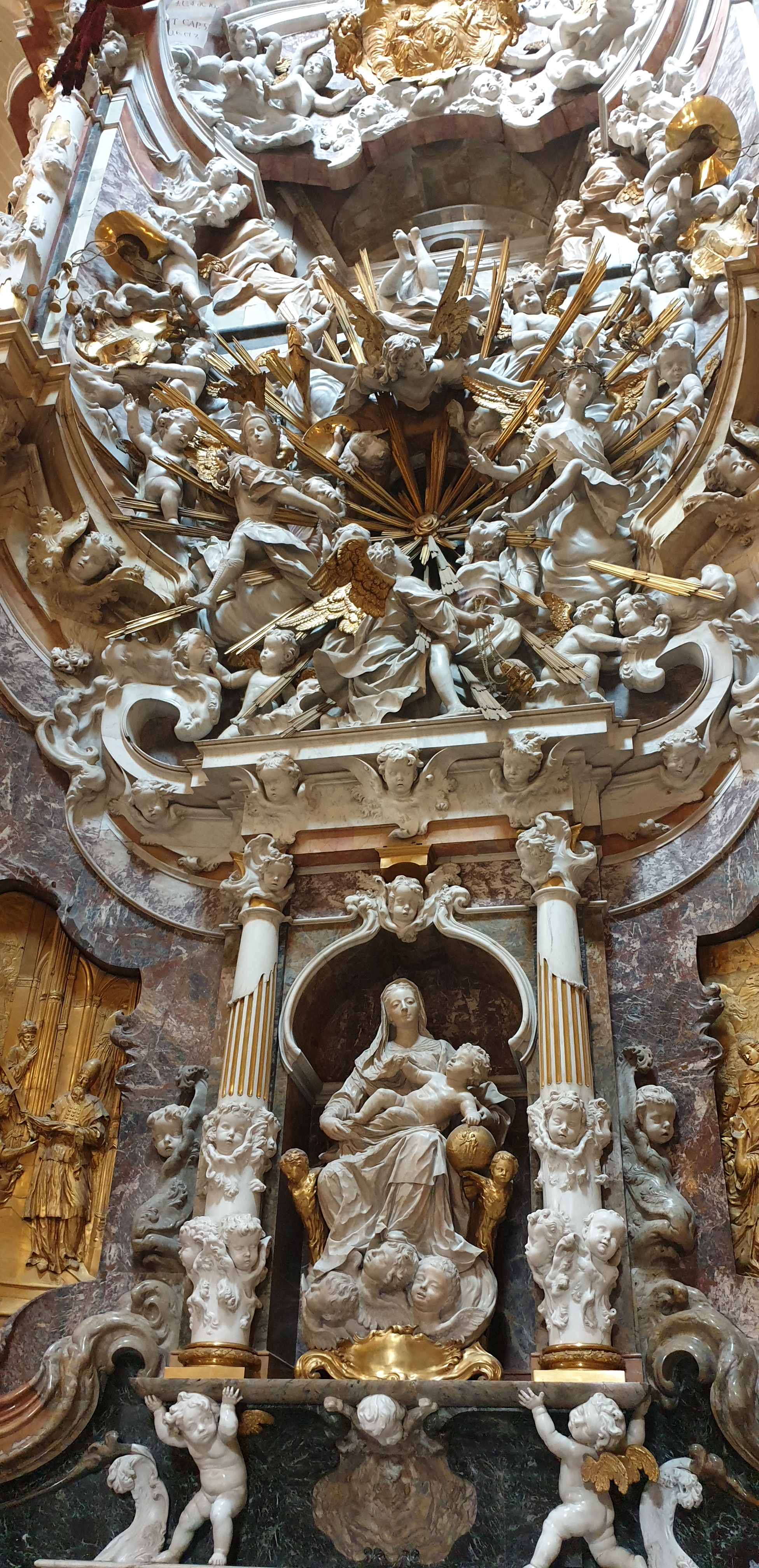
We ambled a bit more, checking out the image of “Lust” which I had photographed years ago for Prof. Dominguez, and the 18th C. “Transparente”.
After our visit, we walked around town a bit and we had lunch where Jaime used to eat when he was working there, but after the Cathedral, it was all a blur for me.
Just a few photos from the last leg of the Camino del Norte.
My last Camino de Santiago had to be cut just short of finishing because of time constraints. After a fallow Covid year, I was rearing to get back on the Camino, the Camino del Norte, following the North Shore of Spain until it turns Southwest towards Santiago de Compostela. That turn inland is just where I finished in 2019.
I picked up just where I left off, on the ria (fjord) that separates Asturias from Galicia on the latter side, Ribadeo. A cute town with a nice marina and old buildings ranging from Medieval to Modernist – these were financed by “indianos” folks that made it big after emigrating to America, mostly Cuba, and returning full of cash. Since I could not find the right transportation to get there, I ended up driving myself. I shared the ride on BlablaCar to help me with the cost of my gas guzzler old Land Rover Discovery.
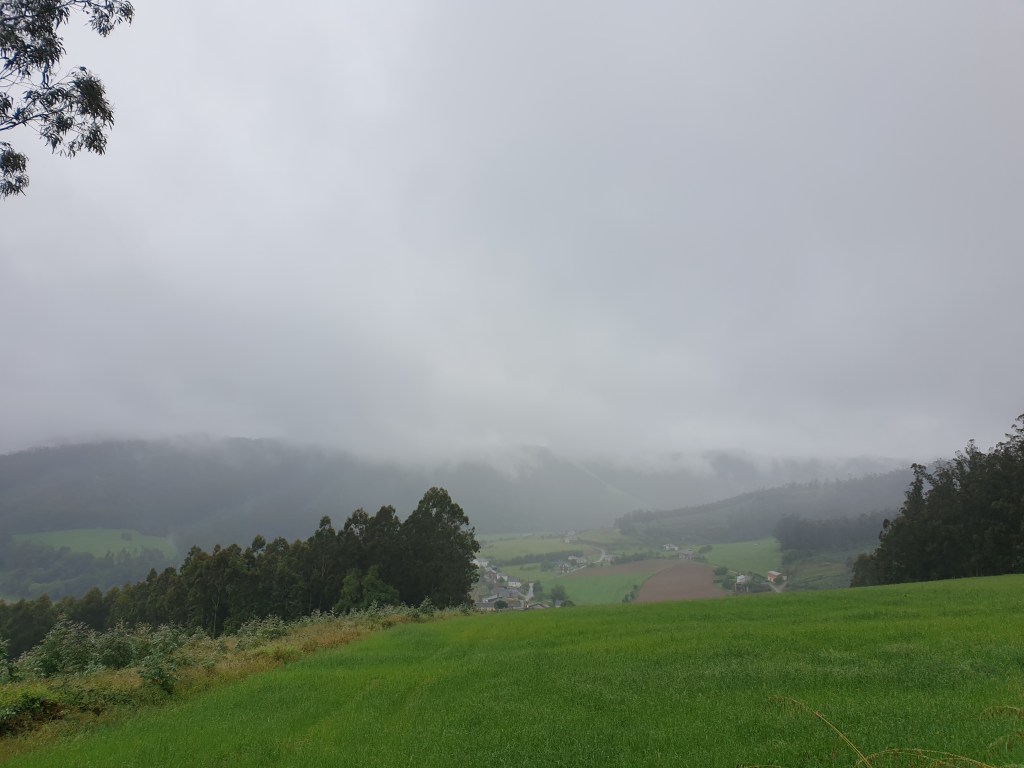
The first day was, like the next four, rainy, but I was so happy to be walking again. It meant wearing a poncho that keeps the rain out but somehow also gets you all wet inside. I have not figured out if the moisture is sweat from wearing a plastic sheet over you, or water that gets in. But I refuse to spend over 200 € for a real rain jacket. I try to keep my Camino as close to the Medieval pilgrims who would have done it, at least as close as I can get in the XXI C.
Breakfast at the albergue was a rare treat: tortilla, good coffee and fresh squeezed OJ. My guide recommended pushing 34km to Mondoñedo for the quality of the Albergue and the town. Although it was a bit of a challenge for my first day, it was worth it. I only met four other pilgrims along the way. Before Mondoñedo is Lourenzá which is a nice village which has an amazing monastery! The albergue in Mondoñedo, as the guide promised, was awesome and I even had space to do some post hike yoga! When I sat down at the cathedral for mass, seeing as I was a pilgrim, I was asked by the sacristan if I wanted to read the first reading and the Psalm. What an honor! Of course I accepted although I was wearing my long sleeve T-shirt, shorts, and after hike flipflops! (I always wear long sleeve T-shirts to protect me from the sun and to keep me warm, as the case might be)
One of the reasons I walk the Camino is to honor and remember my dad, who always talked of doing it. So I always make sure that I am walking on June 20, his birthday. On that day, he walks especially close to me.
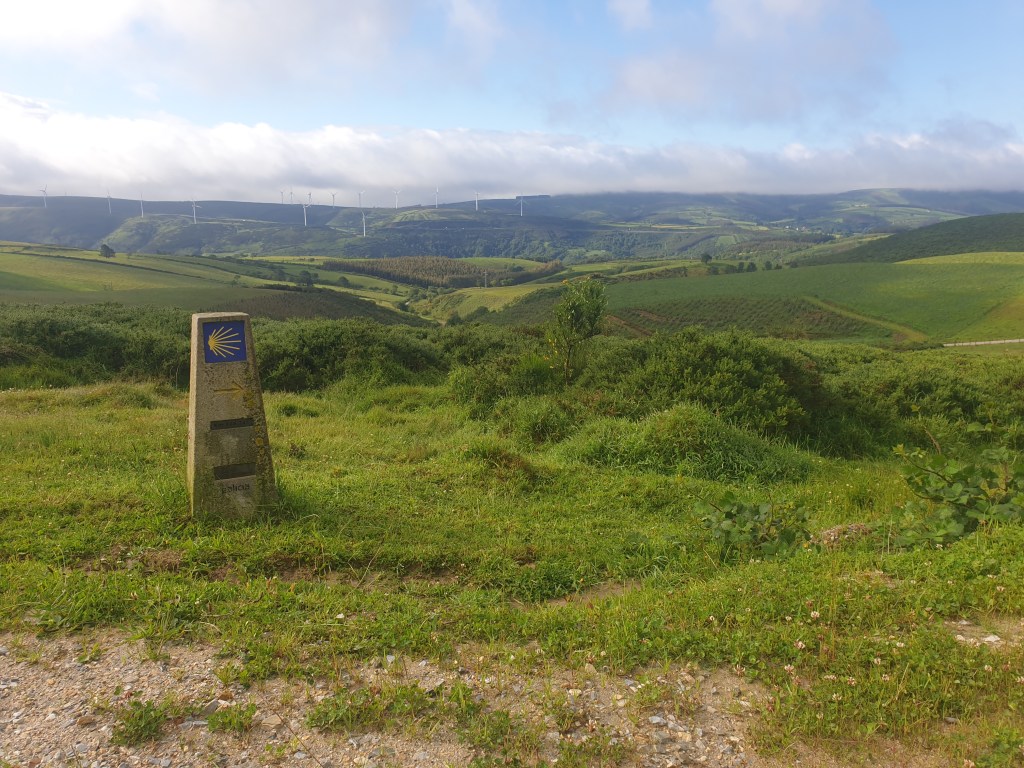
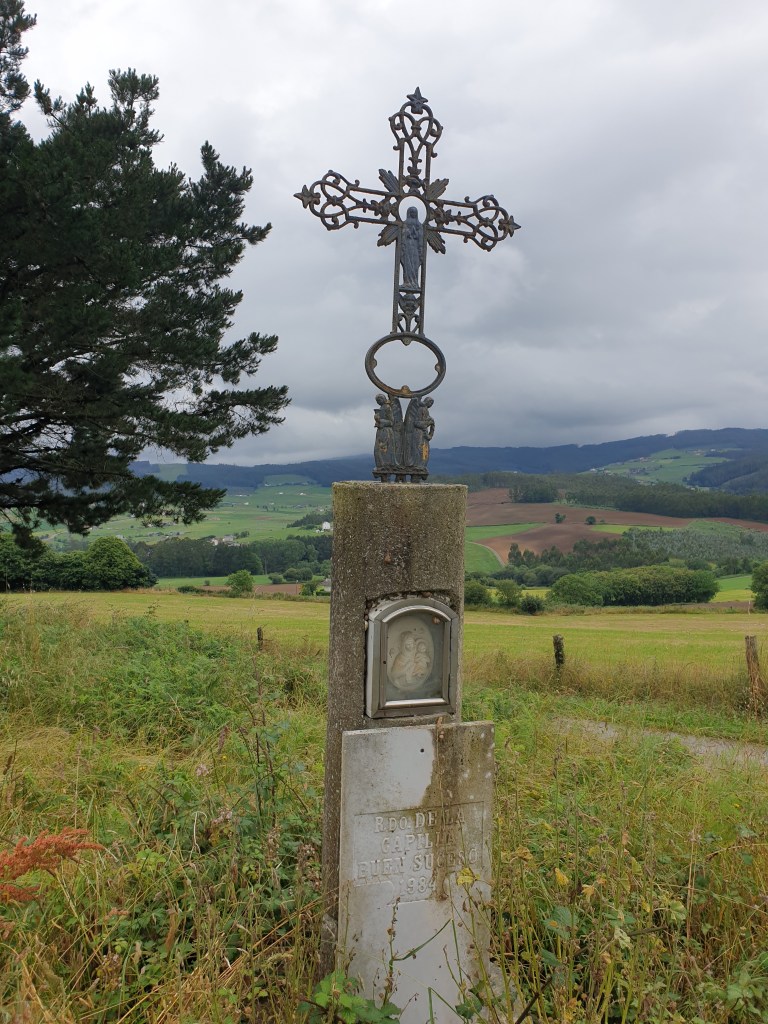
Day two is still raining and starts with a brutal two-hour climb -fortunately on good ground. Eventually it stops raining and I walk through ancient, magical forests for hours, without seeing a single pilgrim all day (except a German couple at the only café on the Camino). Vilalba, my destination, is quiet as it is Sunday evening when I arrive. I go to the evening mass and dine at the only place open in town.
Day three is, as I said before, rainy. But a pilgrim churns on regardless. I finally meet a genuinely nice pilgrim from Gerona, and we chat for a while.
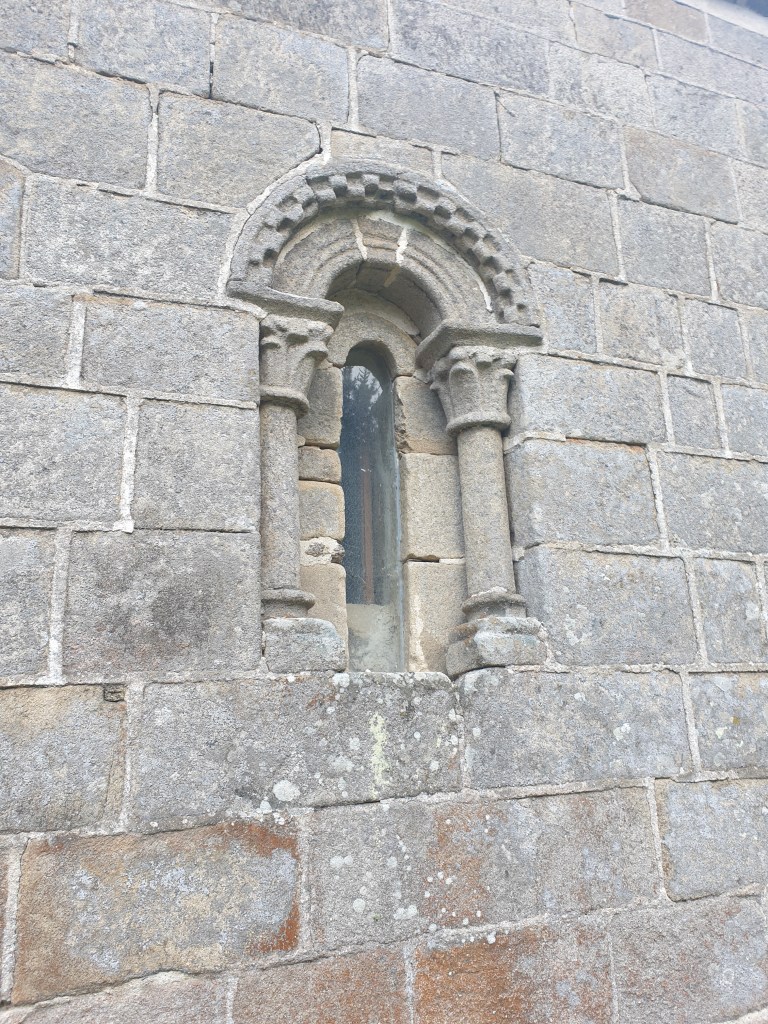
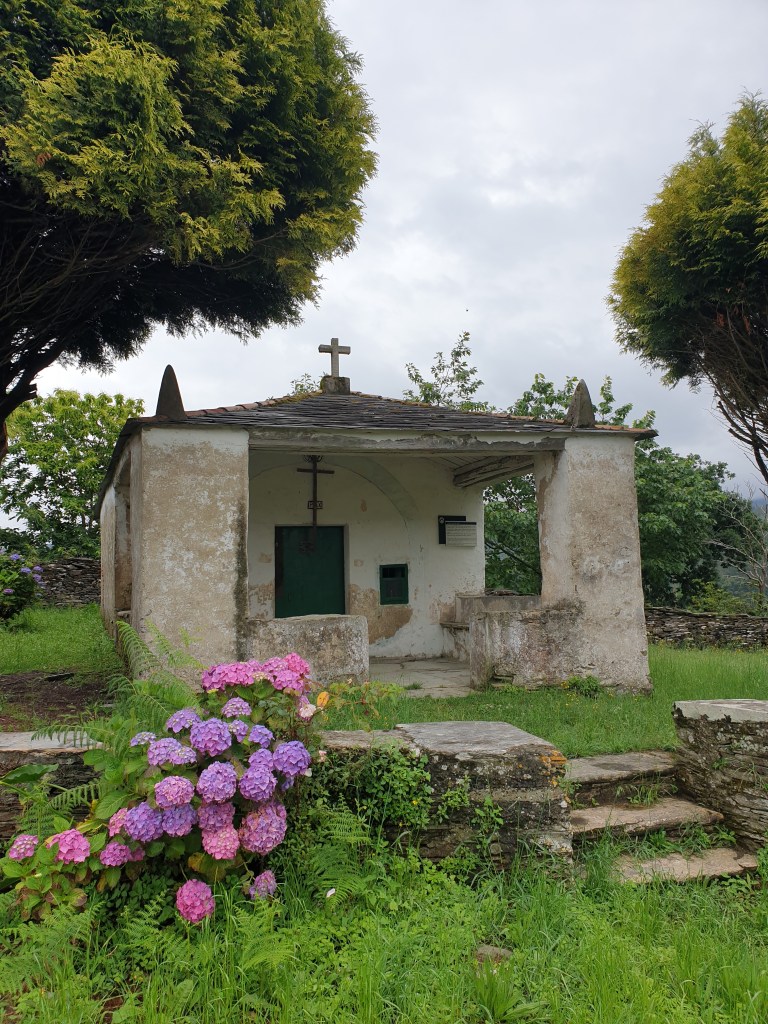
One of the rewards of the Camino is seeing interesting architecture, mostly churches, but also occasionally homes or other buildings. During this stage, I walk to a gorgeous early Gothic church in the middle of a forest, by a river, San Esteve (see photos). Albergue Witericus at the end of the day is an old, restored farmhouse in the middle of a forest. I spend the rest of the rainy evening there, chatting with the wonderful innkeepers, reading, and writing my diary, dining the vegetable soup from their garden and an omelet from their chicken’s eggs!
Day four starts dry but soon changes to pouring rain. The Camino crosses the cute village of Miraz with its manorial tower, and 18th C. church and then climbs into the hills. This day also hits the highest point of the Camino del Norte in Galicia, a mere 700 mts (2.300ft). I finally meet the fellow that keeps overtaking me as he is doing the Camino running!! He is a lovely chap and stops to walk with me for a while. I end my day at Sobrado with its amazing Cistercian monastery which still operates with fourteen monks -one of them a brit! I obviously stay for very mystical Vespers with them, before dinner at a local restaurant.
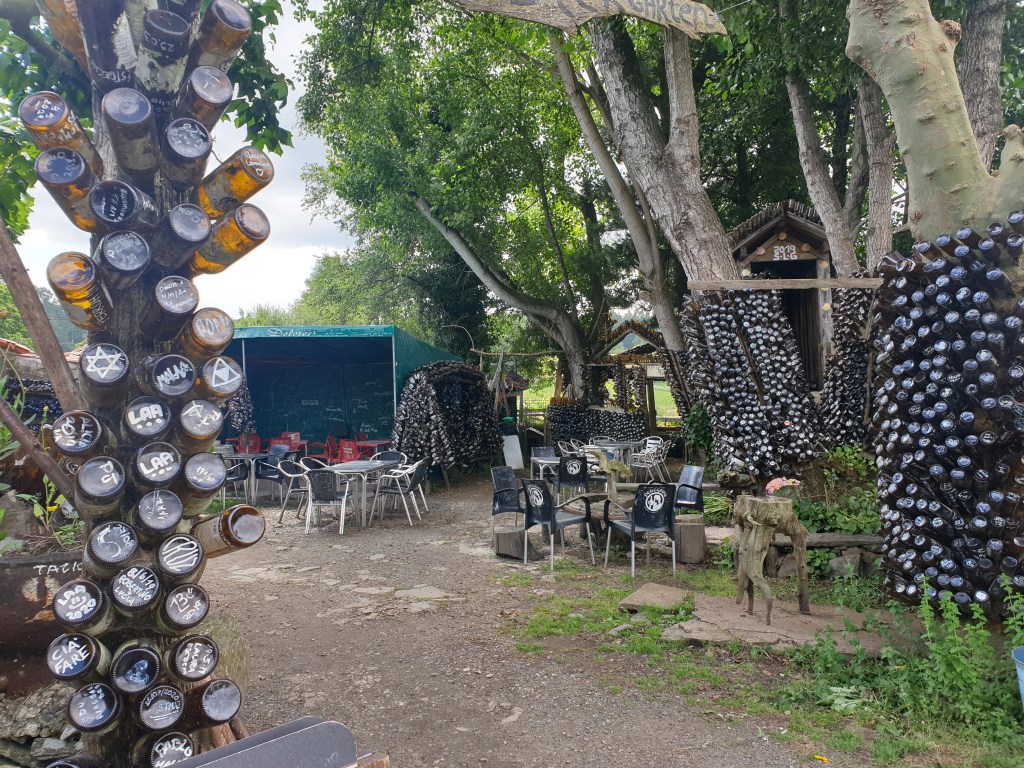
Day five is finally sunny. Cold but sunny, so there is an extra spring in my step. At Arzúa I connect with the Camino Francés, which carries a stream of people. Fortunately, after clearing the village there is no one for the rest of the day. My final albergue is a lovely, restored old house and there is only me and a fellow from Honduras. The only attraction in the village is a bar decorated fully with empty beer bottles! I am the only customer there and spend over an hour chatting with the owner about politics, and the meaning of life, extremely rewarding.
My last day is sad as this Camino has been noticeably short for me, but I get to celebrate it with an amazing breakfast on the trail. I enjoy walking alone, meditating, breathing the fresh air. As we approach Santiago, the concentration of pilgrims increases, but that is part of the Camino. My last coffee stop is the same as when I finished the Camino Francés in 2018, the cortado is just as delicious as I remembered.
Tired of albergues and ready to fulfil one of my Camino dreams, I book my overnight in Santiago at the Parador. This luxury hotel is housed in the original, medieval “Hospital de peregrinos” which yes, was a hospital, but also served as a hostel for those who could not afford where to stay in Santiago. In fact it is technically the oldest hotel in the world. I celebrate my arrival in Santiago with a long, long bath. And only after did I venture for a meal, a walk and eventually mass in the recently restored cathedral that houses the remains of St. James.
In conclusion, I wish my walk would have been longer, but again, family obligations kept me from extending my walk to Finisterre. Otherwise, I love the spiritual journey of self-discovery that is the Camino, walking in nature for days on end, meeting interesting people with their stories, seeing amazing architecture that spans almost a thousand years, and eating great food. But do not get me wrong, the Camino is not a walk in the park, it requires you to walk for miles on end every day. My average this outing was 31.6 km per day (that’s close to 20 miles a day). You start the day with boundless energy, but the last couple of hours of an eight-hour day, day after day are a difficult slog that tests your mental and physical endurance.
A bit over an hour north-east of Madrid lies the town of Sigüenza. I remember going there for an excursion for lunch once with my father when I was a teenager, and again with my family in my twenties, but I had not gone back since. In early January I went with my girlfriend. What a great town it is for a quick week-end getaway!
There are two main highlights to the town but many interesting bits to fill in between those two bookends. And bookends they are as they are situated on each side of town: The castle sits at the top of the hill, and the cathedral at the bottom. They are connected by the medieval wall. Within those walls are a handful of old churches, from Romanesque like Santiago and San Vicente to 19th C Santa Maria. There is a Renaissance town square, monasteries and convents, and like any good Spanish town a bunch of bars and restaurants!
The medieval castle, where queen Blanca de Borbón was kept prisoner for a few years since her dad King Jean II le Bon did not pay the dowry, became the bishops’ palace and eventually was turned into a gorgeous Parador hotel in the 70s. Imagine staying in a medieval castle but with awesome water pressure, great food and Wi-Fi!! We got a great deal, so we stayed there!
The town is perfect for walking around. Although we went in early January and it was freezing, there are plenty of places to check out and warm up!
The highlight is the Cathedral, originally Romanesque and then modified in Gothic, Renaissance, Baroque and eventually Neo-Classic styles. The main attraction in the cathedral is the tomb of “El doncel”. This fellow, Martín Vázquez de Arce was a local nobleman who was killed fighting for Ferdinand and Isabelle against the Moors in Granada in 1482. What is extraordinary is his tomb: he is not lying down like every other bishop and nobleman in every other cathedral… he is reclining, reading a book in his suit of armour, waiting for his eternal rest. The detail in the carving of the alabaster is exquisite to the point of whimsical: his page carefully holding his foot, his eyes open, etc. it is a gorgeous sculpture –funerary art at its best!
The rest of the cathedral is no slouch: a Greco painting, an outstanding collection of tapestries, amazing architecture, two pulpits: a Romanesque and a Renaissance one, etc., etc.
The Clarisas convent just happens to have an ancient burying ground outside their doors which is simply covered with a glass for you to appreciate the architecture and human bones! The nuns make the best chocolate truffles you can imagine. Since these nuns do not allow you to see them you have to buy the sweets via a rotating door. As a certified chocaholic, I can attest to the quality of the truffles! I did not bother tasting anything else.
As in any good Spanish town, food is the soul of the place. Sigüenza lies pretty much along the dividing line between Old and New Castille – so called as Castille progressed on the expulsion of the aforementioned Moors… So you get both cuisines, North and South.
The surrounding villages are obviously much smaller than Sigüenza,but are very rich in history and culture. Make sure you check out Atienza and Medinacelli.
One of the advantages of being a freelancer is that I can take a couple of days off when I can fit them in. So recently we escaped to Santiago de Compostela. I know this Northern jewel well, but last time I was there when I finished my Camino in June of 2018 I didn’t stick around and took the first train back to Madrid. This time we went for three days.
Santiago was built since Roman times mostly out of granite so if it rains and it gets dark the streets and the buildings take on a mystical glow, a very special shine. We were lucky it rained when we went!
Of course the main event is the Cathedral which has been there in one shape or form welcoming pilgrims since the Middle Ages, although the Romans already had a temple there. Other must sees include the square Plaza do Obradoiro (check out the live webcam!) that houses the Cathedral, town hall, parador and university, the awesome modernist market, the park, the contemporary art museum, the folk museum, and, of course, a bucket full of churches/monasteries. But really the best thing to do is to walk around the old town enjoying the atmosphere, the little shops, the bars and restaurants…
We were lucky to stay at the Parador, the original pilgrim’s hospital which is on the Cathedral square and is the oldest hotel in the world!
The other main attraction is food! Needless to say the seafood cannot get any fresher as Santiago is a few miles from the sea. The octopus, the barnacles, any fish is just perfect! There are two local wines to have: the crisp, seabreeze infused Albariño and the lesser known cousin Ribeiro made inland along the local rivers (thus the name).
The Cathedral was under extensive restoration efforts so we could not enjoy mass with the massive incense burner – the Botafumeiro, oh well, maybe next time.









































 Antonioyrocinante's Blog