A good cup of coffee

Of course I have mentioned coffee many times before in this blog, but I have never dedicated a post to it. About bloody time, some of you might say.

As my friend Theo would say I am a bit of a late bloomer, at least on the coffee front, maybe because I did not hit my teenage years in Madrid but in London in the 80’s where a good cup of coffee was as unheard of as a sunny day. Ditto for university in Boston later that same decade. Although I do remember some memorable coffees in the Italian North End where a few cafés knew how to pull a solid espresso!

When I finally got back to Spain in the early 90’s, still young -mind you- then the coffee consumption crept in unannounced. You see, in Spain at mid morning everybody takes a coffee break, who was I not to enjoy a cup? Thus an addiction began.

I do not drink a lot of coffee, preferring to focus on quality over quantity. Normally it is just one a day, mid morning. While travelling, it will be at least a couple, one with breakfast and one mid morning. If I have lunch out, I might have an espresso to finish.

During my PhD, I would meet with my awesome Thesis Advisor a couple of times a week to go over my progress at UNC’s now defunct The Daily Grind, where they knew our orders by heart. Those coffees remain in my memory as some of the most enriching ever.

I have measured out my life with coffee spoons

– T.S. Eliot

Relative to the rest of Europe, Spain does not have the best coffee. You see after our Civil War (1936 to 39) we had a rough famine through the 40’s while the rest of Europe was in WWII. We were lucky to be included in the Marshall Plan that helped us out. We had a scarcity of coffee so it was over roasted to increase flavor. Folks also drank chicory instead of coffee since this grows naturally in Spain and was widely available and much cheaper. Sometimes they mixed coffee and chicory (in proportions depending on what you could afford). A final trick was to add caramel to the coffee, again to push the flavor. All this means is that we got used to bad coffee, torrefacto. Nowadays this is not so much the case except if you go to a remote village where they still like it “old” style.

Another great coffee moment is Sunday after church, where I do not have any time limit on my coffee. In Florida I would go to Bad Ass Coffee next to St. Ann’s, although eventually I moved to The Brick for the more comfy sofas to read on. Here in Madrid I go to the wonderful Pancomido Café where the girls know me enough to prepare my coffee when they see me walking in!

More important than the coffee itself might be the coffee time: a time of reflection, or reading, or of company, and conversation. The ceremony of coffee whether at home, or at a coffee shop is also equally important; taking the time to enjoy a coffee alone or with a friend.


La Navata

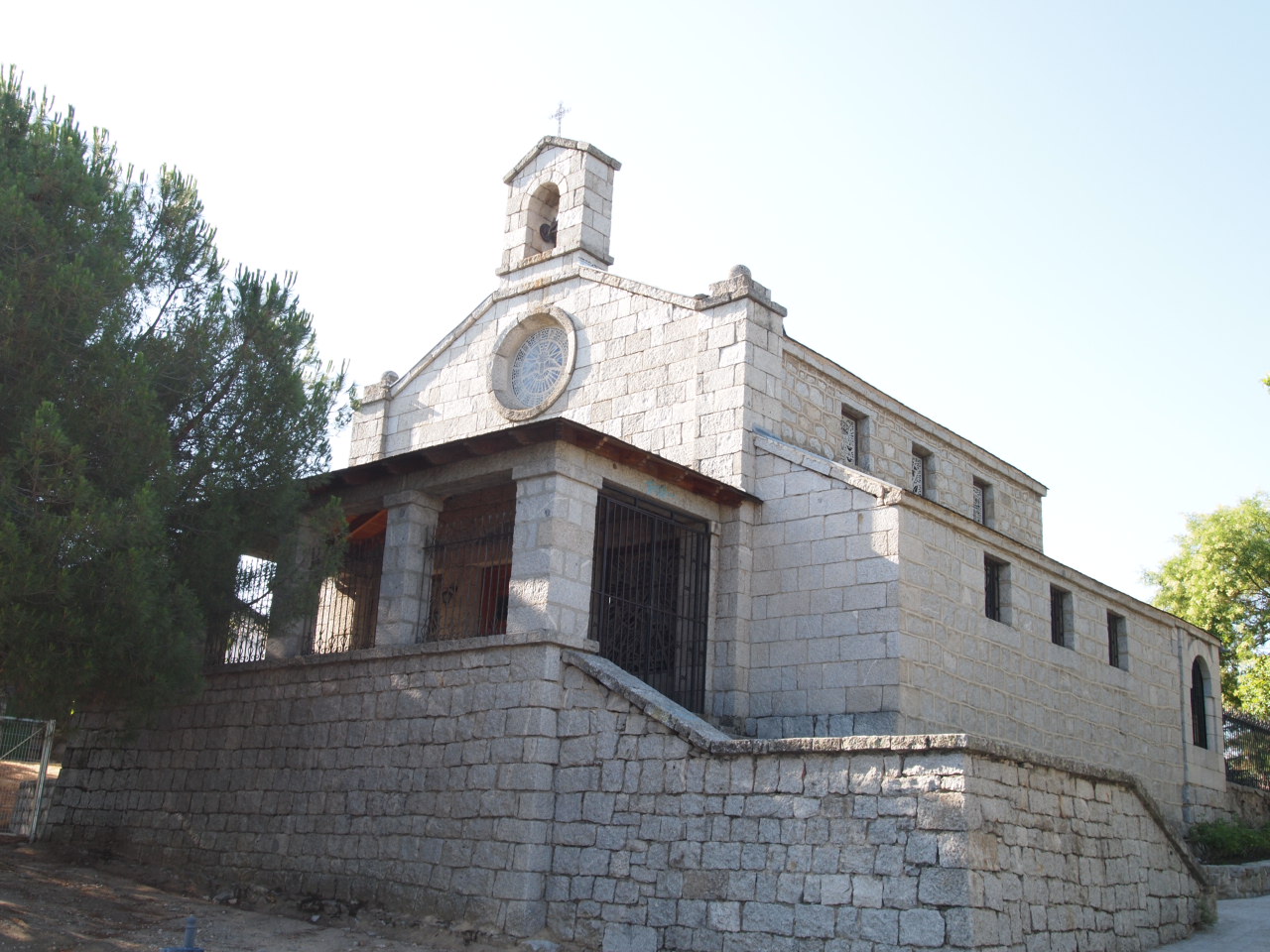
La Navata is a tiny village outside Madrid, near the Sierra de Guadarrama mountains, where Hemingway’s For whom the Bell Tolls is set, the village is so small it is actually dependent of the bigger nearby village of Galapagar, home of Nobel Prize winning playwright Jacinto Benavente and of the current top bullfighter José Tomás. La Navata itself only has a train station, two bars, a kiosk, a hairdresser, a pharmacy, a small supermarket, and an old, small, stone chapel, San Antonio de La Navata.

My parents bought a weekend/summer house here in 1974, when I was 9 years old. In the early 80’s we added the second floor. If I have a home, this is it. This is my “happy place” where I take my mind when I need to relax. This is where most of my childhood memories were made. This is where I learned to ride motorcycles and to drive – my granddad Antonio patiently guiding me round and round the dirt garden, before we put in grass, in La Petra, our old Citroen 2CV. This is where I made my first and oldest friends, where I learned the little tennis I play, where I have done most of my stargazing, reading, bicycle riding, gardening, hiking and barbeques, where I kissed a girl for the first time (quite sloppy if you must know), where I started tinkering with all things mechanical – although mostly motorbikes, where hiking and skiing trips started, and where great summer (and I guess also winter) parties were hosted.

I used to come here for the weekends in winter, reading by the blazing fireplace, and spending the summer in the pool, the garden and the porch, going indoors only when absolutely necessary.

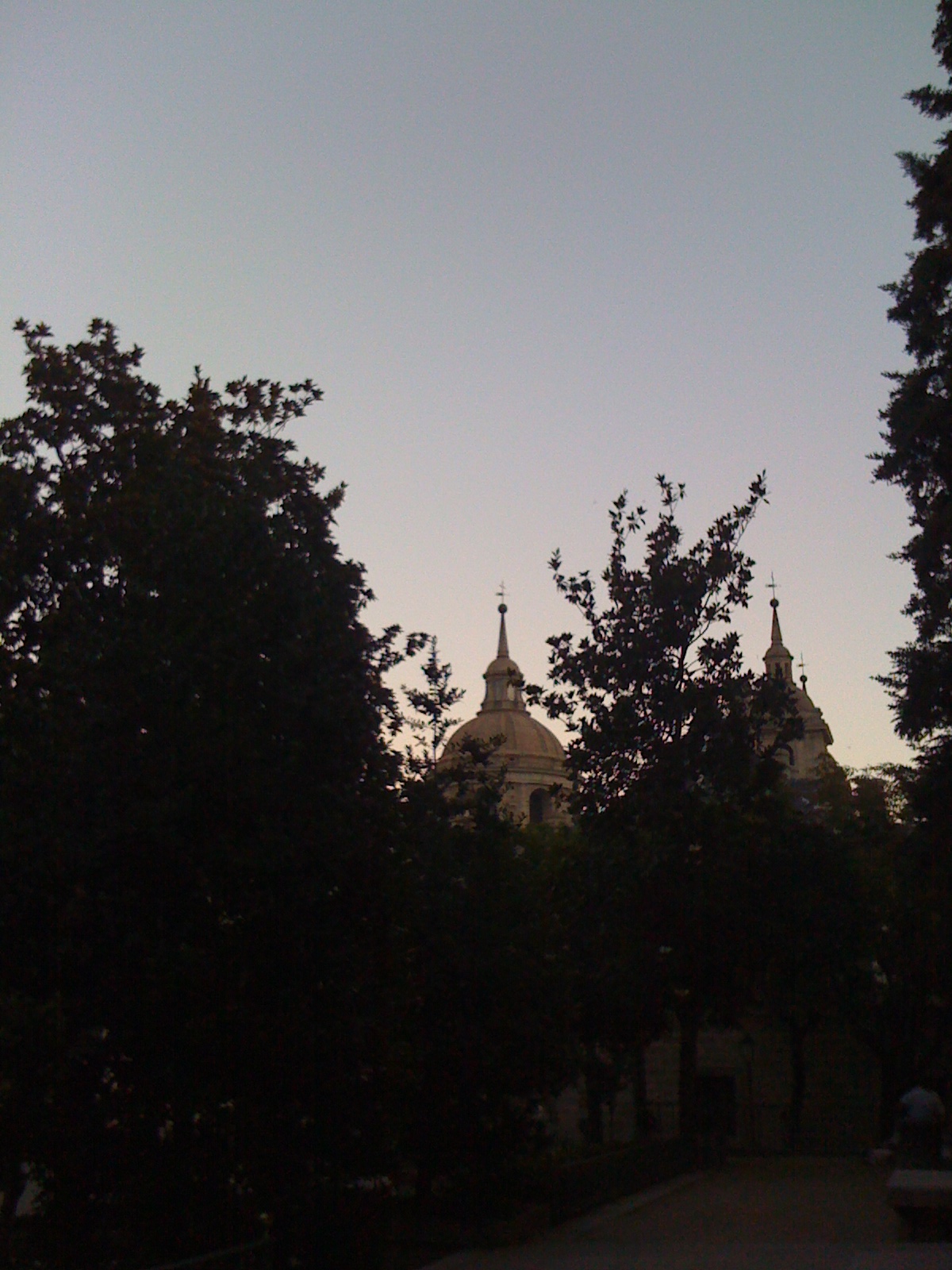
La Navata is about a fifteen minute drive from El Escorial, built by Phillip II, it houses a palace, monastery, school, mausoleum for all the Haubsburg and most Spanish  Bourbon kings, and one of the most important – and beautiful  – libraries, in the world.  Growing up I spent a lot of time in this place, walking around the palace, gardens, surrounding hills, and the town. I still spend a lot of time here, specially with my friend Patxi, with whom I founded the Asociación A. de Amantes del Escorial in the early 90s.

In 1992 I got a job at a photo equipment supplier near here and I lived in La Navata for about a year. It was a lot of fun, living in this big old house alone, cooking, reading by the fire, and going into Madrid for the weekends doing a reverse weekend commute!

IMG_0928

El Escorial

IMG_0903

The view during a bicylce ride

IMG_0935

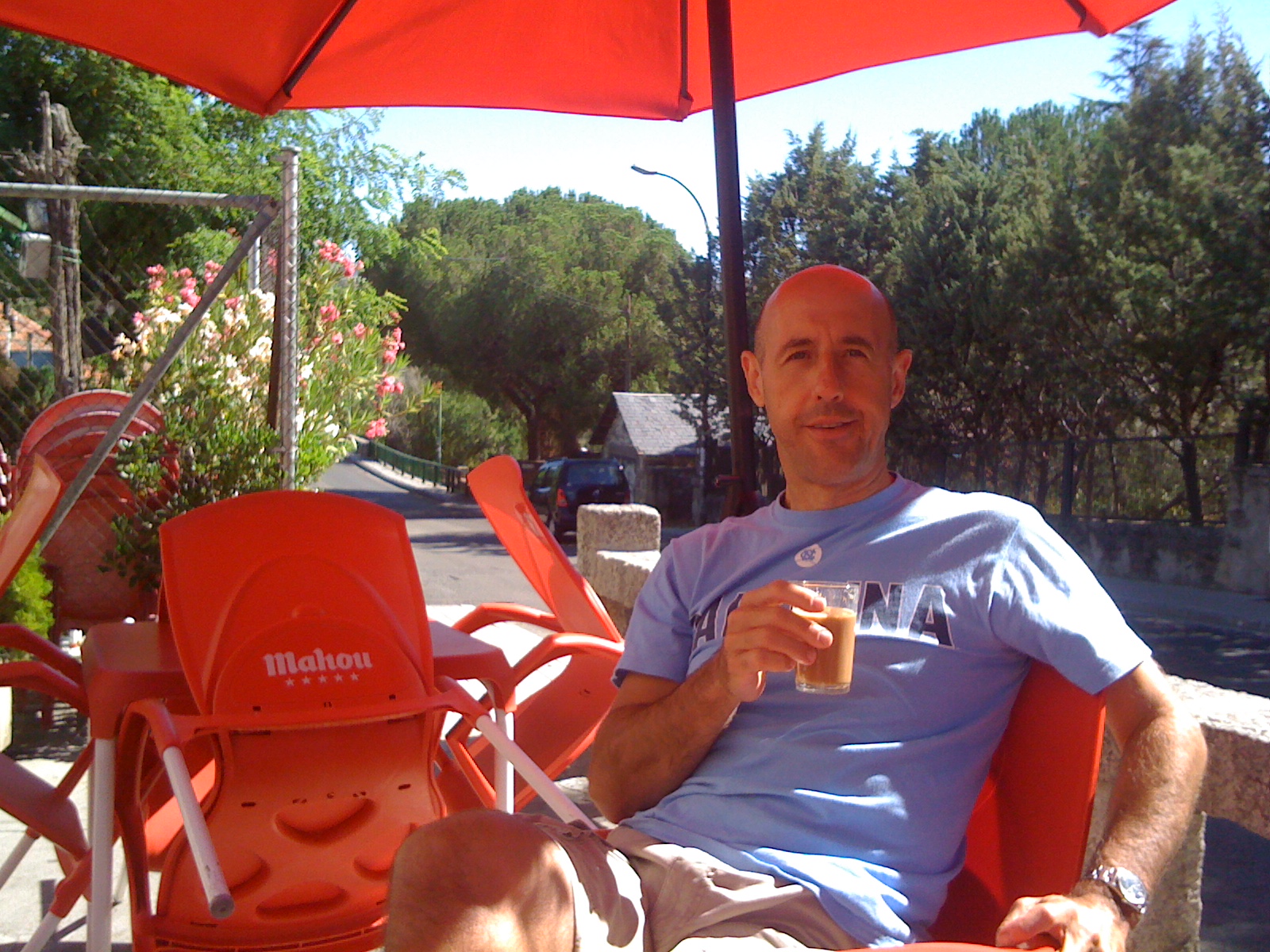
Caf’é con leche at the clasico Marcelino bar, at 10 am they have barely opened!

SAMSUNG

Jacinto Benavente at Galapagar´s Plaza

OLYMPUS DIGITAL CAMERA

San Antonio de la Navata

Life in La Navata is very quiet. I start off with a refreshing wake-up swim in the pool, which makes breakfast a cool joy on the porch. Then there is a walk into the village to buy bread for the day, the newspapers and any other groceries, I stop at the bar for a nice café con leche. There are always chores and gardening and pool maintenance to be done before a pre lunch swim. After siesta things actually slow down even more in the heat of the afternoon and I can read, or hang out with the fam. Nowadays with my nephew and two nieces things are a bit more chaotic, but always fun. The afternoon swim is normally the longest one and then I have time to work out in my homemade gym, or run or go for a bicycle ride before dinner. After dinner we sit around, chat, enjoy a mojito made with old Cuban rum (which is unavailable in the US) and mint from the garden, or a gin tonic, or whatever we can  find, sometimes accompanied by a cigar.