A couple of years ago I wrote about Mahler and Joseph Roth and the coincidence that they both lived in the turn of the Century Vienna. It was very much a gut feeling post (you can read it here) since I am not a history scholar, even less an Austro-Hungarian history scholar specializing in the fall of the empire.
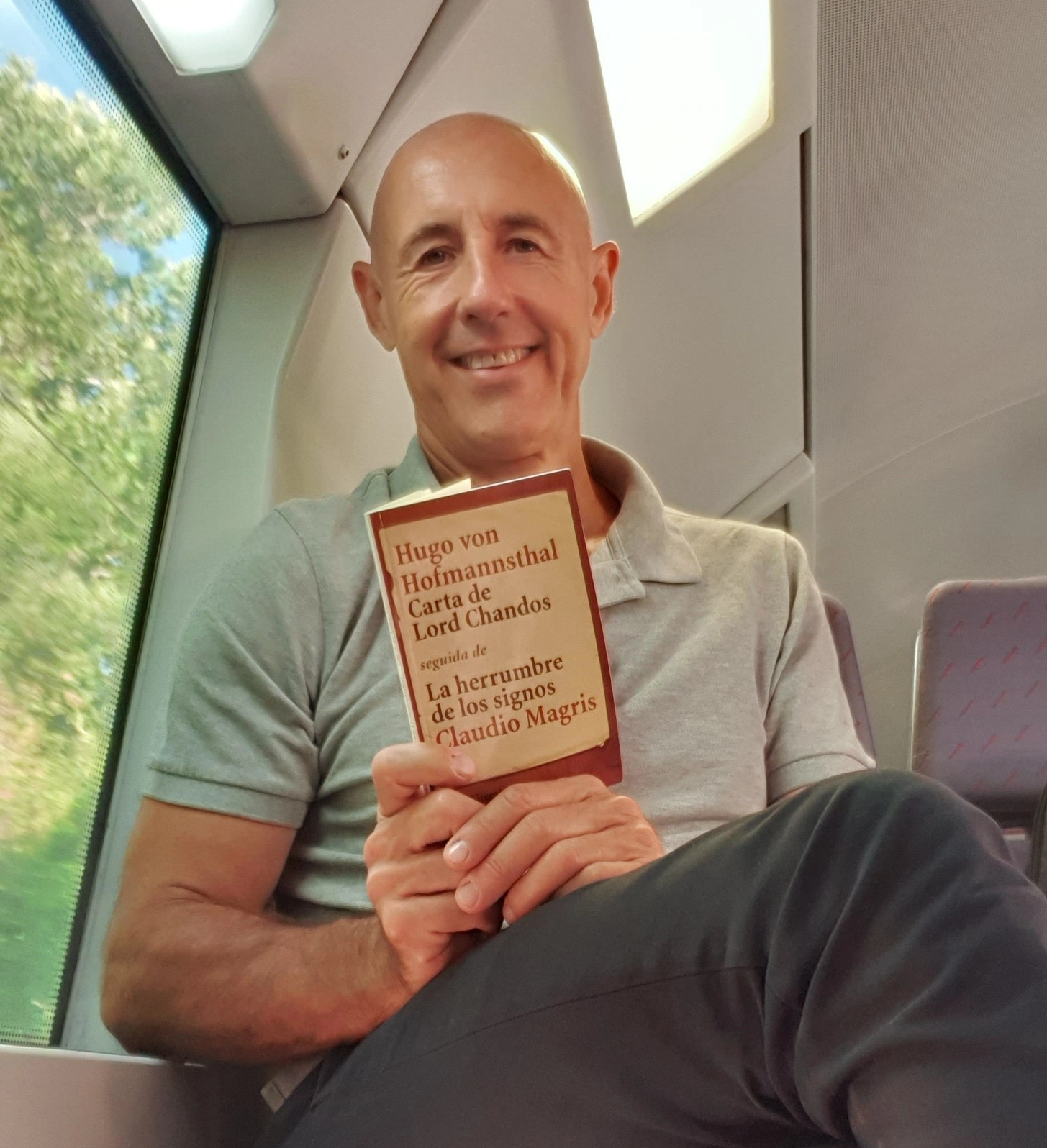
What you read on the Camino is very important. I usually choose spiritually enlightening books. (The Book of Job, Gemma Simmonds The Way of Ignatius A Prayer Journey through Lent (she was my sister’s teacher!), Willigis Jager The Wave is the Sea, even a collection of Zen stories!) They also have to be physically light and small due to backpacking requirements. This year under my friend Paco’s recommendation I took an intellectually challenging book: Hugo von Hofmannsthal Ein Brief (Brief des Lord Chandos) – Letter to Lord Chandos followed by Claudio Magris’ analysis of the Letter in La Lettera Di Lord Chandos.
Hofmannsthal’s (fictional) letter from Lord Chandos to Francis Bacon is a short (22 pages) but fascinating essay on language. Magris’ analysis of the letter is a mind-blowing tour de force of fin de siècle Vienna and the fall of the Austro-Hungarian empire and what was to follow in Europe. After a master’s and a PhD in literature, I was surprised to find that this is by far the densest reading I have ever encountered. It is rich, thick -but readable- and chock full of references: Kafka, Wittgenstein, Heidegger, Freud, and Nietzsche (obviously), Borges, Saussure, Kubrick, Eco, Pasolini, Plato, Seneca, and Cicero, Roth, Kierkegaard, Klee, Van Gogh… and a whole bunch of other names I confess I have no clue who they are. But the point is that Magris explains in philosophical and existential detail the fall of the Austro-Hungarian Empire, turn of the Century Vienna and what would follow in postmodern Europe. It was also very rewarding to read a real essay on what I wrote as a hack blog post…
In conclusion, this is a short, small book, perfect for travelling but dense and rich and glorious academic reading! Enjoy, you are welcome!
PS: If you want to read more about Chandos check out this article:
Greaney, Patrick. “On the Chaos in Chandos: Hofmannsthal on Modernity’s Threshold.” MLN 129.3 (2014): 563-573.
Good things come in small packages, they say. In Spain we say: “lo bueno, si breve, dos veces bueno” the same thinking can be applied to the short story. If you can develop characters and plot in not too many pages instead of hundreds you might have what it takes.
Your end of apprenticeship project in the Middle Ages required you to do a miniature of whatever your craft was; If you were a carpentry apprentice you had to make a tiny piece of furniture. These pieces where far more difficult to make than a regular sized piece. Again, the same goes for short stories. Boiling down a full story to a few pages requires a craftmanship not all writers have.
Short stories are the reason I fell in love with Literature (yes, with capital L). My high school Spanish lit teacher Soledad Sprackling had me reading Borges, and García Márquez. Later on I devoured Poe, Hemingway, Cortázar, Cervantes’ Novelas Ejemplares, Rosario Castellanos, Fuentes, etc. etc.
I recently read back-to-back books of shorts stories and was surprised to see that I have never written about short stories in this blog.
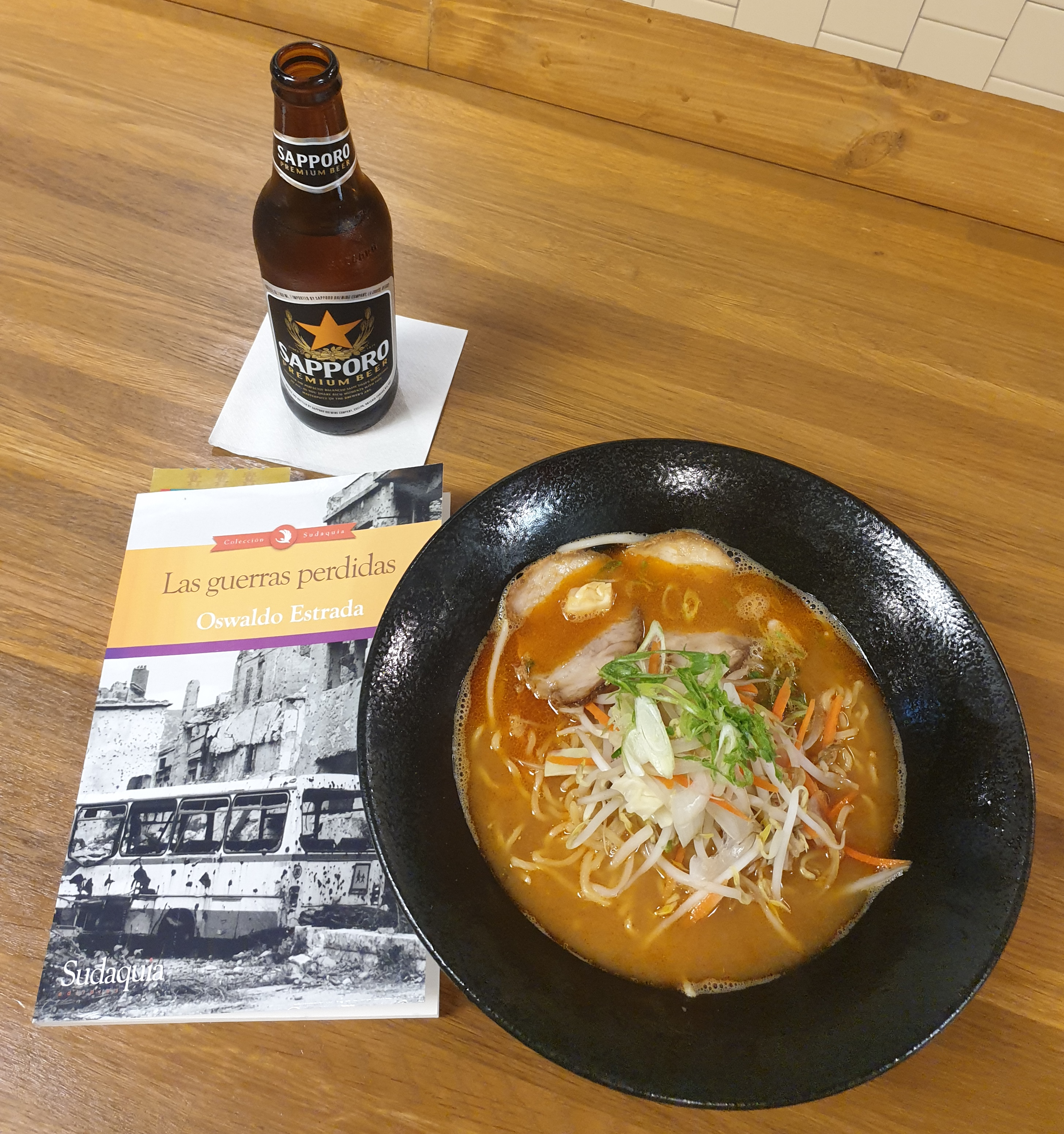
Las guerras perdidas is by Oswaldo Estrada, a dear friend and professor at UNC. Unfortunately, I never took any of his courses since our research interests did not match. Regardless, we became good friends. Last year on a weekend trip to Chapel Hill he even hosted a tapas dinner for me. His bittersweet short stories about loss and pain are beautifully written, his prose is reminiscent of García Márquez “Y aunque te bañes y perfumes, siempre hueles a tristeza.” Estrada’s insight into the human condition is precise, but sweetly narrated, which makes for a wonderful read. Highly recommended, five stars, two thumbs up!
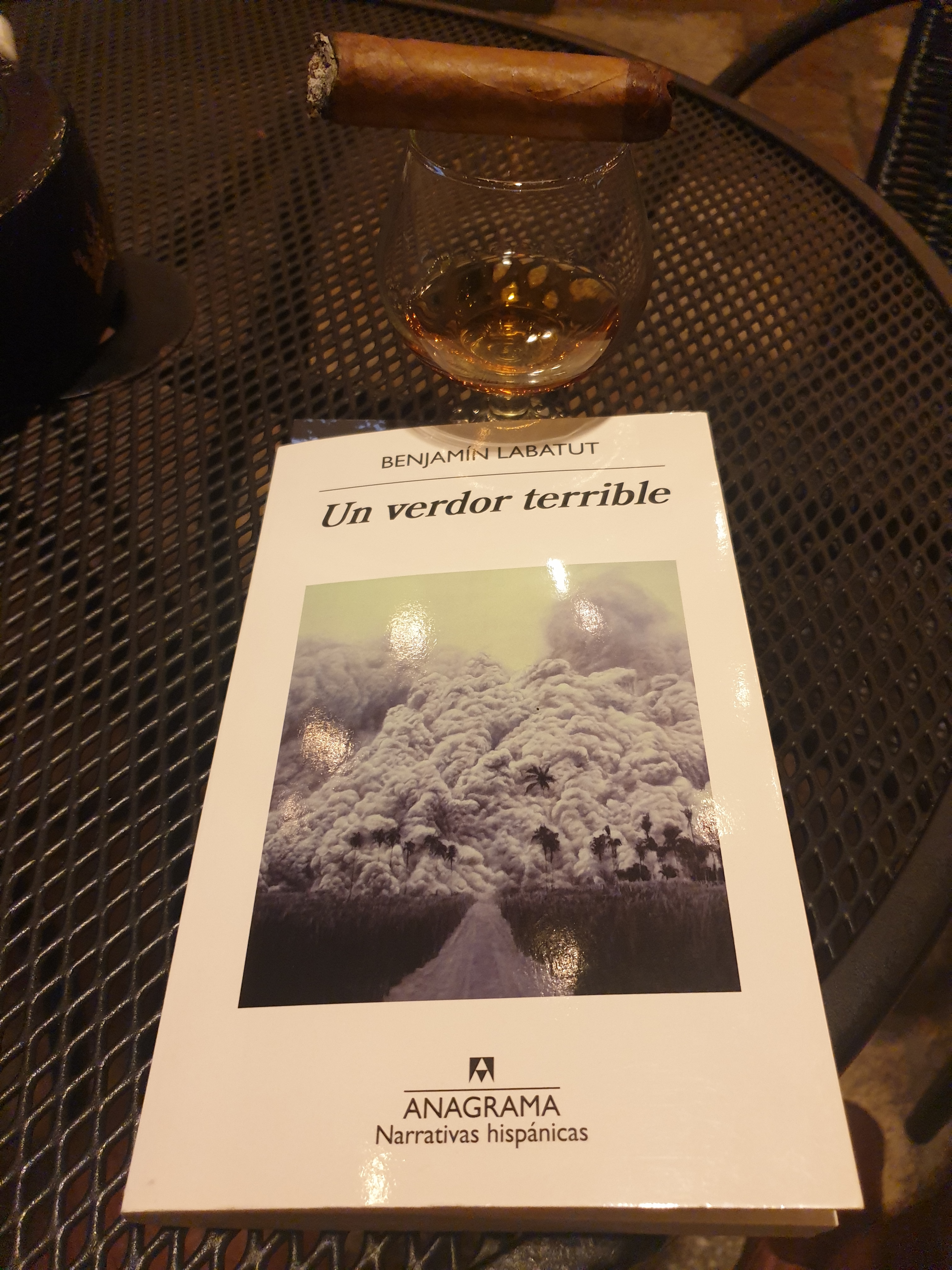
Chilean Benjamín Labatut writes Un verdor terrible (oh yes sorry, both books are in Spanish). Labatut focuses his stories on physicists and chemists, scientists and their discoveries during the first half of the XX C. These are deeply researched stories that mix fiction and history in unknown (to the reader) quantities. It makes for scary but rewarding reading, riveting.
If you like short stories and read Spanish, I recommend both of these books. You are welcome.
Please leave your comments and recommendations below!
This has been a very difficult semester from a teaching standpoint. I feel that my teaching capacity, ability and integrity has been questioned. So looking over stuff that I have written about teaching, I found these thoughts that I wrote last year to apply for a teaching conference (I later found out it is basically only available to All But Dissertation candidates, so I have to wait). At any rate, here it is:
It took a mid-life crisis for me to realize that my true calling in life was teaching. That was nine years ago, and I have not looked back since. Teaching, I discovered, is my passion, my raison d’être. Although I recognized my enthusiasm for literature when I read Hemingway and Borges in high school, it took me twenty-two years to learn what I wanted to do for the rest of my life: To return to the classroom as a teacher and to devote myself to work in a field about which I feel so strongly.
Sharing is what motivates me. Sharing my knowledge, my culture, my language. My first full-time teaching experience was in a budget challenged district, where I confronted underperformance and violence. I had to press charges against one of my students for assault and battery (one of my dad’s journalist friends even wrote an article about the event – somewhat distorted, as journalists do), one of my best students was stabbed to death by her brother, who was then shot by the police instants before he tried to kill his other sister, dining room fights were de rigueur. Although I did not realize it at the time, these challenges, made me grow and mature. It was a baptism of fire of sorts and I was happy to pay my dues and earn my stripes. It also taught me what is really important as a teacher. From there I went to Walnut Hill, an independent upper school in suburban Boston (and the oldest independent arts high school in the US) where for five years I honed my craft and eventually led the Spanish Department. Before coming to UNC, seeking a challenge, I moved to Buckingham, Browne and Nichols, in Cambridge, an elite independent school with a rigorous curriculum. There I had the privilege of coaching soccer, fencing and tennis, of getting involved in Community Service, and even teaching a Senior Seminar on Spanish film.
In my first semester at UNC I found that teaching at the college level requires a more intense and in-depth approach. Due to their higher maturity and experience level, the students are more demanding academically. This calls for more preparation and sharp execution and delivery from the instructor. The students have a clear idea of what they want, they have been in school for over twelve years and our duty as educators is to deliver.
Hand in hand with good teaching, goes meaningful, practical, applied professional development. Ever since Walnut Hill sent me on a new teachers retreat organized by the Association of Independent Schools of New England (AISNE), I have been a strong supporter of learning and improving the craft. In this respect, my twenty years corporate and business experience came in handy, applying motivational techniques, mentoring and fostering teamwork. Another byproduct of my business experience is my devotion to Kaizen, the Japanese technique of continuous measurable improvement. In this vein, as a department in Walnut Hill, we mapped the full Modern Language curriculum, involved the students in year-end course improvement meetings, even held a Modern Language “Summit” inviting other academic and arts department heads as well as teachers from other schools to define and improve our department.
What little I know about being a good teacher I learnt from being a bad student. I was never a good student, so good teachers were very important in my schooldays. They marked my life, they made a difference. Going back to school as an adult for my Master’s and my PhD renewed my interest in teaching technique, what works and what does not.
Real learning happens from a place of wanting to learn, so a place of openness, of certain vulnerability. Getting the students to that place requires a relationship of trust, understanding and fairness, and that is what I build from day one in the classroom. First day of class I stand by the door – having memorized all students’ names from the roster photos – and greet by name and shake hands with every student. Then we go over the expectations for the class with a fine tooth comb, in English so there are no misunderstandings later. This avoids misunderstandings later on and sets the tone. From there comes a fine balance of fun and hard work. Showing up early to the classroom to chat with the students and set up a music video in Spanish for them as they walk into the room and settle down. At the end of the year when I informally ask them what they liked and disliked about the course, so many of them mention the Spanish music videos! Then there is the grammar. I always go over the grammar, which they should know by now, but just so I know that I have gone over it with them and they do not have the “oh I never learned that” line. And talking, everybody talks about what they are going to do over the weekends, and on Mondays everybody talks about what they did over the weekend. We talk and talk, about food, restaurants, sports, culture, whatever. Once we spent a whole class period talking about bullfighting, something that I am passionate about.
So basically, as much as we want to implement scientific approaches to language learning and teaching, and to a certain extent we can, the basis of teaching has to come from an organic need/want/desire to learn. Our jobs as teachers revolve around making that need happen. The motivated student must be kept motivated while the unmotivated student has to be inspired to want to learn. That is best done through building a relationship, it will rarely come from a book, or from a lecture, it will happen from a relationship.
Putting my money where my mouth (pen/keyboard) is, here is a video of me teaching Spanish 203 an intermediate level in the Fall of 2012, my first semester at UNC. (Yes, I do have a FERPA release form signed by every student.)



 Antonioyrocinante's Blog