-

-
Marco Pantani wearing his trademark bandana which is why he was called Il pirata.
-
-
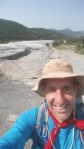
If you bring one thing on the Camino it has to be a hat. (That is a lovely magnesite factory outside Pamplona)
-
-
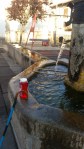
Keep your water bottle handy!
-
-
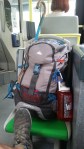
Do not put your backpack on seats.
-

-
You will usually find snacks at the top of tricky climbs!
-
-
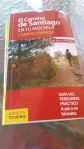
You do not really need a guidebook, you could just walk, but it was nice to be able to read about albergues and different spots.
-

-
My reading for the Camino
-
-
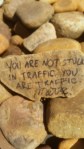
If you are creative carry a Sharpie.
-

-
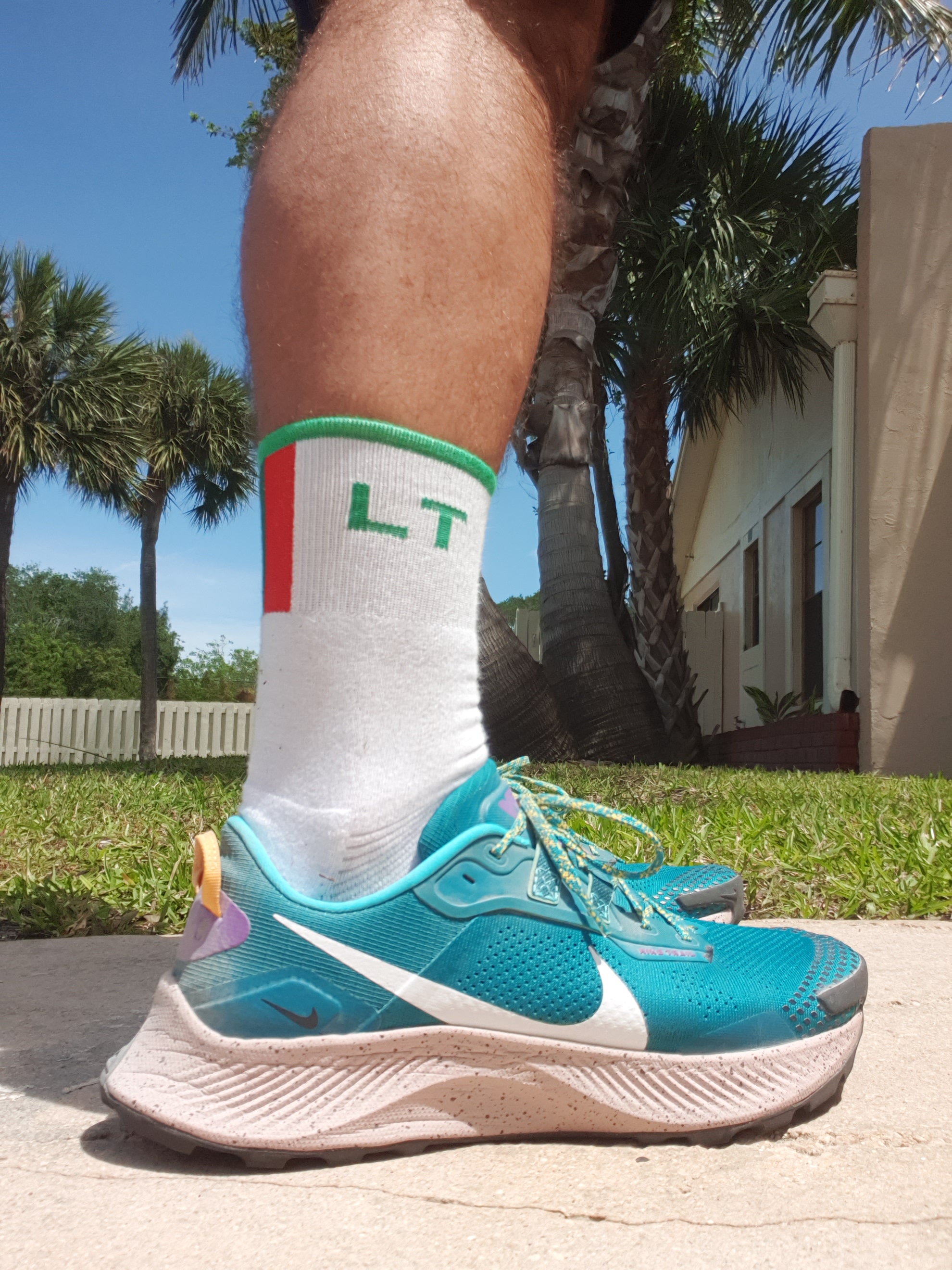
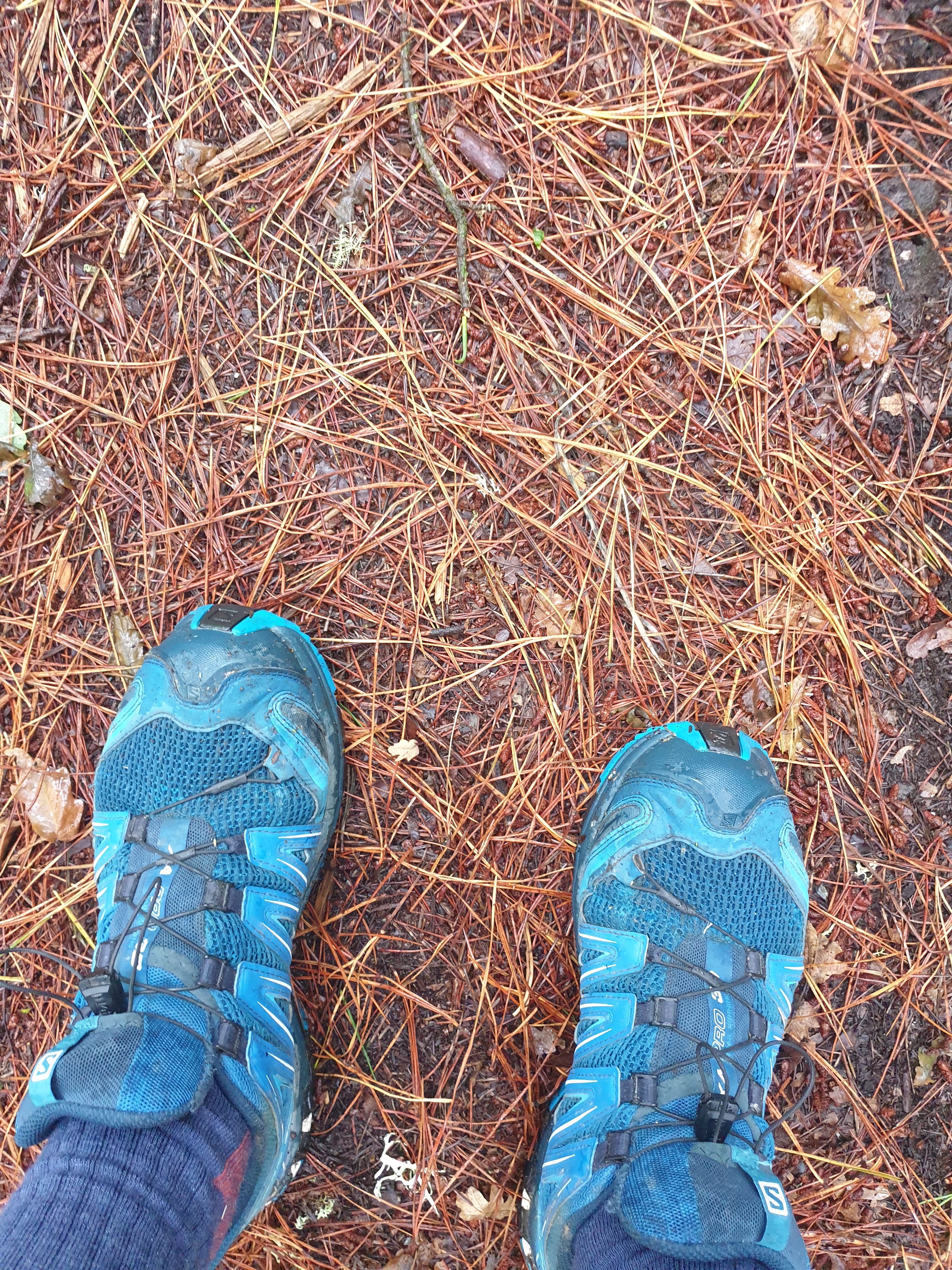
Good, broken in hiking shoes are fine for a Summer pilgrimage.
-

-
A diary/log/notebook is a great addition. Thanks Liz @ Surfland Bait and Tackle
-
-
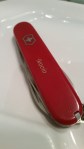
A pocket knife is obligatory for any good pilgrim. (Thanks for lending me yours, Rocky)
-
-
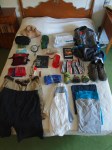
Make sure your pack is under 10 kg (20 lbs) or 10% of your body weight.
-
-
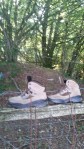
There are lots of abandoned boots, I wonder why???
-

-
A very handy pocket guide.
-

-
Bandanas are super useful, this was during a super strong early morning sun.
Many of my fans preparing for the Camino have asked me about my gear (ok, maybe just a couple of people). There are many Internet spots that explain what and how to pack, but here are my two cents, as Americans would say:
Walking 500 miles (give or take) in a month (give or take) carrying your backpack is an exercise in minimalism, physically, mentally and spiritually reducing clutter. By reducing stuff in your backpack, you also reduce it in your mental/spiritual backpack. I hope to soon be able to write about the emotional and mental process of the Camino. For now I will leave you with this quote from Richard Rohr, and write about the material gear that goes in your backpack.
The German Dominican mystic Meister Eckhart (c. 1260—c. 1328) preached, “God is not found in the soul by adding anything, but by a process of subtraction.” [2] But in the capitalistic West, we think very differently. We all keep trying to climb higher up the ladder of success in any form. We’ve turned the Gospel into a matter of addition instead of subtraction. All we can really do is get out-of-the-way. The spiritual life is often more about unlearning than learning, letting go of illusions more than studying the Bible or the catechism.
There are a few things to keep in mind when packing for the Camino: a. you are never more than a few hours away from civilization, with supermarkets, pharmacies, convenience stores, and anything else you might need. b. there are laundry facilities at all albergues, so you do not need to pack many clothes, and c. basically all you do on the Camino is walk, eat and sleep. Having said all that, this was my packing list:
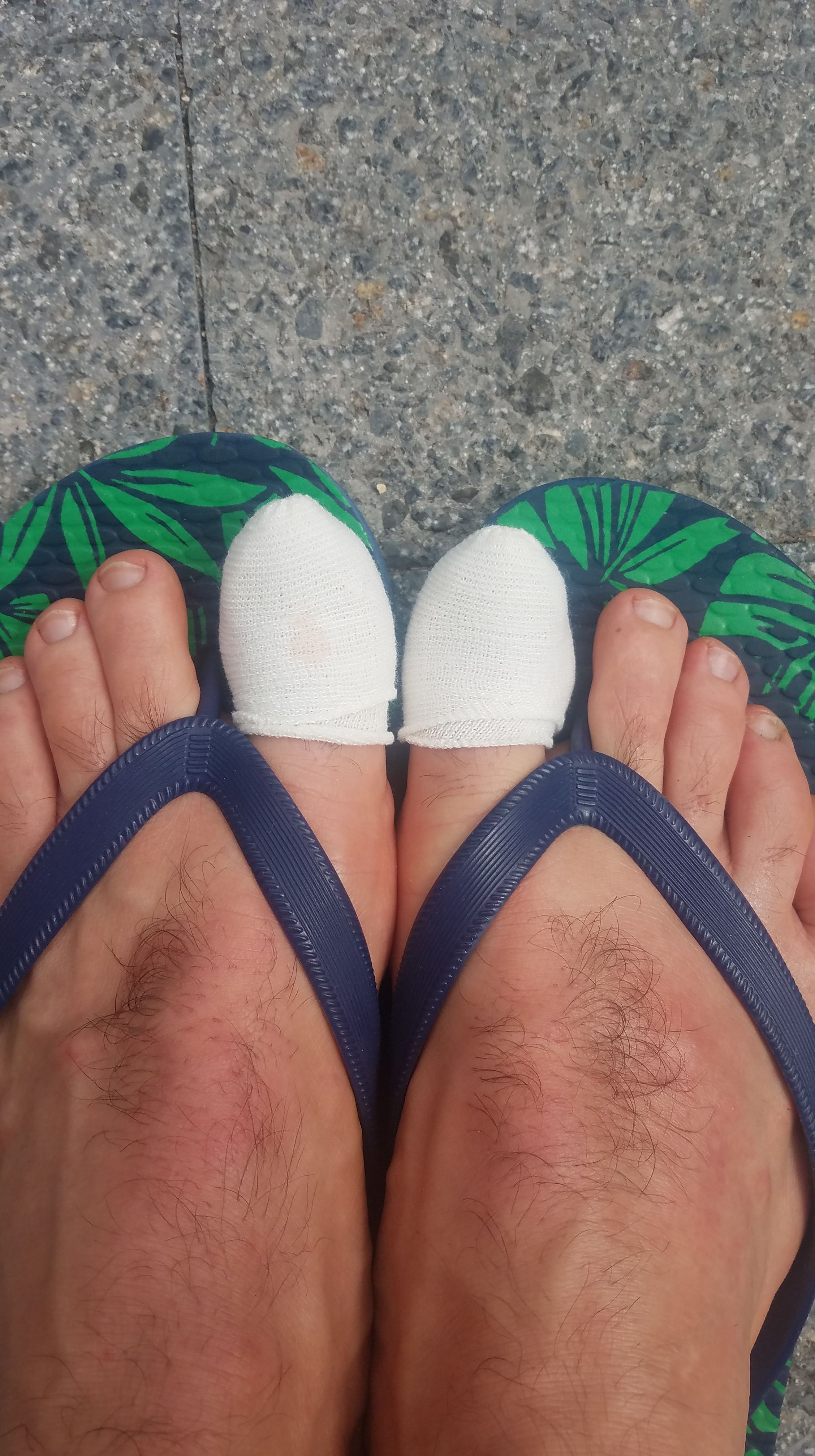
Shoes are probably the first thing to think of. If you are walking in the summer you do not need hiking boots. I saw plenty of people struggling with heavy hiking boots in the hot 30+ C° weather, plenty of abandoned boots, and plenty of feet like steak tartare. Good, broken in hiking shoes are perfect. Some people wear running sneakers, they are probably fine, although maybe a bit too lightweight for you and your pack, in my opinion. I packed a pair of cheap Flip-Flops for showering and a pair of water sandals for the apres-walking evenings.
You basically only need the clothes you are wearing and the ones that are washing/drying. Of course this depends on the season, but in the summer that means T-shirt, underwear, shorts and socks. As I mentioned before, as I am a snob, I carried three changes.
Since your feet are doing basically all the work on the Camino, and account for 25% of the bones in your body, you really should pamper them with the best socks you can get. Ideally hiking specific socks in a wool blend without seams. The higher up the leg they are, the less dust and grit is going to get into your feet.
Although everybody recommends hi-tech, moisture wicking, breathing fibers, for your T-shirts, I chose old school 100% cotton long sleeve shirts. The cotton because I am a snob and don’t like the feel of synthetic fibers, and the long sleeves because I also hate sunscreen and long sleeves meant I could avoid creams (and packing them).
For a second I considered athletic underwear, but ended up going with my Brooks Brothers boxer shorts. Some things just like hanging the way they always do!
I carried two cargo shorts. The side pocket was extremely handy for my guidebook/map as I used it constantly.
It was never too cold for me until the approach to Burgos. That day I wore two long sleeve shirts all day long. That evening I surrendered to the cold and bought a hooded sweatshirt at the souvenir shop, the only shop open in Burgos that day, as they were celebrating their festivities!
For my bald head I alternated bandanas (which I would tie around my neck in the morning) in different configurations depending on the sun: a la Marco Pantani, Il Pirata, or a la Tupac Shakur, and a “crunchy” boonie, or giggle hat that I could soak at fountains to keep me cool.
Unless you are going to camp or bivouac (which I saw plenty by the side of the Camino) you are going to sleep indoors, so a summer weight sleeping bag is fine. I chose to have one of my favorite cotton sheets folded in half (lengthwise, duh) and sown to create a sleeping bag. It might have been a bit heavier than the synthetic bags, but it was oh so comfy. Most albergues have blankets, so on cool nights I pulled a blanket over my sheet/bag. I did carry a pillowcase since the albergues all have pillows, in retrospect I could have used one of my three T-shirts.
Your minimal dopp kit with your bathroom supplies. I used Marseille soap – Jabón Lagarto – in Spain as I could use it for my laundry and my body, and my bald head, hahaha!
A lot of thought was given to what to read on the Camino, something meaningful but light. The library at the albergue in Roncesvalles, the first stop, is full of donated/abandoned Bibles… I ended up choosing The Book of Job and I do not regret it. I did finish it early and donated it to the Convent of Saint Claire where I was staying at Carrión de los Condes. I also packed a notebook and writing material to keep a diary and a daily Scripture reading for inspiration. I carried two guidebooks: The Michelin Guide for quick reference on the go, and the Anaya “El Camino de Santiago en tu mochila” for more detailed reference.
Small flashlight – critical for reading and moving around the albergue after lights out. Mine has a wrist band which means I could hang it from the boards of the bunk above me, great for reading.
For towel I used a lightweight microfiber from Decathlon, it is not the most luxurious item, but it works. I must confess I was very jealous when James pulled out this exotic, gorgeous, printed Indian sheet. It is very refreshing to see flashes of glamour on the drab, technical, weight obsessed Camino equipment.
Water bottle, and make sure you have a comfortable, handy spot to carry it, I struggled carrying mine around in different locations until I settled on a hip strap. Although you are never too far from a fountain, there are a few long (over 10 km.) stretches without water. Also, you should always be drinking anyway, so even if you do not fill it up, always carry water. It is also handy to wash fruit, hands, etc. Some people carry water “bladders” but these seem tricky to fill up mid hike and are apparently expensive.
Basic first aid kit with whatever you think you might need – hopefully you will not use anything.
Bathing suit!
Trail mix, it is nice to have s snack without having to wait for the next bar.
Phone and charger.
Bug spray – I did not use it.
Sharpie, critical for marking stuff and writing on stones at mileposts.
Safety pins in case your clothes have not dried overnight and you need to “hang” them outside your pack.
Poncho that covers your backpack. Keep it handy in case of sudden storms.
Most albergues have laundry facilities for manual laundry. The bigger ones have washer/driers. Some of them will even treat you to detergent, so I packed a few of the liquid plastic pods in a zip-lock bag.
Pilgrims swear by the hiking sticks (that look like ski poles), I carried one of my dad’s old walking sticks that an old friend had given him. It was useful on technical climbs and descents and to poke at things.
Last, but not least a pocket knife is critical. You might only use it to make bocadillos, but it is always handy to have. I found an old Swiss Army knife that I had given my little sister years ago and that for some reason was in my dad’s desk drawer.
Buen Camino!



 Antonioyrocinante's Blog