PhD year two, check.

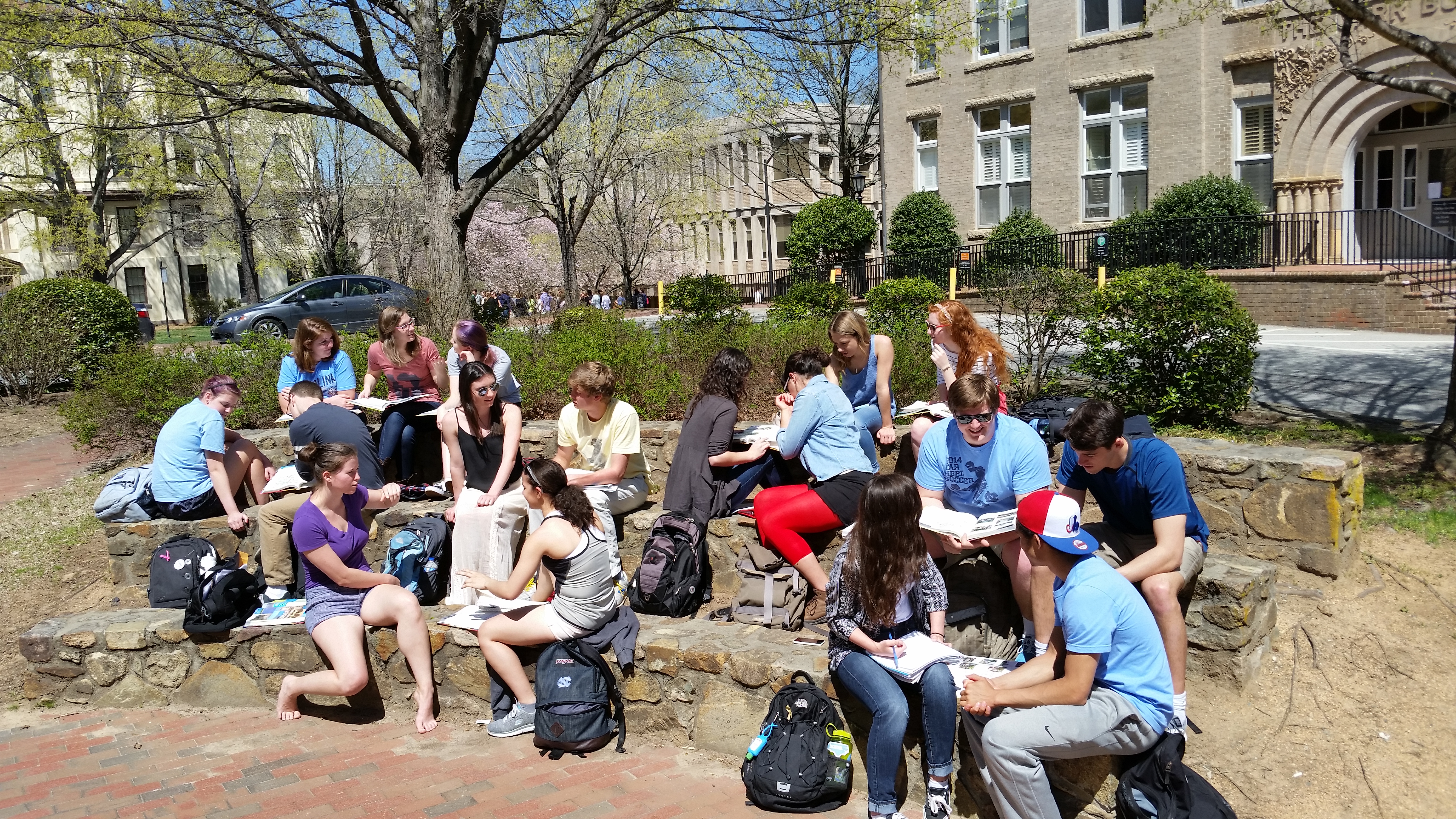
Graham Memorial, a great place to read.

Graham Memorial, a great place to read.

Wilson Library Reading Room

Wilson Library Reading Room

On the porch

On the porch

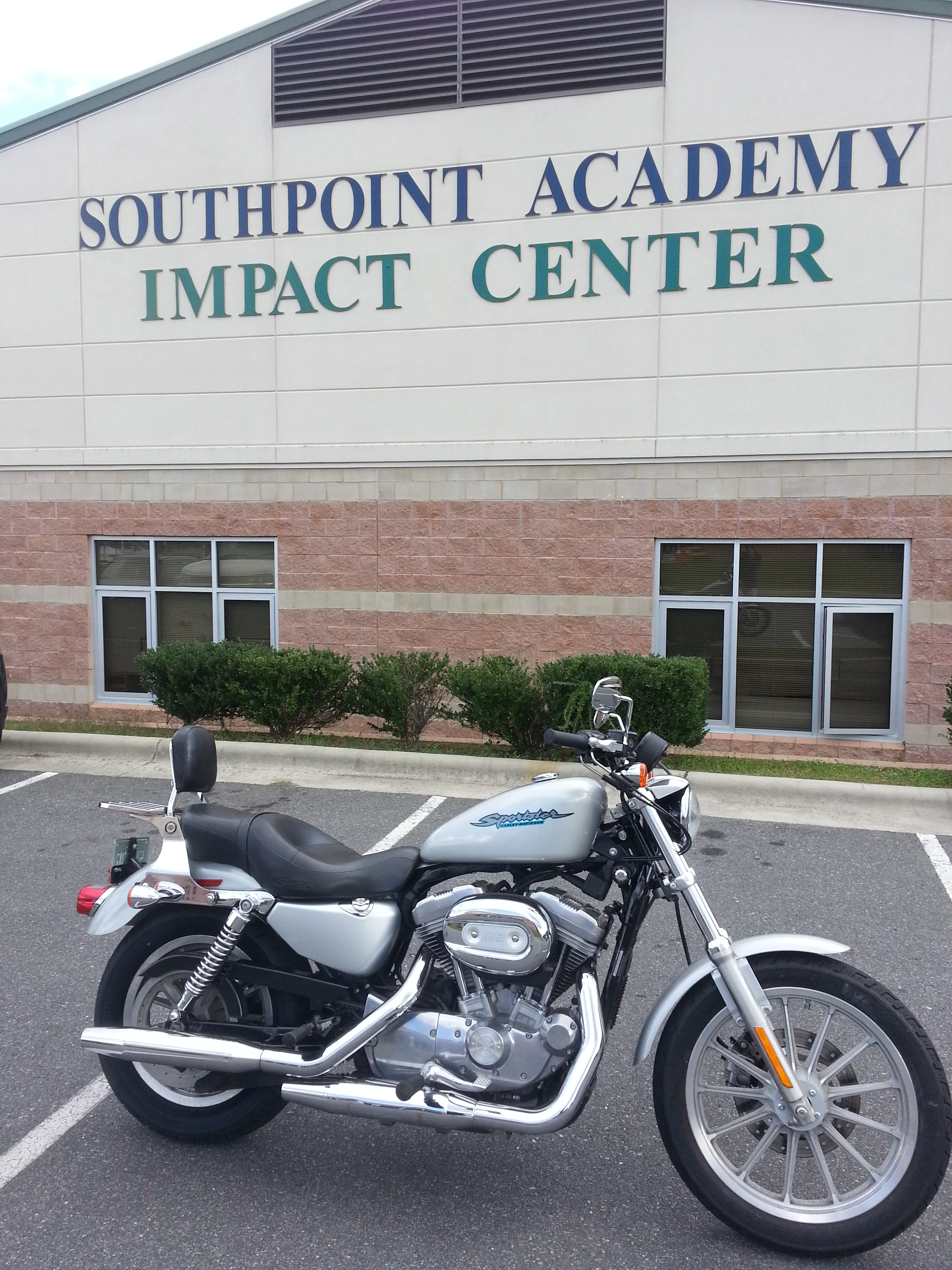
Even in the Harley dealership

Even in the Harley dealership

Spring

Spring


Five Guys

Five Guys

And just like that my second year at UNC is finished. As with last year, the academic schedule is so demanding that I did not have time to blog. This semester has had one theme and one theme only. My PhD qualifying exams. Every week since last semester I read, and read, and read. Every week I met with my incredibly patient professors to go over the readings, chat, and be quizzed. Spring Break was dedicated to reading, Martin Luther King Day was dedicated to reading. Although I have been reading for this exam for over the last two years, the pace for the last three months was intense, I read non-stop January, February, March and halfway through April.

For the oral exam, you are in a conference room with your three professors sitting around you. The first, very pointed question about the prologue of the Libro del Buen Amor threw me off kilter. I bungled through it best I could and from there the exam became a bit more conversational between the four of us. At some points during the exam, the three professors would get into a discussion about this or that, and I must admit it was really exciting to see them spar at such a level, it was very inspiring. My exam was at noon, right after I taught my Spanish for Business class. I had time to eat a sandwich and to make espresso for myself – and to treat my committee to, which was nice. After being grilled for almost two hours – although it feels much longer, I passed my orals.

A week later, Holy Thursday in the afternoon, I received my written exam. In this exam each professor gives you two questions and you choose one question for each. Then you write, write, write for that afternoon and the next two days straight. It is grueling. Trying to coherently put on paper everything you have learnt over two years in sixty hours. Basically you eat, sleep and write and write and write.

Surprisingly and fortunately I passed both oral and written exams, with a rare High Pass on my Medieval written exam! The sense of depletion after the exams must be somewhat similar to post-partum depression. The shifting of gears, the changing of tempo, of lifestyle, is very peculiar as the pressure to read – although not entirely gone, not for at least two more years – is lifted and you have time to look around, smell the roses, watch a movie, take more time doing things that you have rushed over the last two years, like going to the gym, or even eating.

I did manage to squeeze in some great concerts: Wynton Marsalis, the Israel Philharmonic, the North Carolina Symphony, András Schiff played Bach’s Goldberg Variations, Yefim Bronfman’s Beethoven’s Piano Concerto #2, The English Concert Orchestra played Handel’s Theodora, The Carolina Ballet performed the obligatory Nutcracker, I saw Shakespeare’s Tempest, Mary Zimmerman’s hilarious Metamorphoses – both with a pool cut out in the proscenium!, Puccini’s Gianni Schicchi and it’s sequel Buoso’s Ghost by Michael Ching both performed by UNC Opera, all the UNC Baroque ensemble’s recitals. With the UNC Gearhead Club I went to see a Porsche exhibit at the Raleigh Museum of Art, that was fun.

The gearheads

The gearheads

20140125_135234

With my limited graduate student budget I only managed to discover a couple of new restaurants: a sushi place in Raleigh, an Indian place and Al’s Burger Joint, both in Chapel Hill. Another highlight was when my course coordinator gave me tickets for the Greek Festival in Raleigh, great food!

Other than those occasional outings my life was limited to working, the library, the gym, church, and the supermarket.

That is about it for my academic year. I received half a Summer Research Grant in order to do some research in Spain, so I will spend some time in musty Spanish libraries…

Here is the visible part of my work this year: the reading list

bibliografia firmada


On teaching and learning

This has been a very difficult semester from a teaching standpoint. I feel that my teaching capacity, ability and integrity has been questioned. So looking over stuff that I have written about teaching, I found these thoughts that I wrote last year to apply for a teaching conference (I later found out it is basically only available to All But Dissertation candidates, so I have to wait). At any rate, here it is:

It took a mid-life crisis for me to realize that my true calling in life was teaching. That was nine years ago, and I have not looked back since. Teaching, I discovered, is my passion, my raison d’être. Although I recognized my enthusiasm for literature when I read Hemingway and Borges in high school, it took me twenty-two years to learn what I wanted to do for the rest of my life: To return to the classroom as a teacher and to devote myself to work in a field about which I feel so strongly.

Sharing is what motivates me. Sharing my knowledge, my culture, my language. My first full-time teaching experience was in a budget challenged district, where I confronted underperformance and violence. I had to press charges against one of my students for assault and battery (one of my dad’s journalist friends even wrote an article about the event – somewhat distorted, as journalists do), one of my best students was stabbed to death by her brother, who was then shot by the police instants before he tried to kill his other sister, dining room fights were de rigueur. Although I did not realize it at the time, these challenges, made me grow and mature. It was a baptism of fire of sorts and I was happy to pay my dues and earn my stripes. It also taught me what is really important as a teacher. From there I went to Walnut Hill, an independent upper school in suburban Boston (and the oldest independent arts high school in the US) where for five years I honed my craft and eventually led the Spanish Department. Before coming to UNC, seeking a challenge, I moved to Buckingham, Browne and Nichols, in Cambridge, an elite independent school with a rigorous curriculum. There I had the privilege of coaching soccer, fencing and tennis, of getting involved in Community Service, and even teaching a Senior Seminar on Spanish film.

In my first semester at UNC I found that teaching at the college level requires a more intense and in-depth approach. Due to their higher maturity and experience level, the students are more demanding academically. This calls for more preparation and sharp execution and delivery from the instructor. The students have a clear idea of what they want, they have been in school for over twelve years and our duty as educators is to deliver.

Hand in hand with good teaching, goes meaningful, practical, applied professional development. Ever since Walnut Hill sent me on a new teachers retreat organized by the Association of Independent Schools of New England (AISNE), I have been a strong supporter of learning and improving the craft. In this respect, my twenty years corporate and business experience came in handy, applying motivational techniques, mentoring and fostering teamwork. Another byproduct of my business experience is my devotion to Kaizen, the Japanese technique of continuous measurable improvement. In this vein, as a department in Walnut Hill, we mapped the full Modern Language curriculum, involved the students in year-end course improvement meetings, even held a Modern Language “Summit” inviting other academic and arts department heads as well as teachers from other schools to define and improve our department.

What little I know about being a good teacher I learnt from being a bad student. I was never a good student, so good teachers were very important in my schooldays. They marked my life, they made a difference. Going back to school as an adult for my Master’s and my PhD renewed my interest in teaching technique, what works and what does not.

Real learning happens from a place of wanting to learn, so a place of openness, of certain vulnerability. Getting the students to that place requires a relationship of trust, understanding and fairness, and that is what I build from day one in the classroom. First day of class I stand by the door – having memorized all students’ names from the roster photos – and greet by name and shake hands with every student. Then we go over the expectations for the class with a fine tooth comb, in English so there are no misunderstandings later. This avoids misunderstandings later on and sets the tone. From there comes a fine balance of fun and hard work. Showing up early to the classroom to chat with the students and set up a music video in Spanish for them as they walk into the room and settle down. At the end of the year when I informally ask them what they liked and disliked about the course, so many of them mention the Spanish music videos! Then there is the grammar. I always go over the grammar, which they should know by now, but just so I know that I have gone over it with them and they do not have the “oh I never learned that” line. And talking, everybody talks about what they are going to do over the weekends, and on Mondays everybody talks about what they did over the weekend. We talk and talk, about food, restaurants, sports, culture, whatever. Once we spent a whole class period talking about bullfighting, something that I am passionate about.

So basically, as much as we want to implement scientific approaches to language learning and teaching, and to a certain extent we can, the basis of teaching has to come from an organic need/want/desire to learn. Our jobs as teachers revolve around making that need happen. The motivated student must be kept motivated while the unmotivated student has to be inspired to want to learn. That is best done through building a relationship, it will rarely come from a book, or from a lecture, it will happen from a relationship.

Putting my money where my mouth (pen/keyboard) is, here is a video of me teaching Spanish 203 an intermediate level in the Fall of 2012, my first semester at UNC. (Yes, I do have a FERPA release form signed by every student.)

Medieval Wild Women

That’s right. That is what I researched and wrote about last semester for my Medieval Spanish Literature class. No, these are not drunk girls on Spring Break in Fort Lauderdale, and they are not drunk girls in New Orleans’ Mardi Gras. Philistines, lack of academic rigor… If you want to know about them, you will have to read on,

Having taken only one class this last semester, I only have one essay to show. As usual, remember that this is a rough, rough draft, so use at your own discretion and remember to cite. This work has not been published in a peer reviewed journal, or in any journal, for that matter. I hope you like it, as I did put an awful amount of work into it. If you do like it please comment, if you do not like it, I do not need reminding what a hack I am, thank you very much.

oh, BTW it is all written in Spanish.

Serranas Marcela puente

My Madrid

Defensor del pueblo

Defensor del pueblo

La unión y el fenix

La unión y el fenix

20131230_102640

Angel caido

Angel caido

Café en el retiro

Café en el retiro

Castellana

Castellana

20140101_194322 20140101_202347 OLYMPUS DIGITAL CAMERAWith all the reading I have to do I only took ten days to visit my family in Madrid this Winter Break. I was happily busy with my parents, sisters, nieces and nephew, but a couple of times I managed to sneak out and walk around my Madrid, absorbing every sight, smell, sound and feeling. I love this city. While every city is unique in its personality and character, Madrid seems even more unique. This might be due to the fact that for centuries Madrid, although the capital of Spain since around 1561 was extremely isolated. It is not only the highest capital in Europe (667 m, 2,188 ft. above sea level), it is also terrifically well protected, surrounded as it is by mountains. It is also in the middle of nowhere. No harbor, no navigable river, sitting in the middle of a massive plateau. Unless you needed to visit the king, you really had no reason to go to Madrid. The name Castille does not come in vain. Of course it has Arab influences, and every type of cultural imprint since the Middle Ages, most notably the French influence of the Bourbon dynasty starting in 1713. So Madrid is a village in La Mancha, never mind the more or less 6 million inhabitants. But it is my home town.

But, what is a city but a collection of people at any given moment? Madrid is where you can find Medieval feudal noblemen (and their wannabes) – “Hello? We are in the 21st Century!” You want to shout as you shake them by their tweed lapels, to tattooed hipsters brewing their own beer and roasting their own coffee. You can find ladies dressed in couture next to punks who think we are still in the 80s. From Ferraris to ancient Seat 600s. From Arab inspired chickpea “cocido” stew to frozen yogurt, from blistering heat to snow and ice, Babies and old relics walking side by side, in the summer months this happens into well entered the night. It is these contrasts that make me love Madrid. In winter you can still find old ladies selling roasted chestnuts next to glossy shop windows, or a Chinese owned convenience store selling “bocadillos de chorizo” late, late at night.

Although most morning were devoted to walks with my dad, one morning I took my niece and nephew to the Retiro park where María roller skated while Jimmy skateboarded. It was chilly and we stopped for Cola-Cao – the Spanish brand of hot cocoa – and coffee in one of the bars around the park, it was a blast!

And the neighborhoods. I chat with my coffee shop owner (Felix) with my newspaper kiosk owner (Yague), with my cigar expert (José), with concierges, with the lottery sales lady, with shopkeepers I have known since I was a boy, with neighbors, with the bank employees, even the local cops.

A heartbreaking aspect of these visits is that I do not have enough time to visit everyone I would like to see. It is a delicate knit of family time, friend time, and some me time. I was lucky to visit with some friends and family, to walk around a bit and to catch a couple of interesting art exhibits near my parents’ home.

Although my visit to Madrid was short this time, I still had time to refresh and renew my love for this city I love so much.

Santander

Santander is one of the most beautiful cities in Spain. It sits just about in the middle of the North Shore of the Iberian Peninsula. It has a beautiful bay, harbor, beaches and old town. I had not been there in ages and I went to spend a wonderful weekend and visit an old friend. My family has a bit of a history with the city as my dad worked for the local bank for many years. My visit coincided with the local festivities, so there was a great atmosphere. I had a great weekend, visiting the lighthouse, the old town, enjoying great meals and drinks and the great views of the bay, watching the boat taxi cross the bay, as well as all the other boats crisscrossing around.

El Faro

El Faro

IMG_0910 IMG_0913

The sporting harbor

The sporting harbor

IMG_0916

El Barco Taxi - "La Pedreñera"

El Barco Taxi – “La Pedreñera”

Downtown

Downtown

IMG_0920

La Conveniente

La Conveniente

La Navata

La Navata is a tiny village outside Madrid, near the Sierra de Guadarrama mountains, where Hemingway’s For whom the Bell Tolls is set, the village is so small it is actually dependent of the bigger nearby village of Galapagar, home of Nobel Prize winning playwright Jacinto Benavente and of the current top bullfighter José Tomás. La Navata itself only has a train station, two bars, a kiosk, a hairdresser, a pharmacy, a small supermarket, and an old, small, stone chapel, San Antonio de La Navata.

My parents bought a weekend/summer house here in 1974, when I was 9 years old. In the early 80’s we added the second floor. If I have a home, this is it. This is my “happy place” where I take my mind when I need to relax. This is where most of my childhood memories were made. This is where I learned to ride motorcycles and to drive – my granddad Antonio patiently guiding me round and round the dirt garden, before we put in grass, in La Petra, our old Citroen 2CV. This is where I made my first and oldest friends, where I learned the little tennis I play, where I have done most of my stargazing, reading, bicycle riding, gardening, hiking and barbeques, where I kissed a girl for the first time (quite sloppy if you must know), where I started tinkering with all things mechanical – although mostly motorbikes, where hiking and skiing trips started, and where great summer (and I guess also winter) parties were hosted.

I used to come here for the weekends in winter, reading by the blazing fireplace, and spending the summer in the pool, the garden and the porch, going indoors only when absolutely necessary.

La Navata is about a fifteen minute drive from El Escorial, built by Phillip II, it houses a palace, monastery, school, mausoleum for all the Haubsburg and most Spanish  Bourbon kings, and one of the most important – and beautiful  – libraries, in the world.  Growing up I spent a lot of time in this place, walking around the palace, gardens, surrounding hills, and the town. I still spend a lot of time here, specially with my friend Patxi, with whom I founded the Asociación A. de Amantes del Escorial in the early 90s.

In 1992 I got a job at a photo equipment supplier near here and I lived in La Navata for about a year. It was a lot of fun, living in this big old house alone, cooking, reading by the fire, and going into Madrid for the weekends doing a reverse weekend commute!

IMG_0928

El Escorial

IMG_0903

The view during a bicylce ride

IMG_0935

Caf’é con leche at the clasico Marcelino bar, at 10 am they have barely opened!

SAMSUNG

Jacinto Benavente at Galapagar´s Plaza

OLYMPUS DIGITAL CAMERA

San Antonio de la Navata

Life in La Navata is very quiet. I start off with a refreshing wake-up swim in the pool, which makes breakfast a cool joy on the porch. Then there is a walk into the village to buy bread for the day, the newspapers and any other groceries, I stop at the bar for a nice café con leche. There are always chores and gardening and pool maintenance to be done before a pre lunch swim. After siesta things actually slow down even more in the heat of the afternoon and I can read, or hang out with the fam. Nowadays with my nephew and two nieces things are a bit more chaotic, but always fun. The afternoon swim is normally the longest one and then I have time to work out in my homemade gym, or run or go for a bicycle ride before dinner. After dinner we sit around, chat, enjoy a mojito made with old Cuban rum (which is unavailable in the US) and mint from the garden, or a gin tonic, or whatever we can  find, sometimes accompanied by a cigar.

Cities and Friends

Besides the enriching experience of teaching, the other benefit of being a teacher is the holidays it comes with. No, we don’t make bank, but not even French government employees get our kind of time off. So after unwinding in Chapel Hill and going on a nice ride with Rocinante (see previous posts) I jumped “the pond” to visit my family in Madrid.

I know I am not original when I say that cities are like people, at least my relationship with them is similar. My relationship with Madrid is that of an old friend and lover. We know each other’s dirty little secrets, but we respect each other like the old friends we are. So coming to Madrid is always special.

One of the first visits I do is to Patxi Navarro. A dear, dear friend from my financial services days. We share a twenty three year friendship. Together we founded the Asociacion A. de Amantes del Escorial since we are both passionate about that monastery/palace/school/village. It is always great to catch up and hear about his life. Another obligatory meeting is with Andrea, another dear college friend who has been there through thick and thin, we had a nice lunch at a neighbourhood “menu” restaurant. A third key friend and one that deserves extra credit when I see him is Felipe Pérez de Madrid, “Pipe”, “The Pipe”, as he is from Valencia. We had a quick coffee in between trains for him, just enough to make sure everything is ok and have a quick laugh. Gracias amigo.

After a few days in town, I was blessed with the visit of Mark Miller and Matthieu, two of my dearest, closest and best friends. We went to university together, Matthieu was a groomsman in my first wedding and Best Man at my second wedding, where Mark was the usher. I had not seen Matthieu since celebrating New Year’s ’08 in NY when Mark, the most gracious and generous host, arranged a spectacular party. Since he is in NY I have had the chance to see Mark more regularly, but not since moving to Chapel Hill.

We spent three days together, eating, walking around the city, drinking, smoking cigars, eating, walking around the city, drinking and smoking cigars. We had paella, roast lamb, jamón, tortilla, garlic shrimp, lots of tapas, wine and coffee. We went to my favorite places, including Del Diego where we met comedian Leo Harlem! It was fantastic to catch up, to share some of the secrets of my old friend Madrid with some of my other old friends, to have a good laugh, good discussions, reminisce and talk about our futures.

Besides the enriching experience of teaching, another benefit of being a teacher is meeting students that eventually become friends. Two days after Mark and Matthieu left, I reunited with Jenny whom I had not seen in a year and a half. Since she graduated from Walnut Hill and I went to see her dance at Mount Holyoke. She is spending the summer in Valencia and came to Madrid for the weekend. We had burgers at my favorite restaurant in Madrid, Alfredos Barbacoa and it was great to catch up, have a good laugh, a good discussion, reminisce and talk about our futures.

My visits to Madrid are few, far between and shorter than I would like them to be, so I never get to see all my friends and family. But one morning coffee I always have is with my godmother Isabel, “Isita”, she is brilliant, funny and wonderful and her advice is always spot on, prejudice free and caring. I love her.

So in one week in Madrid: I reunited with the city, the oldest of friends, I reunited with old, university friends and with new friends – and with my godmother.

Tapa

Tapa

Casa Botín

Casa Botín

Tapas

Tapas

Comedian Leo Harlem

Comedian Leo Harlem

Fernando jr. and Fernando del Diego

Fernando jr. and Fernando del Diego

Del Diego

Del Diego

Plaza Mayor

Plaza Mayor

Julieta en Alfredos

Julieta en Alfredos

Here is to friends, I salute you.

Photo creds: Mark Miller (except Julieta)

Granada

Olive trees in Antequera

Olive trees in Antequera

With Catherine

With Catherine

Snails

Snails

Backlit snails

Backlit snails

Cathedral

Cathedral

Santa Ana

Santa Ana

Casa San Juan de Dios

Casa San Juan de Dios

Santa Ana y Alhambra

Santa Ana y Alhambra

Old Granada

Old Granada

Walnut Hill 2010 Spain Trip reunion

Walnut Hill 2010 Spain Trip reunion

Sierra Nevada in the back

Sierra Nevada in the back

The last time I jumped on a train in Spain for some alone time was in 2010. A lot has happened since and I needed some time to be alone and enjoy this beautiful country. So I booked train tickets and I set off to Granada, the enchanted Moorish city of the South, home of Federico García Lorca, final resting place of Ferdinand and Isabel, inspiration for Washington Irving´s Tales of the Alhambra, and home to Europe´s Southernmost ski station, Sierra Nevada.

Some of the more noticeable changes in Spain in the last twenty years have been in infrastructure: Highways and railroads. Long gone are those creaky, smelly, shaking, trains, replaced by smooth, clean, and fast ones. The award winning Talgo technology – whereby the train “swings” in the turns allowing for a speedier, smoother ride now run on the high speed train rails. While not technically high speed, they do run quite fast. Making the Madrid to Granada trip in four hours where before eight would have been normal!

I love trains. I love enjoying the view while reading, listening to music or enjoying a nice cup of coffee. I love seeing the changes in the countryside as we speed along: now vines, now olive trees, now hills and rocky ridges. Tired and lazy I jumped into a cab for the five minute ride to the hotel. Right downtown, next to the beautiful Renaissance cathedral and the old Moorish town. The hotel, a 1920’s tile covered building has an old indoor patio.

I met up for dinner with Catherine Keller, a dear old student from my Walnut Hill days who is spending her summer in Granada with her Fordham University program. We went to the classic old Café Sevilla where we enjoyed great tapas and raciones – sharing plates. Including salmorejo (a concentrated type of gazpacho), and caracoles – snails!

Saturday morning, after a fabulous breakfast at the hotel, I hit the used book stores in the old part of town, and… Bingo! I found a trove of books that I needed for my reading list for my Ph.D. exam next Spring. The morning flew by while my bag grew heavier with books. Lunch was – as it should be – a leisurely affair, including, after coffee, a nice cigar and a Tanqueray Tonic while I continued reading my dear Fray Gerundioˡ. After a siesta it was time for vespers, as I knew I would not have time for mass on Sunday. I showed up at the beautiful Santa Ana church a while before mass, only to find that a wedding was finishing. It was all very beautiful, they had hired a four horse carriage, and the flowers in the church were delightful.

For dinner I met up with Catherine and Jenny – who I had seen in Madrid a few weeks ago, but was visiting Granada with her Mount Holyoke program from Valencia. So we had a mini Walnut Hill, 2010 Spain trip reunion with a lot of laughs.

Sunday morning, refreshed from my visit to old Granada, and with my bag a few pounds heavier, I jumped on the train back to Madrid.

Year one Ph.D.: Check

Well, that wraps up the first year of my Ph.D. program and of my course work. Now I “only” have to read until my eyes bleed for my exams next Spring. This semester was overall much better than the Winter term. I took three courses: Early Modern Spanish Women Writers, with Rosa Perelmuter – a luminary in the field, and an Independent Study on Medieval Narratives with the iconic Prof. Domínguez. For my third course I took 18th Century Spanish Lit. with Irene Gómez-Castellano – and it has changed my life. Not only did I learn about the Enlightenment (something that had been in the back of my mind since I read Voltaire’s Candide at the American School in London, and then reread often) and the Romantics, but I discovered Padre Isla, a fairly unknown Jesuit writer who wrote the “best seller” of the 18th Century: Fray Gerundio de Campazas. I also taught two sections of Spanish 203, an intermediate level class. I loved it! I had great kids and we had a great time, including the cockroach that climbed up a girl’s dress. Pobre Raquel!
The end of the term was extremely stressful. One is normally 100% occupied with schoolwork during the year, so having to take two exams, write three twenty page essays, give and correct about forty exams, plus all the end of the year wrap up stuff was beyond hectic. For a week I did not work out or shave! I hope that the first year of the Ph.D. program is the baptism by fire test, that it is the hardest to juggle all the work, because the end was no fun.
But it is over and with very positive results. Most importantly my dissertation seems to be coming into focus, writing about Padre Isla. My secondary/complementary writing list will be about Medieval satire with Prof, Domínguez and my Transatlantic list will be Colonial lit. with Rosa Perelmuter. This means that I have to come up with six reading lists. A primary reading list of twenty books for each list and about thirty secondary/theoretical lists for each topic. Total: give or take 150 books that I have to learn by next Spring to pass my exams, Gadzooks! Yikes!
Taking only three classes, I had time to volunteer at the Ronald McDonald House of Chapel Hill on Monday nights, and I worked at the Clinical Skills Center at the UNC Hospitals

teaching medical students Spanish. Both of these side ventures are a lot of fun and very rewarding and very much needed to clear my head and do something else for a while that is not just studying.
Conclusion: Overall it has been an incredible year and I have learnt much more than I ever expected or hoped. I’ve met some very interesting people, discovered a new town, been more culturally active than I expected, forged some nice relationships and I am slowly rebuilding my life. I’m very happy to be doing this, I love UNC and Chapel Hill.

Rocinante in North Carolina

Rocinante loves North Carolina! She loves the beautiful country roads, she loves taking me to discover barbecue restaurants and most importantly she loves riding in the winter!! (She also likes coming into the house when it is raining or when I leave Chapel Hill to come to Spain).

Sadly, since I walk to work, Rocinante and Helmut (the car) just sit on the driveway passing time, I might take them out once during the week to run an errand or to buy groceries. But on the weekends I make sure to go on a nice ride. Since Chapel Hill is really a glorified village we hit the back roads very soon, which means I have yet to get very far. Basically I have been discovering the myriad roads around Orange county and they are all beautiful.

In September I bought a bicycle. It is an old Schwinn road bike. The biggest bicycle retailer in the US happens to be Performance Bike

in Chapel Hill – who knew, right? aaaaand the husband of one of my colleagues happens to work there. They were having a charity fundraiser for MS so I bought it for $300 for the cause. I love it! She is aluminium with carbon fiber fork and seatstays. As they would say in old Boston, she is wicked fast. My last road bike was called the Millennium Falcon, so for now this one has the same name. I love going on rides on the country roads around Chapel Hill, although I have already managed two flat tires. I also use it to go to the gym or to specific events around campus. Normally I walk eight minutes to Dey Hall, so I do not really need to ride.