Stuff I struggle with: Posthumanism (and Transhumanism)

We recently explored AI for our Film Club theme, watching Fritz Lang’s seminal Metropolis (1927), Ridley Scott’s already classic Blade Runner, the more modern Her (2013) with the great Joaquin Phoenix, Scarlett Johansson’s voice, and finally Ex Machina (2014).

The main discussion, besides the fact that the common thread was that everybody wants to have sex with the robot, was the whole Posthumanism debate. This is something I have been pondering for a few years, specifically since I met Professor Francesca Ferrando, a leading voice in the field of Posthumanism, at a conference in 2024.

My main concern is the paradox, or rather, the oxymoron, of Humanism in a Posthuman world. I discussed this in relation to AI and Caravaggio here. This brings me full circle back to our original observation in Film Club that all our films boil down to Humanism.

I am obviously oversimplifying here, but the basic premise of Posthumanism is that humans coexist with non-humans to the point where humans are no longer the driving force on the planet, as it is overtaken by technology and ecology. The tricky bit is how do you define co-exist, and how to define non-human. Maybe, as a Humanist, I struggle with the labeling. Posthumanism just seems too apocalyptic, too alarmist. I know I should worry, but this made me think about the concept of Humanism, which was only made up, as a label, in the 19th century. Greek writers and philosophers did not realize they were humanists; they were just doing their thing. Even Renaissance humanists like Erasmus, Luis Vives, or Dante did not consider themselves humanists. Of course, the word Humanitas and the study of it existed, but the folks who studied it did not call themselves Humanists.

In conclusion, and I realize I am only —at best— scratching the surface of this argument, there is only Humanism, everything else is academic labels (which I wish I had invented: Posthuman, or Transhuman, and then written a book about).

Humanities, Caravaggio, and Artificial Intelligence.

Am I the only one who is sick and tired and bored of AI? And this nightmare has only just begun? Yes, let’s eradicate Cancer and streamline flight traffic, and all that good stuff, but do you really need an AI generated picture of whatever nonsense you think of? and you certainly do not need it for that high school or college essay. Sorry.

This comes to mind because AI is already everywhere we look, but also because as every cloud has a silver lining, folks are hungry, thirsty for meaning. The solution? more Humanities, more arts, music, theatre, literature, more stories, more narrative.

Everybody has an opinion on AI. Some more positive, like Spanish writer Irene Vallejo, who thinks AI will “push” us towards the Humanities, and some more pessimistic, like French philosopher Éric Sadin who wisely explains that AI will not generate new jobs -at any rate not enough to cover those lost to AI.

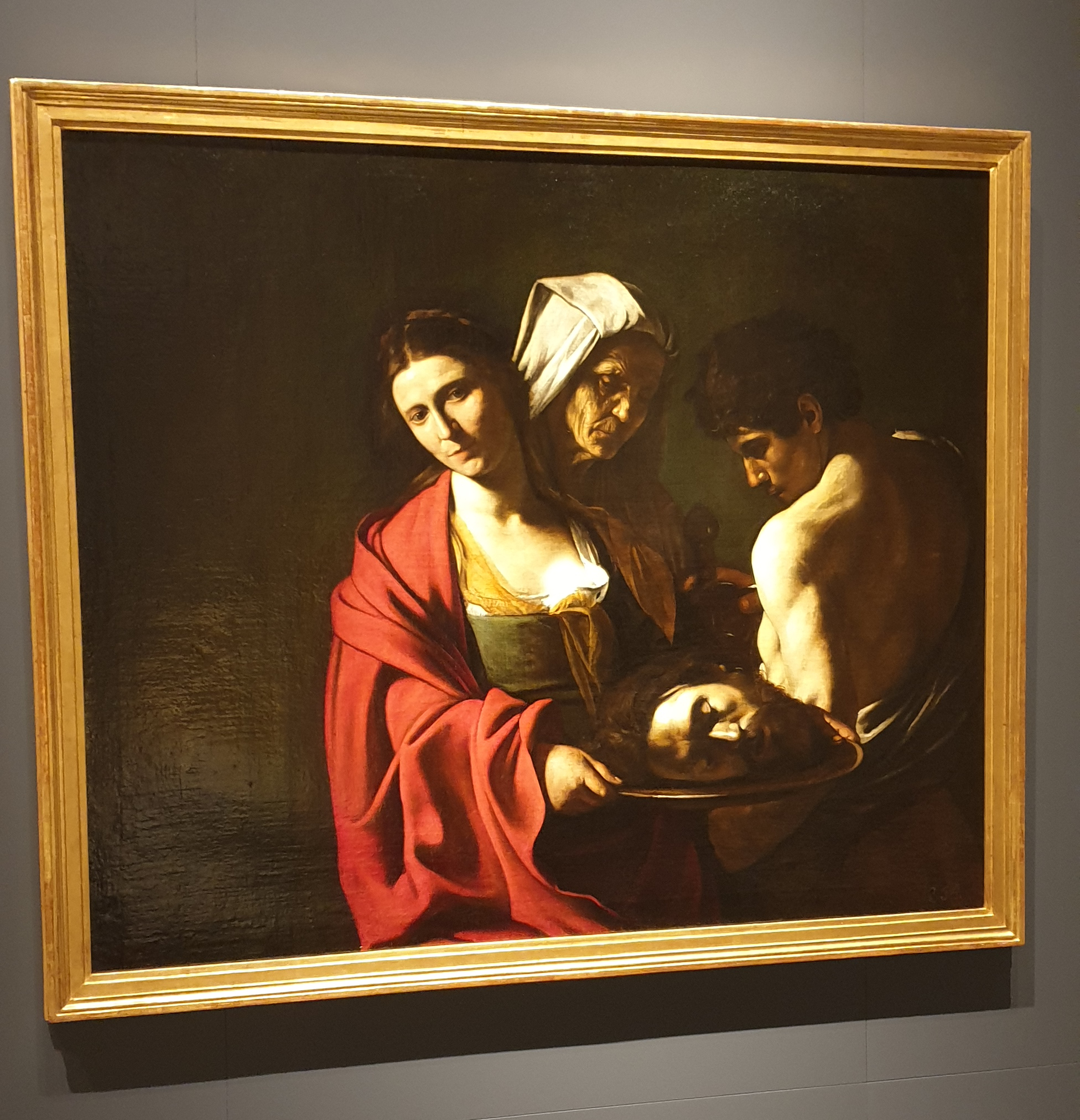
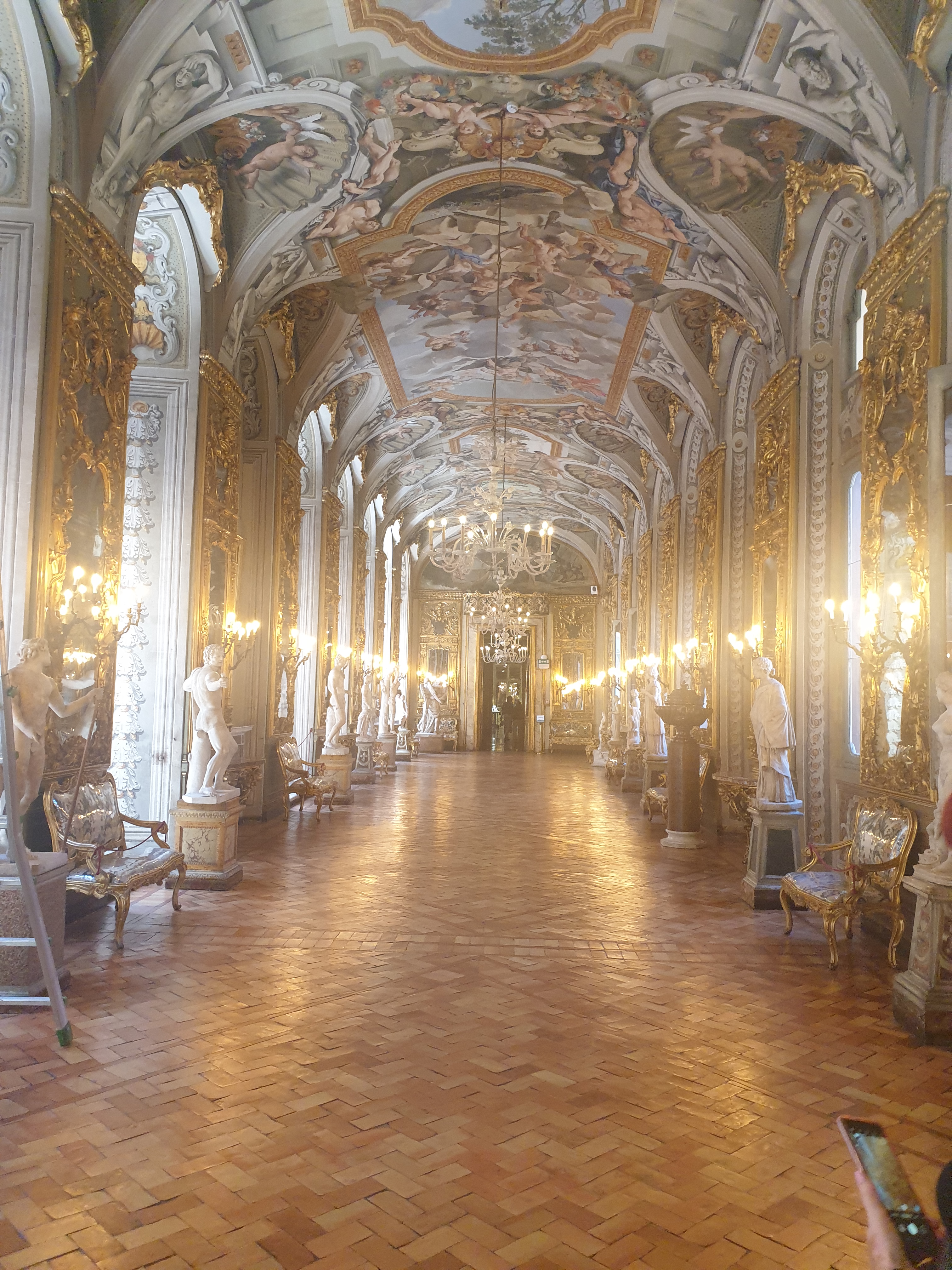
So what does Caravaggio have to do with all this? Well, I was thinking about AI when I unexpectedly “bumped” into a brilliant Caravaggio at the Colecciones Reales recently (read about that here) and I was so deeply moved, that I understood how art and the humanities are the antidote to AI. A few days later I saw two more Caravaggios at the Prado, including a lost one which was in the attic of a Madrid family. I then basked in the memory of other Caravaggios I had recently seen: one in the Cathedral of Toledo, and a couple at the Doria Pamphilj Gallery in Rome. The evidence was evident: AI can “paint” just like a Caravaggio with the amazing 3D effect and the chiaroscuro, but it will never be a Caravaggio.

Caravaggio only painted about 60 to 105 paintings, and the story each one tells, the drama, the humanity, is moving. You can see where each painting is on this Wikipedia page.

So, if you are hungry, thirsty for meaning, for purpose, for humanity, find a Caravaggio near you and go enjoy it. If you can’t find one, you can read a good book, watch a good film, listen to a symphony, etc. You are welcome!

Is technology making us more or less human?

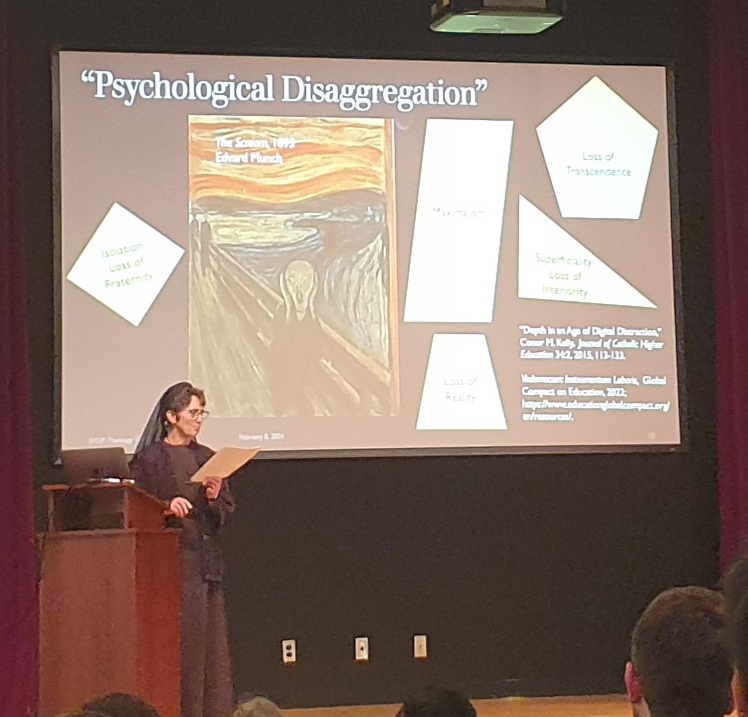
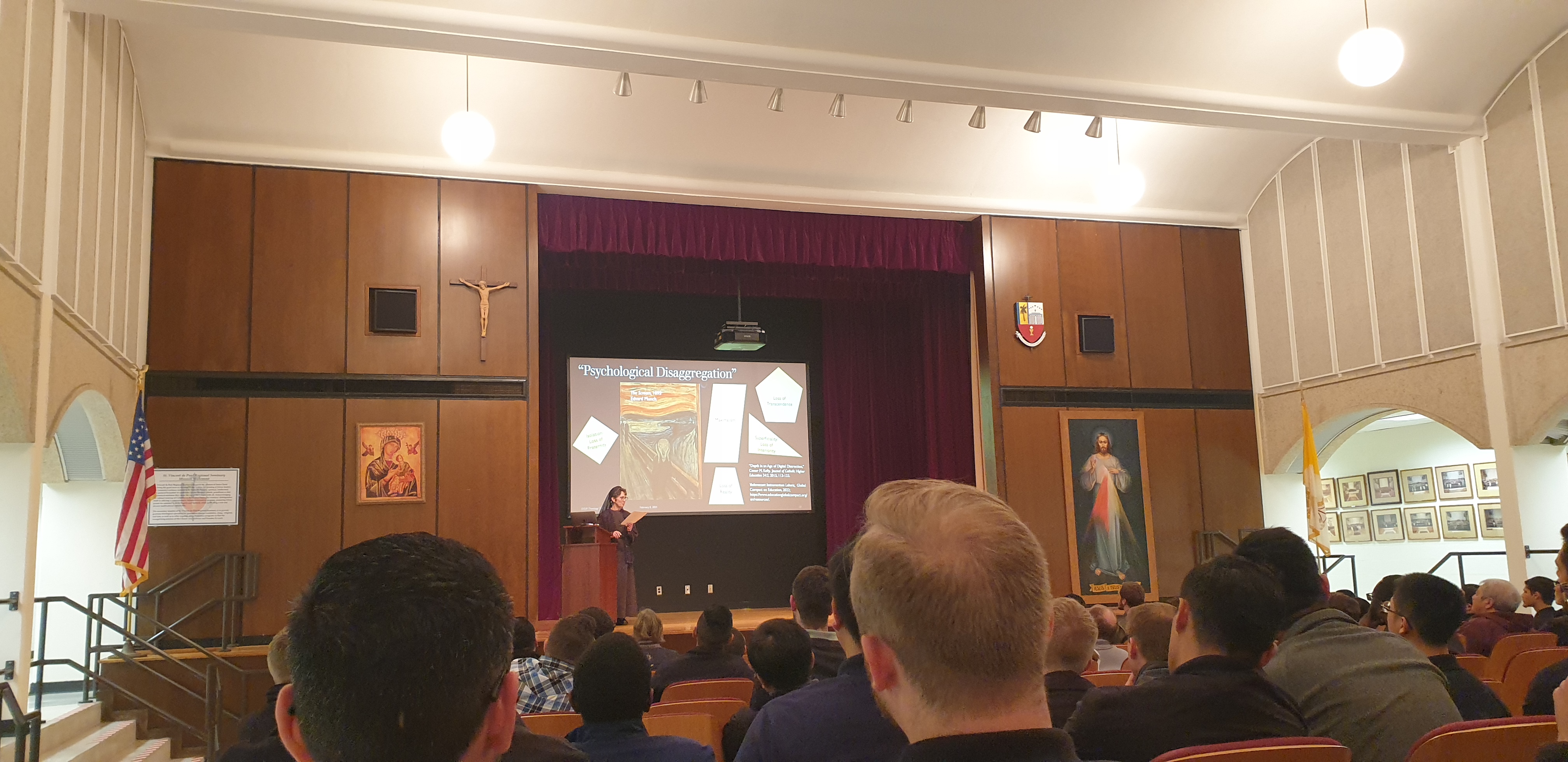
Sr. Damien Marie Savino FSE recently asked this question at a “Town and Gown” conference at school.

Of course, the question was answered before the conference even started. Yes, computers might, and probably will rule the world at some point (soon) to who knows what end. But that only underlines our humanity.

Sister Dr. Damien who is a Franciscan Sister of the Eucharist, the religious order that works in our school –although Sr. Damien is currently working at the U of Notre Dame in Indiana, had a well laid out presentation going over some key and necessary points such as Who we are not and Who we are. She made some cool references to paintings like The Song of the Lark by French naturalist artist Jules Breton (1884), as well as to Heidegger, CS Lewis, Pope Francis, Gaudi, etc.

To be frank, Chat GPT was launched (carelessly, I might add) in November of 2022 and I am already sick and tired of it, and it has only started, and it is only going to get more and more conspicuous. Oh well.

This is the video on Gaudí that Prof. Savino shared with us: