Confession time: I do not always understand modern art, it does not move me, it does not make me question anything, it does nothing for me -maybe giggle. Having said that, I do not agree with the “I could have done that”, “My toddler could have done that”, “A drunk monkey could have done that” variations. It does take some creativity to come up with the idea to make/paint something.
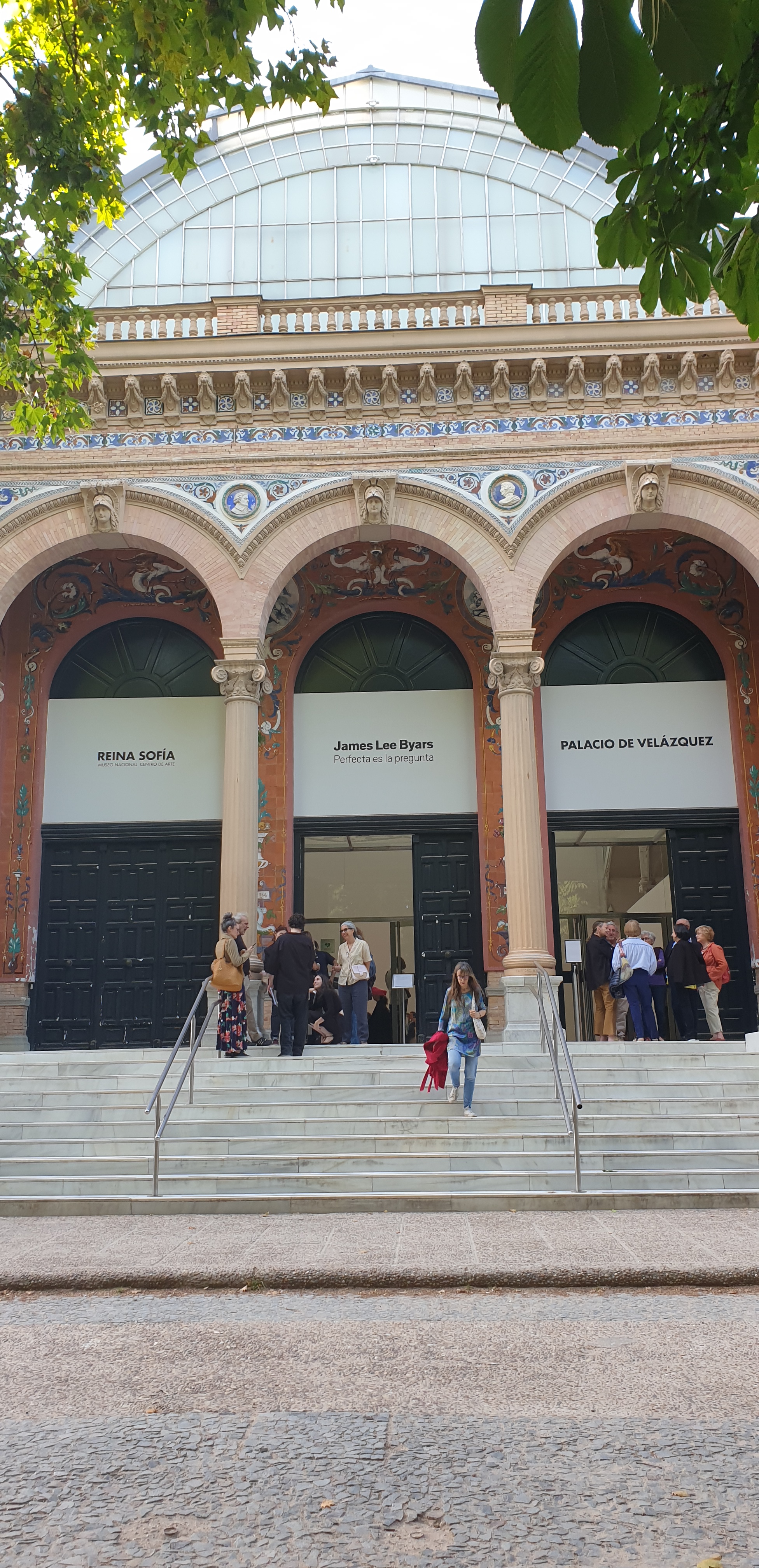
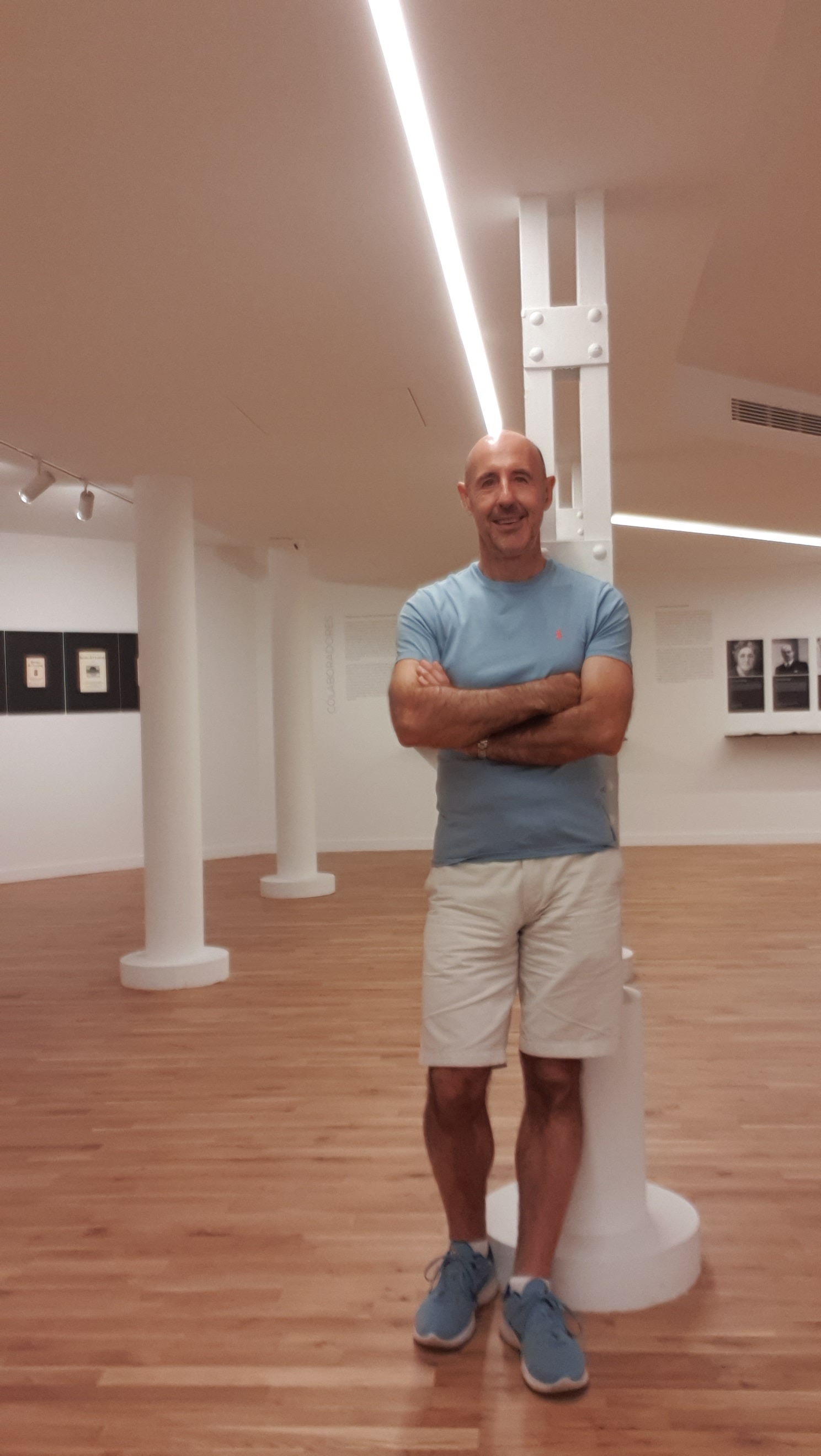
Walking around the Retiro park recently, Celia and I dropped by an exhibition at the beautiful Palacio (or Casa) Velazquez by renown modern artist James Lee Byars. Having just come from seeing the Colecciones Reales a few days earlier (check that our here), the contrast was, to say the least, amusing.
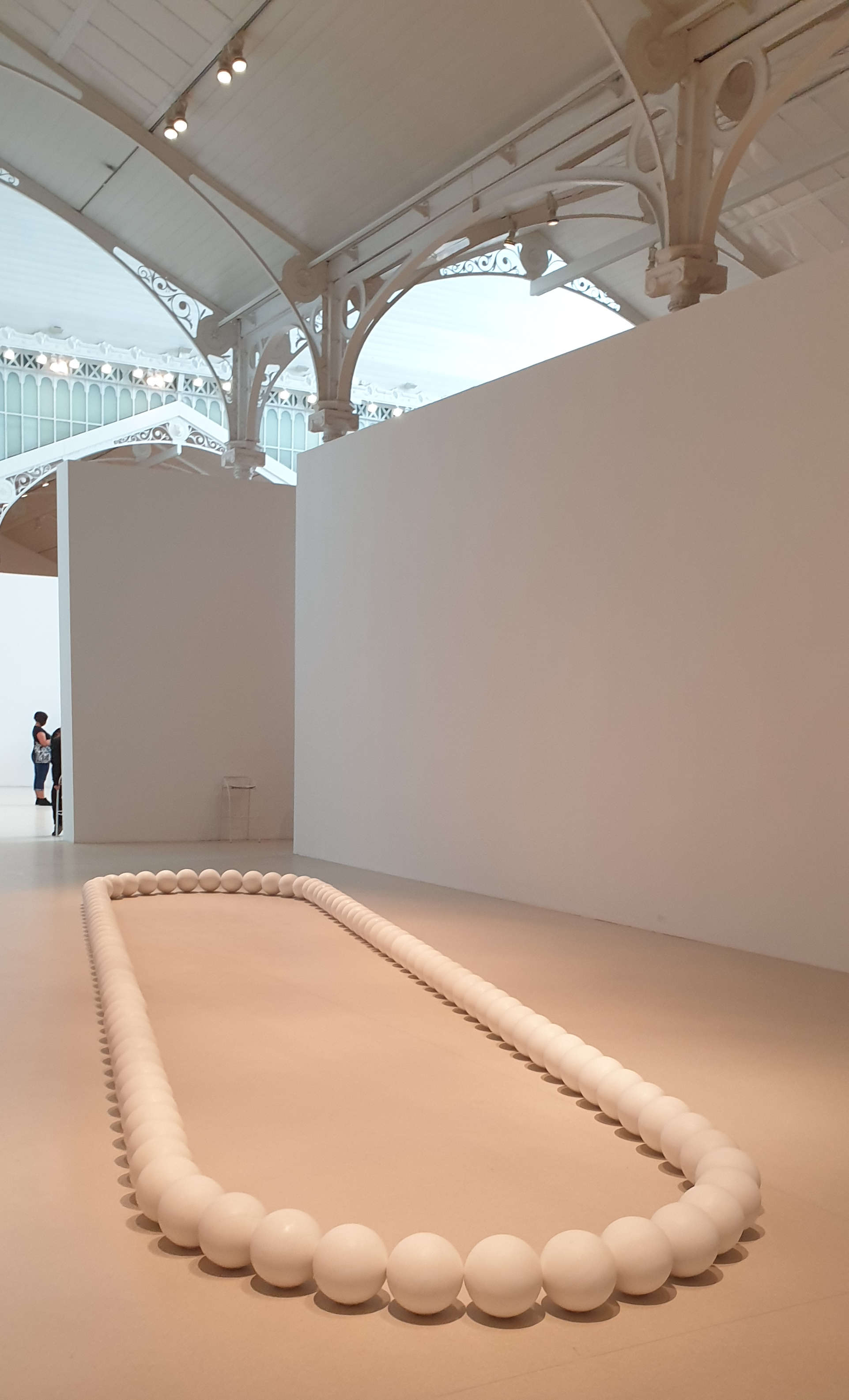
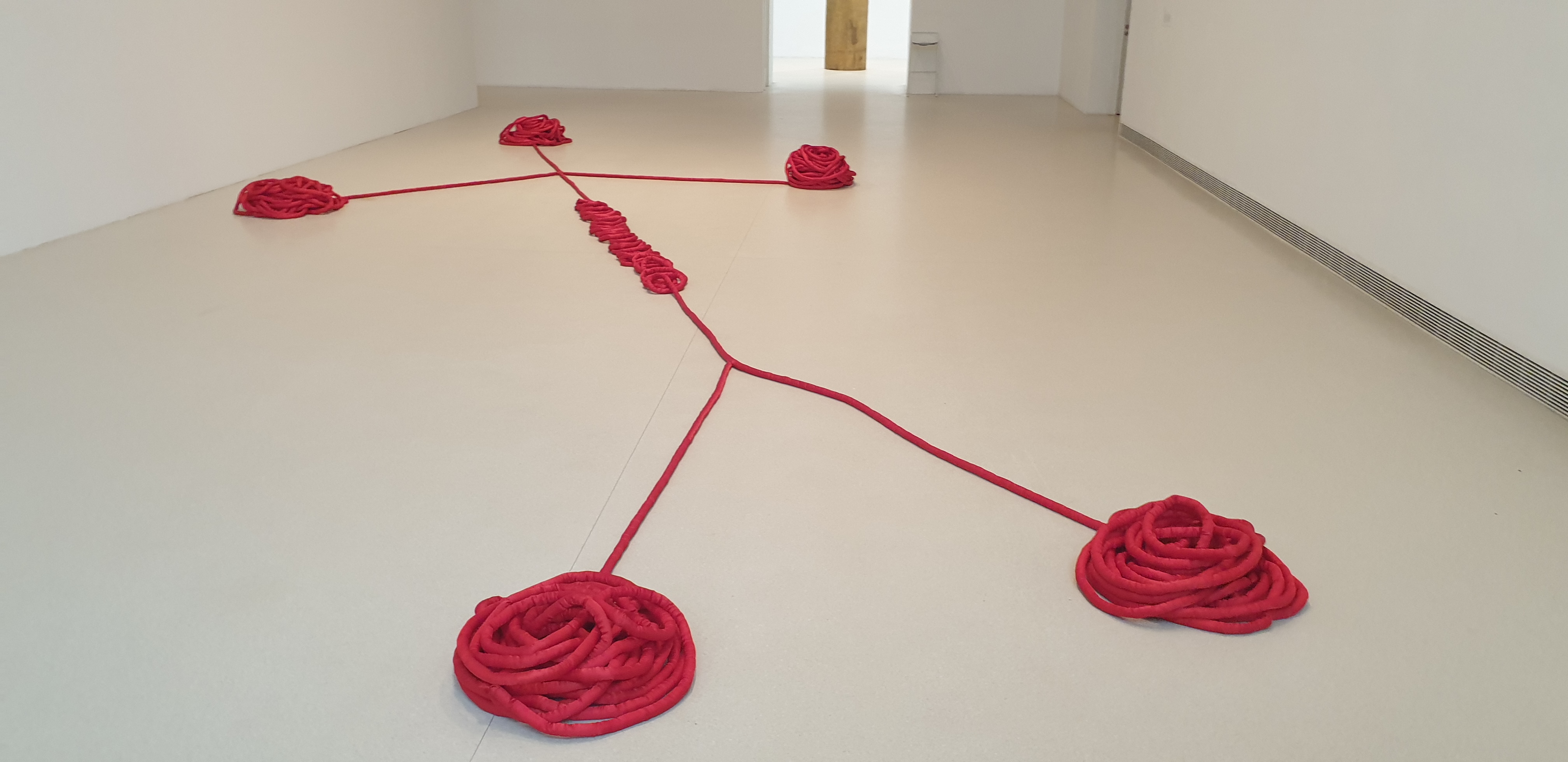
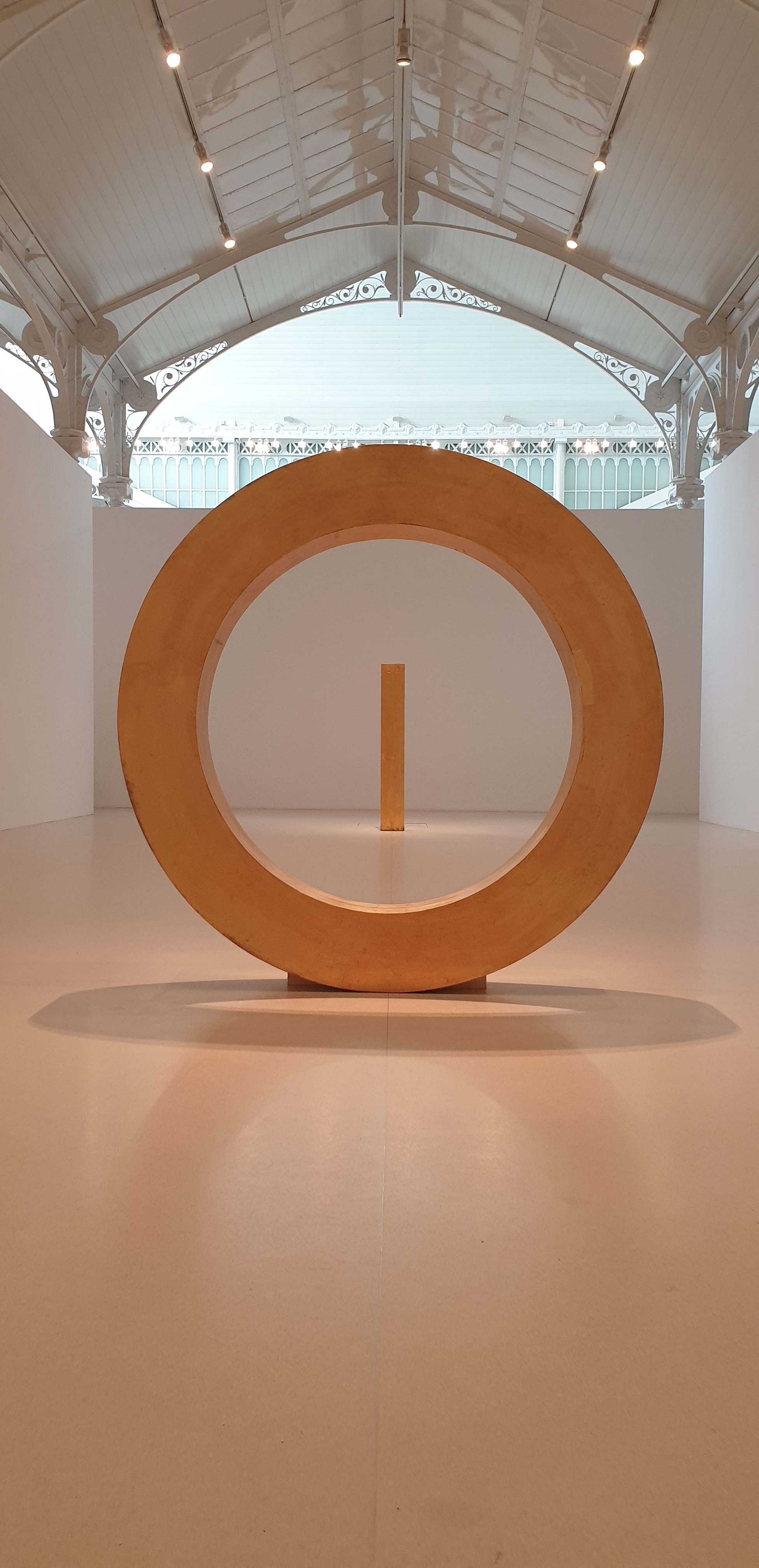
The show included fixed pieces, which ranged from interesting to outright questionable, (half a golden sphere, seriously?). More interesting were performance numbers with people walking around the gallery and performing different activities. I did stop by a fire extinguisher wondering if it was part of the exhibit or part of the emergency equipment of the building.
Did I miss anything? Please enlighten me in the comments below.
Am I the only one who is sick and tired and bored of AI? And this nightmare has only just begun? Yes, let’s eradicate Cancer and streamline flight traffic, and all that good stuff, but do you really need an AI generated picture of whatever nonsense you think of? and you certainly do not need it for that high school or college essay. Sorry.
This comes to mind because AI is already everywhere we look, but also because as every cloud has a silver lining, folks are hungry, thirsty for meaning. The solution? more Humanities, more arts, music, theatre, literature, more stories, more narrative.
Everybody has an opinion on AI. Some more positive, like Spanish writer Irene Vallejo, who thinks AI will “push” us towards the Humanities, and some more pessimistic, like French philosopher Éric Sadin who wisely explains that AI will not generate new jobs -at any rate not enough to cover those lost to AI.
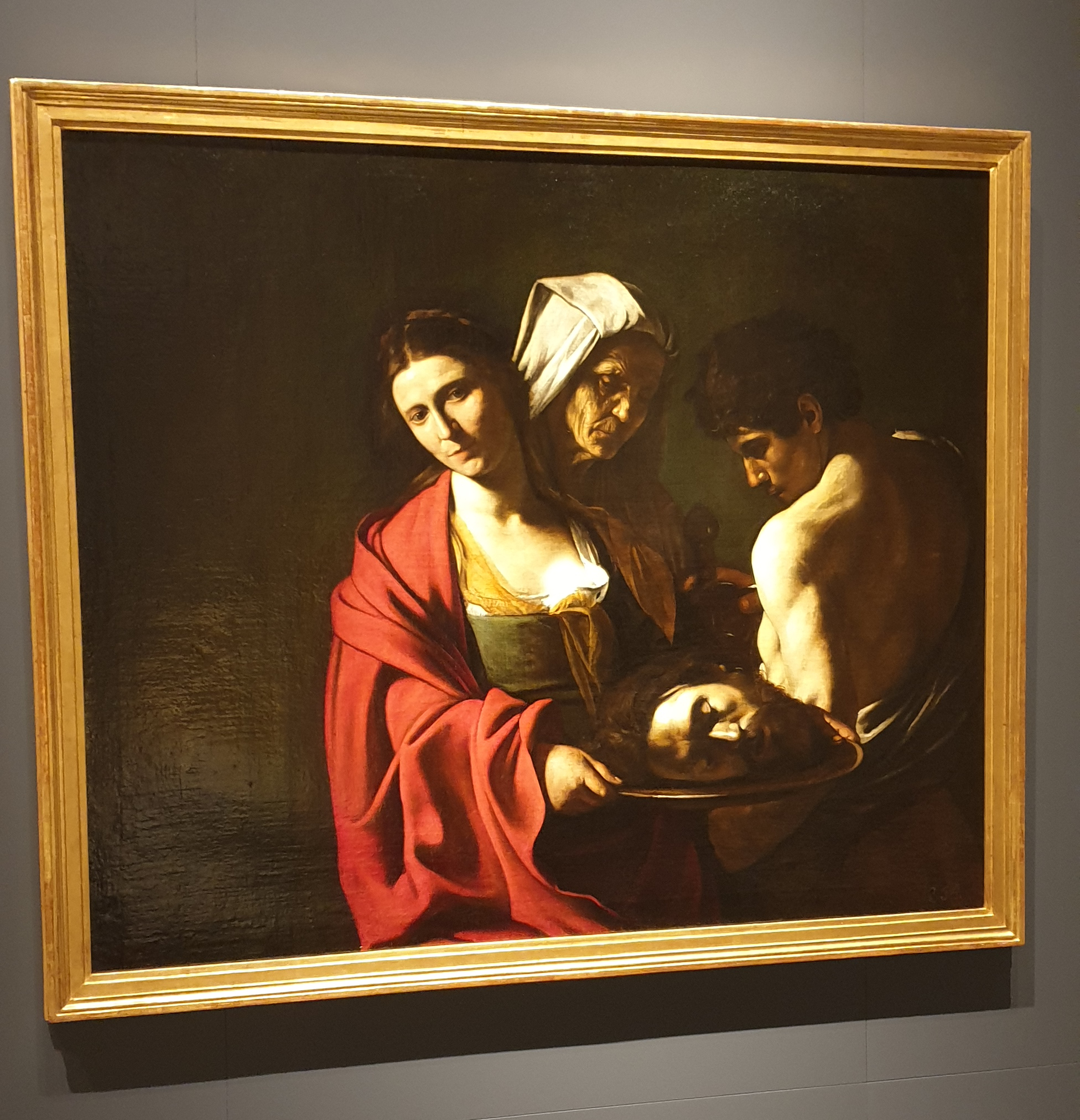
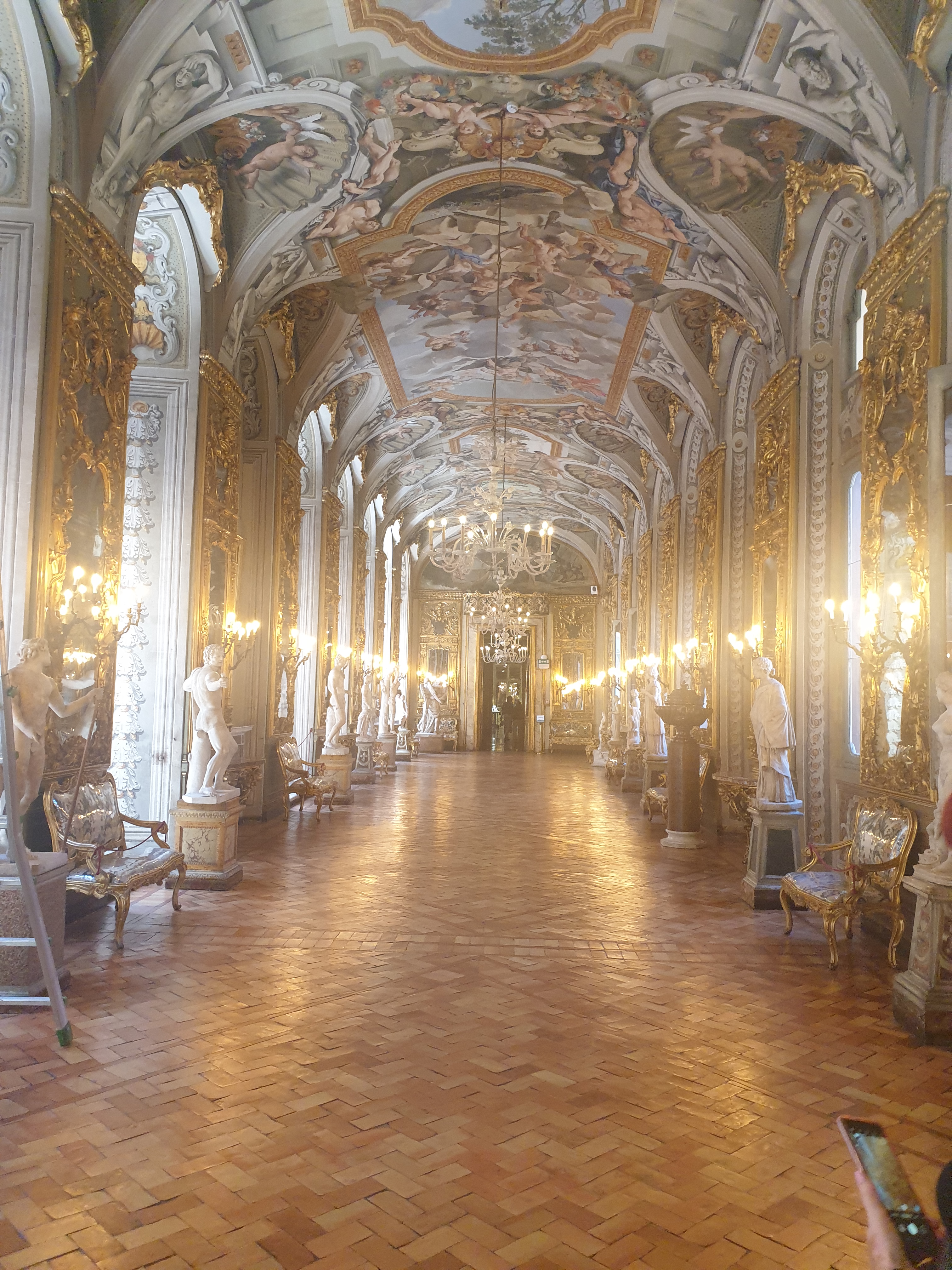
So what does Caravaggio have to do with all this? Well, I was thinking about AI when I unexpectedly “bumped” into a brilliant Caravaggio at the Colecciones Reales recently (read about that here) and I was so deeply moved, that I understood how art and the humanities are the antidote to AI. A few days later I saw two more Caravaggios at the Prado, including a lost one which was in the attic of a Madrid family. I then basked in the memory of other Caravaggios I had recently seen: one in the Cathedral of Toledo, and a couple at the Doria Pamphilj Gallery in Rome. The evidence was evident: AI can “paint” just like a Caravaggio with the amazing 3D effect and the chiaroscuro, but it will never be a Caravaggio.
Caravaggio only painted about 60 to 105 paintings, and the story each one tells, the drama, the humanity, is moving. You can see where each painting is on this Wikipedia page.
So, if you are hungry, thirsty for meaning, for purpose, for humanity, find a Caravaggio near you and go enjoy it. If you can’t find one, you can read a good book, watch a good film, listen to a symphony, etc. You are welcome!
Next year will be my professional Platinum anniversary, my 20th year teaching. During that time, I have instructed little kids from 7- to 10-year-olds -exhausting- to university. Basically, I have taught 10 years in secondary (high school) and 10 in university (those little kids were my boss’ and she asked me to go to their school to teach the Spanish classes, it was an amazing experience but I don’t have the patience). Each type of school has different pros and cons.
St. Vincent de Paul is a small school and I love many the advantages that brings:
Something I would never be able to do at a bigger school would be to teach and coach at the same time (other than at secondary schools, where many times you are required to coach), but I have already written about this (for example: here)
Every month we have a special birthday lunch when everyone that has a birthday that month, students, faculty, staff, is celebrated. The kitchen staff prepares a great lunch, and the Student Council prepares a video. I was recently cast in the birthday video, the last of the year, where the theme has been fighting the many iguanas we have on campus. (if you want to skip to my Oscar winning performance, go to minute 4:24 but you would miss a hilarious film and a great tour of school)
Another thing going on is that the students have started a podcast, and they recently invited me to participate. It is called In-Formation, and while it is an easy pun, it is very informative. You can listen to it here. It is an honor to follow an illustrious list of guests including the rector, a couple of students about to graduate, a bishop, etc. To listen to the podcast click below:
So, while there are drawbacks to working in small schools such as lack of diversity of students, fewer courses to teach, etc. I really enjoy the benefits of teaching at such a special small school.
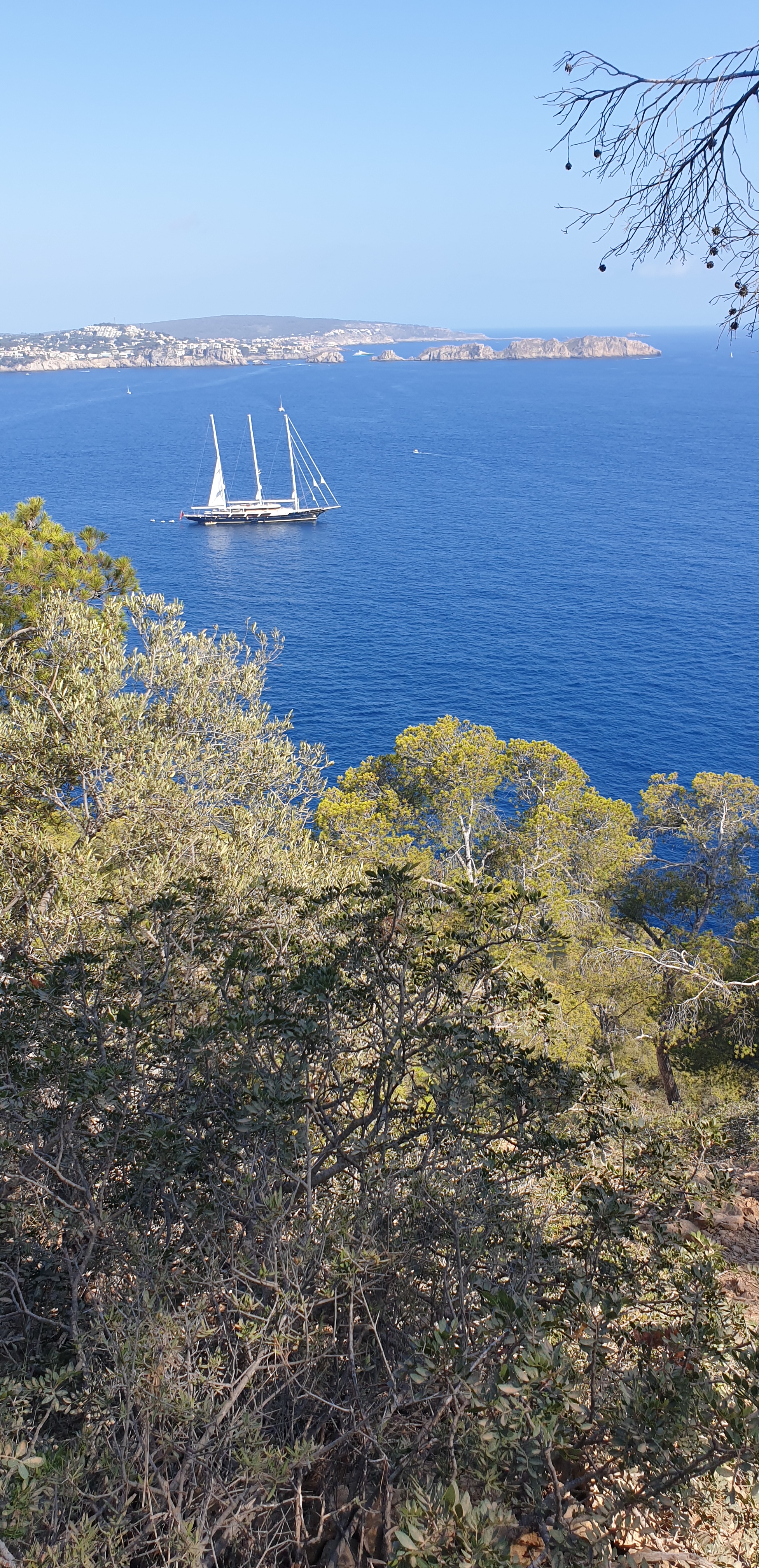
When the smell of the pine trees hits your nostrils, when the song of the cicadas hits your ears, and when the deep sapphire blue hits your eyes, then you will understand the origins of Greek philosophy, then you will understand Marc Anthony’s and Cleopatra’s passion, then you will understand Homer’s travels, Cavafy’s poetry, and then, and only then will you understand the Mediterranean.
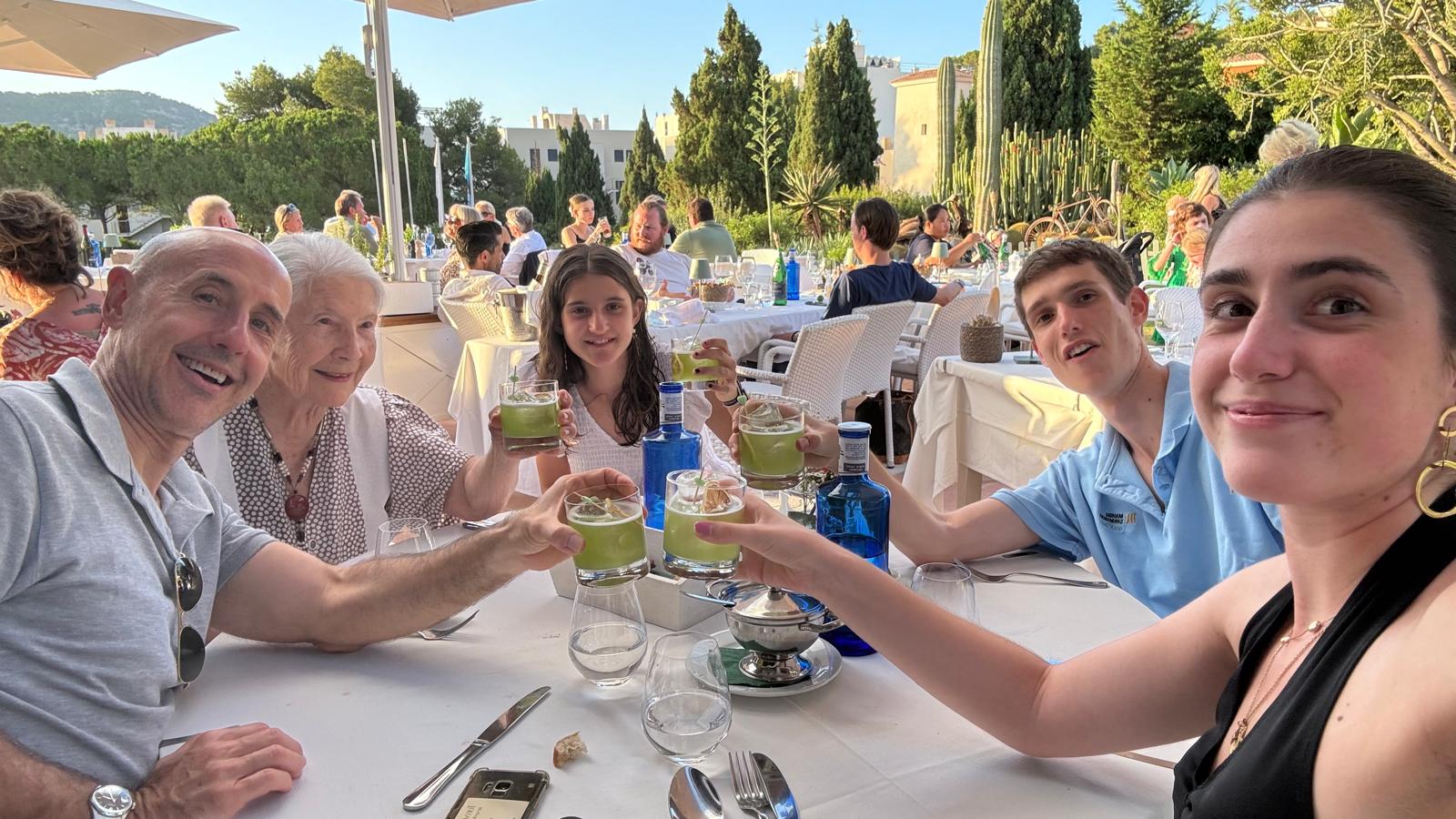
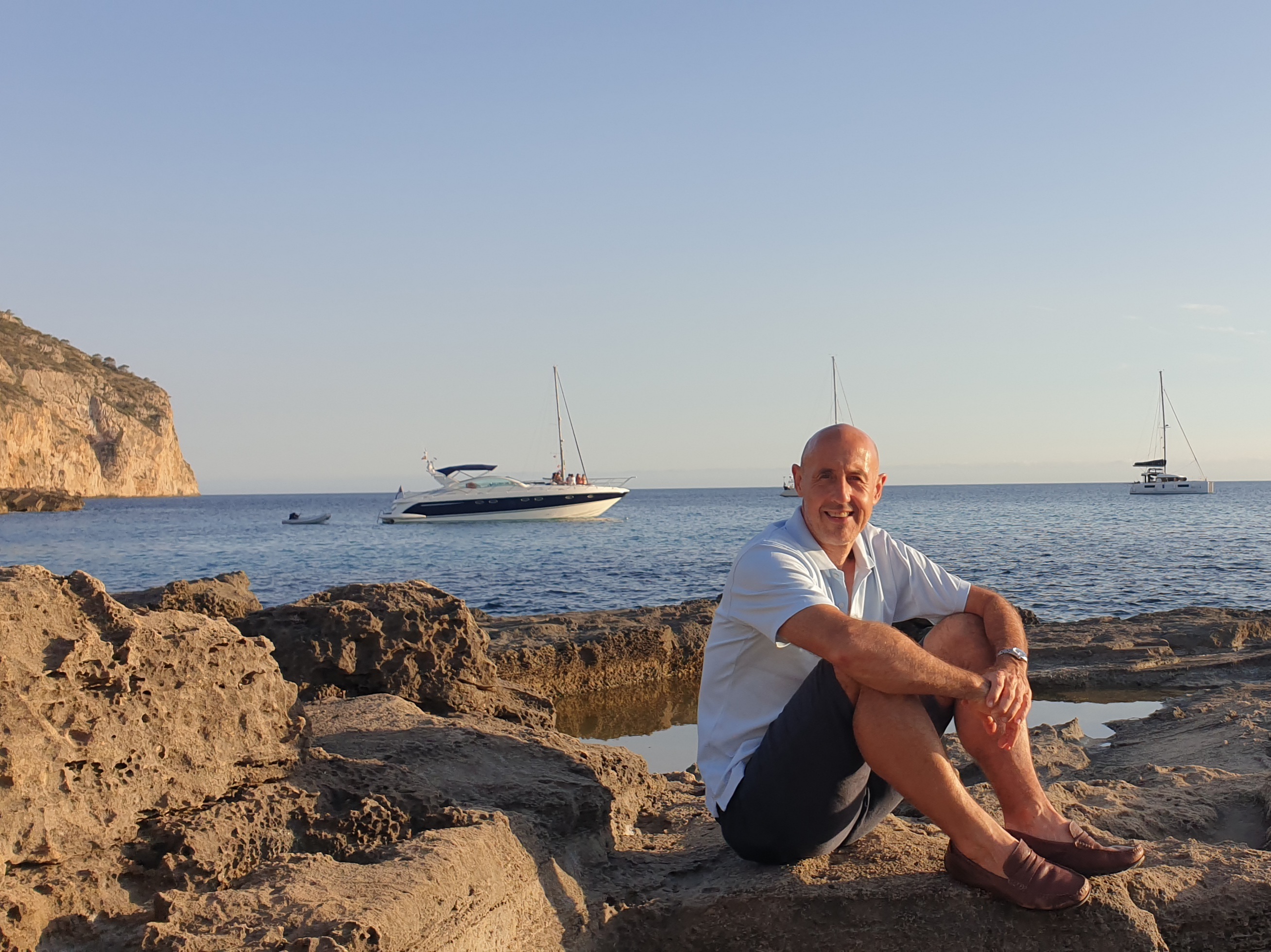
I am blessed to spend a few days in Mallorca every Summer with my mom, my nephew, and my nieces. We have been coming for about 40 years to the same cala -a small bay. I have talked about the special light on the island, and all the other characteristics of the Mediterranean basin, it is wonderful.
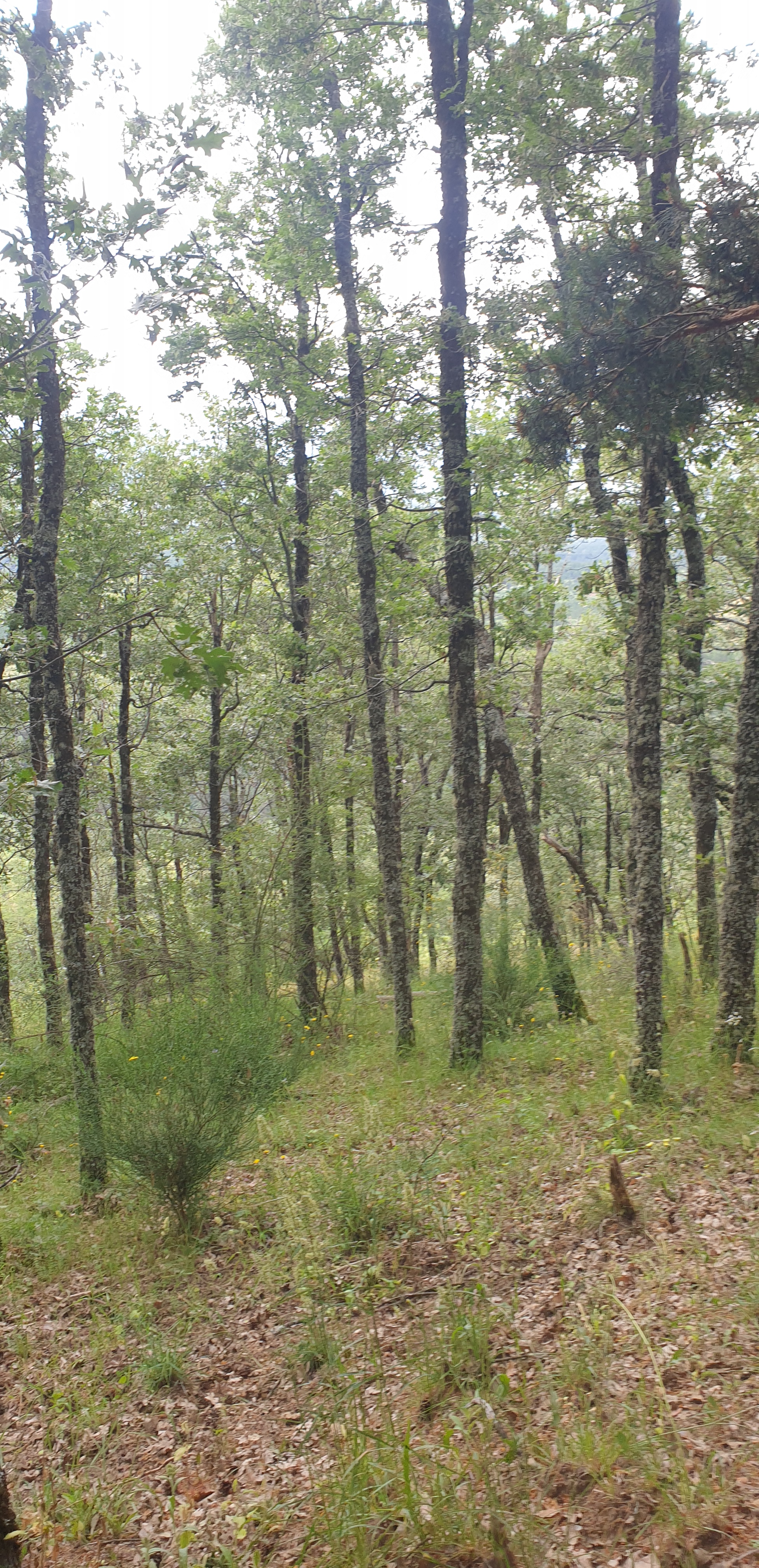
One of the highlights of my stay in Mallorca is when I run up to an old Arab signal tower. It is a wonderful -but usually hot- run by the cutest little cala (Cala Fornells), and up a pine forest to reach the tower before heading back down.
My brief stay on the island is a cleanse, a detox from the crazy world we live in. I am privileged to enjoy the sea and the pine forests; this year was no different.
New museums are rare, most of the stuff worth seeing is already being shown. Another key issue is that for most modern museums the building is more interesting than what is inside -think of Guggenheim Bilbao, or even NY- It is rare to find a new museum where both the container and what it contains are both at the same level of excellence. One such exception is the massive collection of “stuff” the Spanish Royal family has -which technically belongs to all Spaniards, as it is part of the national heritage which is being shown in the brand new Colecciones Reales Museum in Madrid.
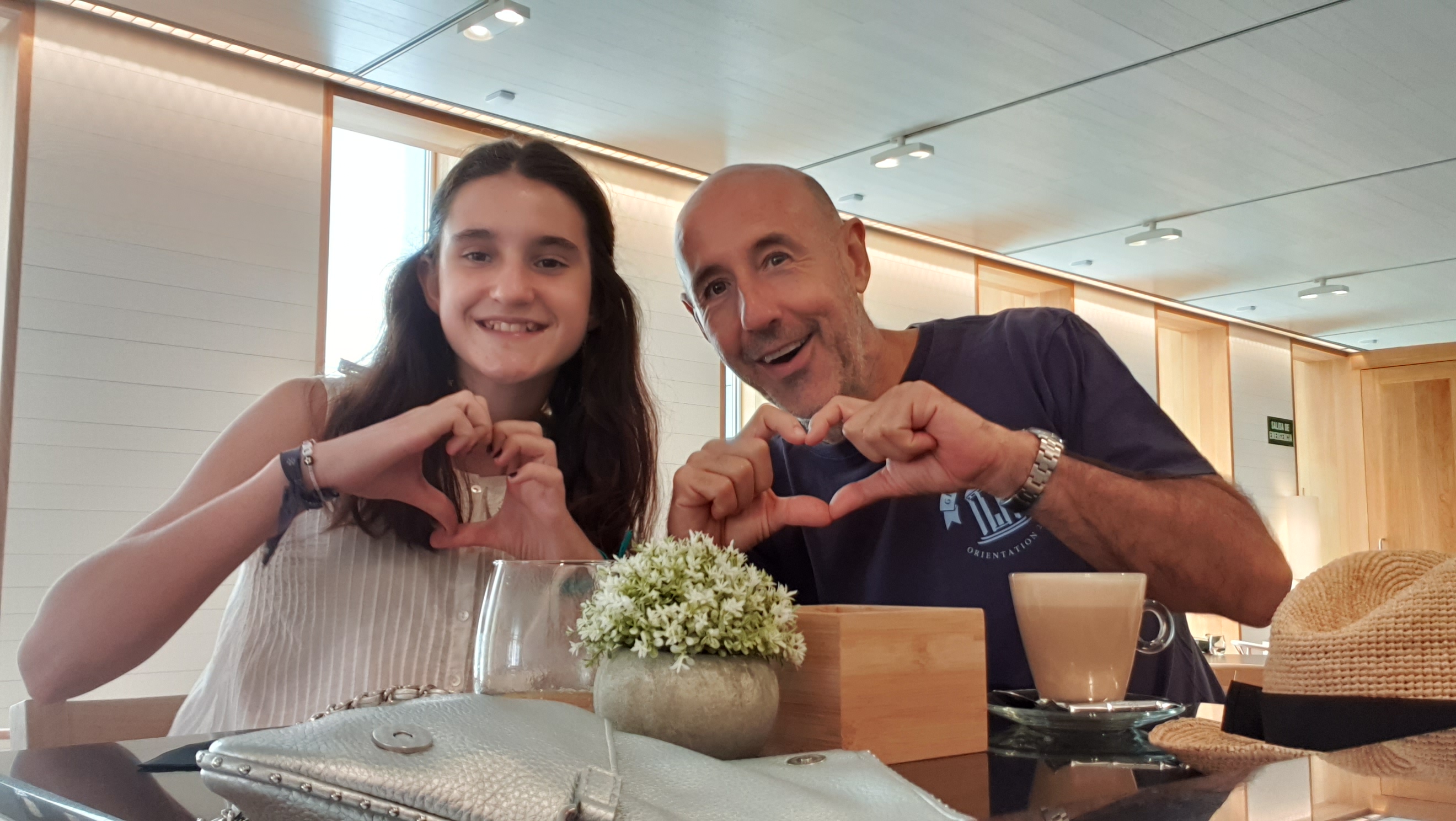
This museum has been pending since 1934 with the advent of the Second Republic, but it was finally constructed right above the Royal Palace gardens and next to the Cathedral. It opened in June of 2023. Celia and I finally got a chance to go, and it was free since the museum was celebrating the 10th anniversary of the crowning of King Felipe VI. I liked it so much, I returned the next day with my niece!
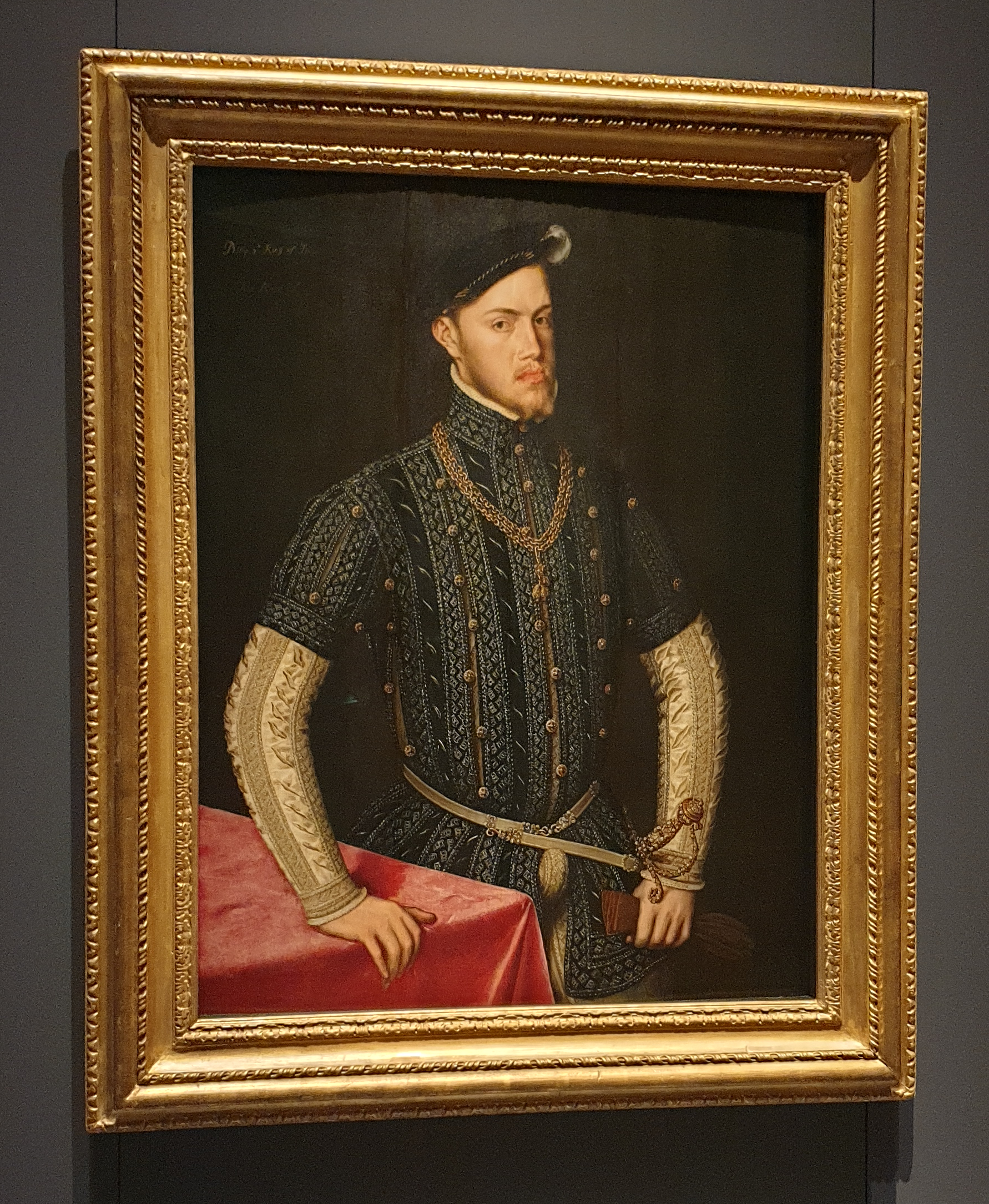
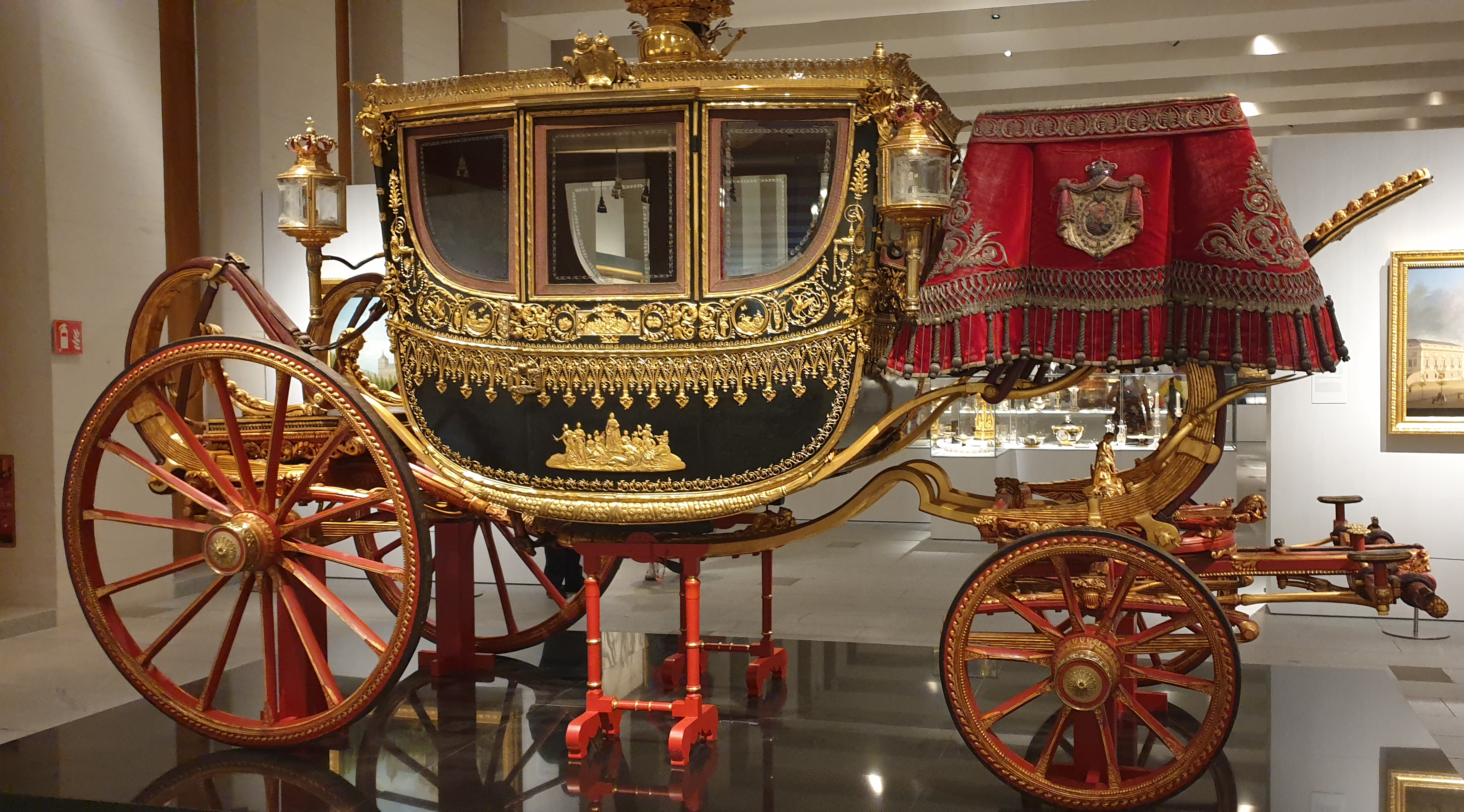
The museum is massive all in concrete and granite with some wooden accents, it is really cool. The collection has artifacts from the Trastámara dynasty, the Hapsburgs, and the Bourbons. The collection includes carriages and cars, a ton of tapestries, a fountain! some religious items, books, a set of Solomonic columns, dinning sets, and obviously a ton of paintings, including a huge Velazquez horse, and oh, a Caravaggio!
The museum includes the de rigueur coffee shop and gift shop, and it is worth the visit, even if it is not free when you go.
Although I went to a business school for university, I took all the literature and history courses I could take. That should have been a big flag, as usual, I missed it.
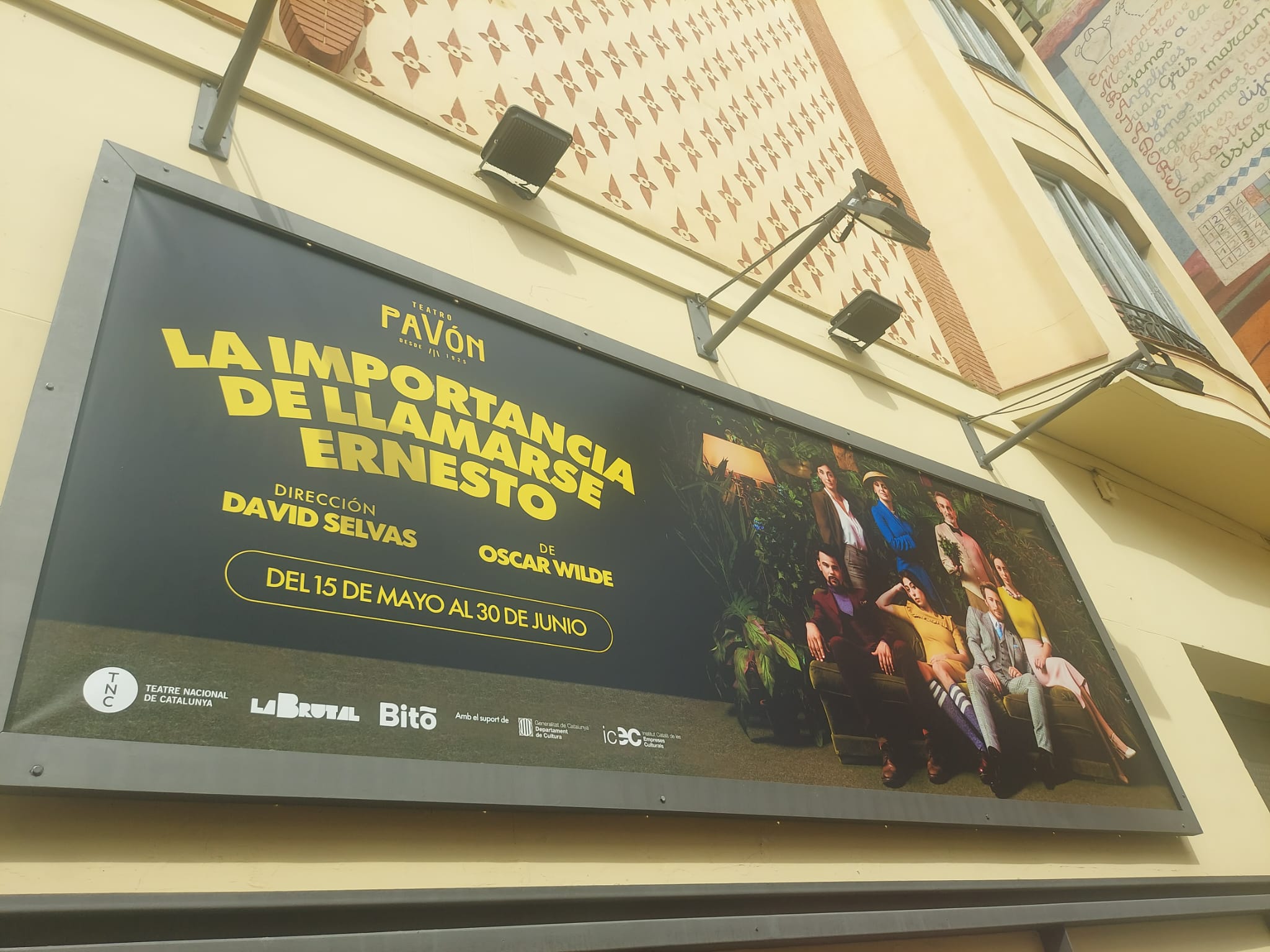
One such class was a Victorian literature course which changed my perspective on life. I was introduced to Alfred Lord Tennyson (you can read about that here), the whole pantheon of Victorian writers and poets and of course Oscar Wilde, precisely The Importance of Being Earnest, a Trivial Comedy for Serious People, and specifically Lady Bracknell’s hilarious interrogation of John Worthing (Ernest). That reading was around 40 years ago. After reading and rereading the play, reciting that same exchange in different venues, I finally got to see a theatre production -albeit in Spanish.
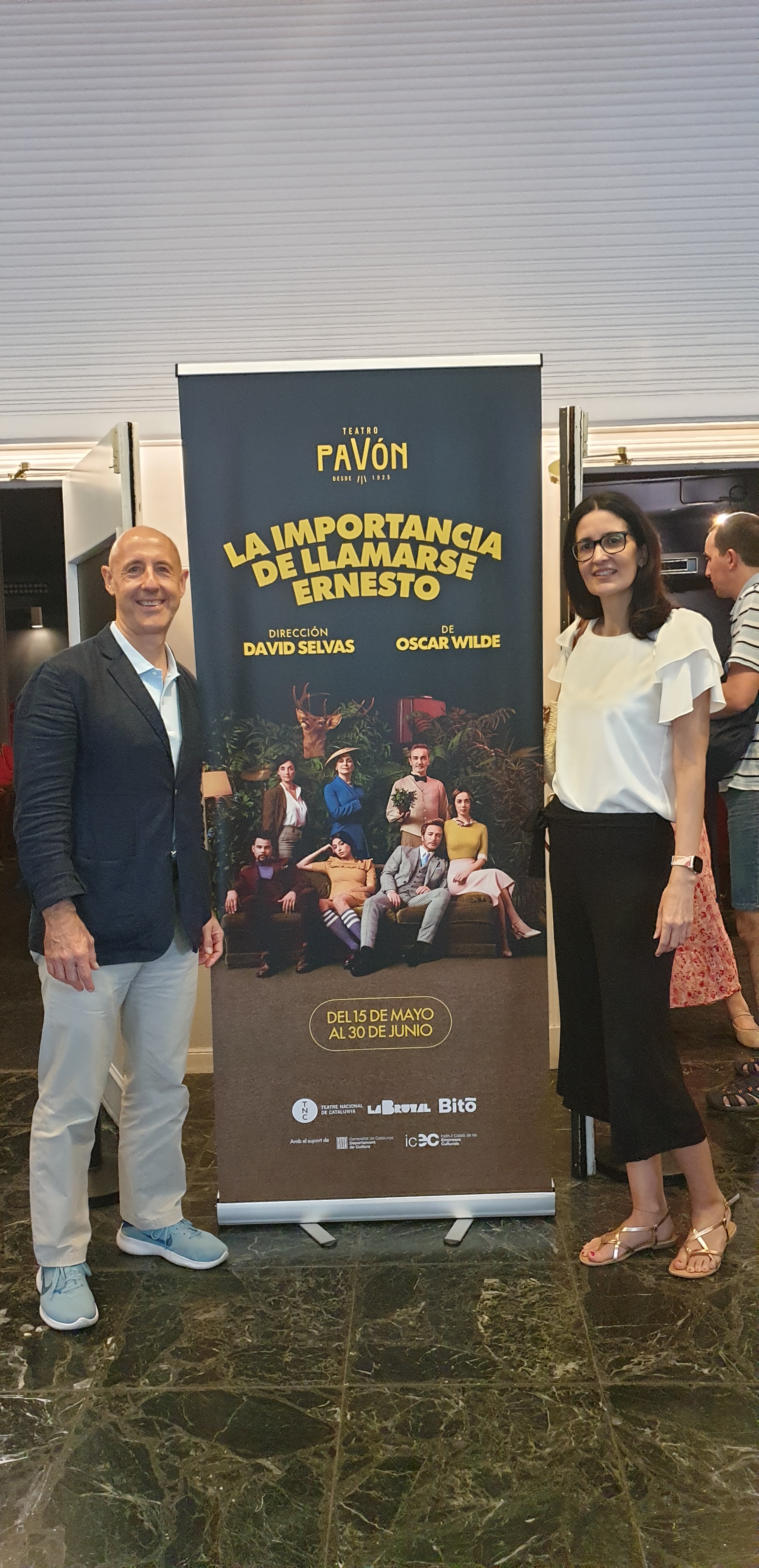
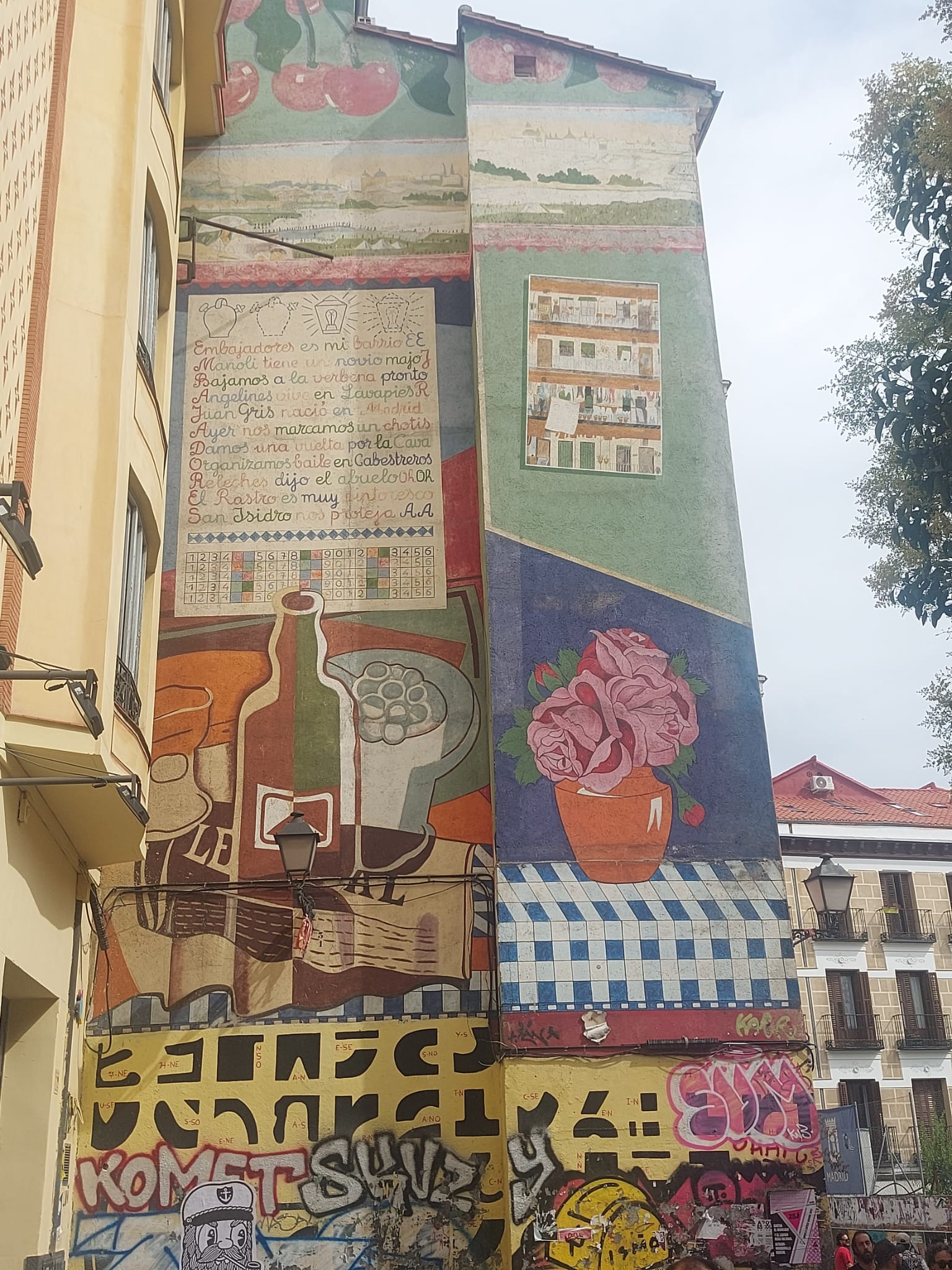
Celia and I went to the Teatro Pavon in the trendy Latina district to see the play. Besides the translation, it was modified as a bit of a musical with about half a dozen songs thrown in. I guess the director felt the need to make the play a bit more “fun” than it already is…
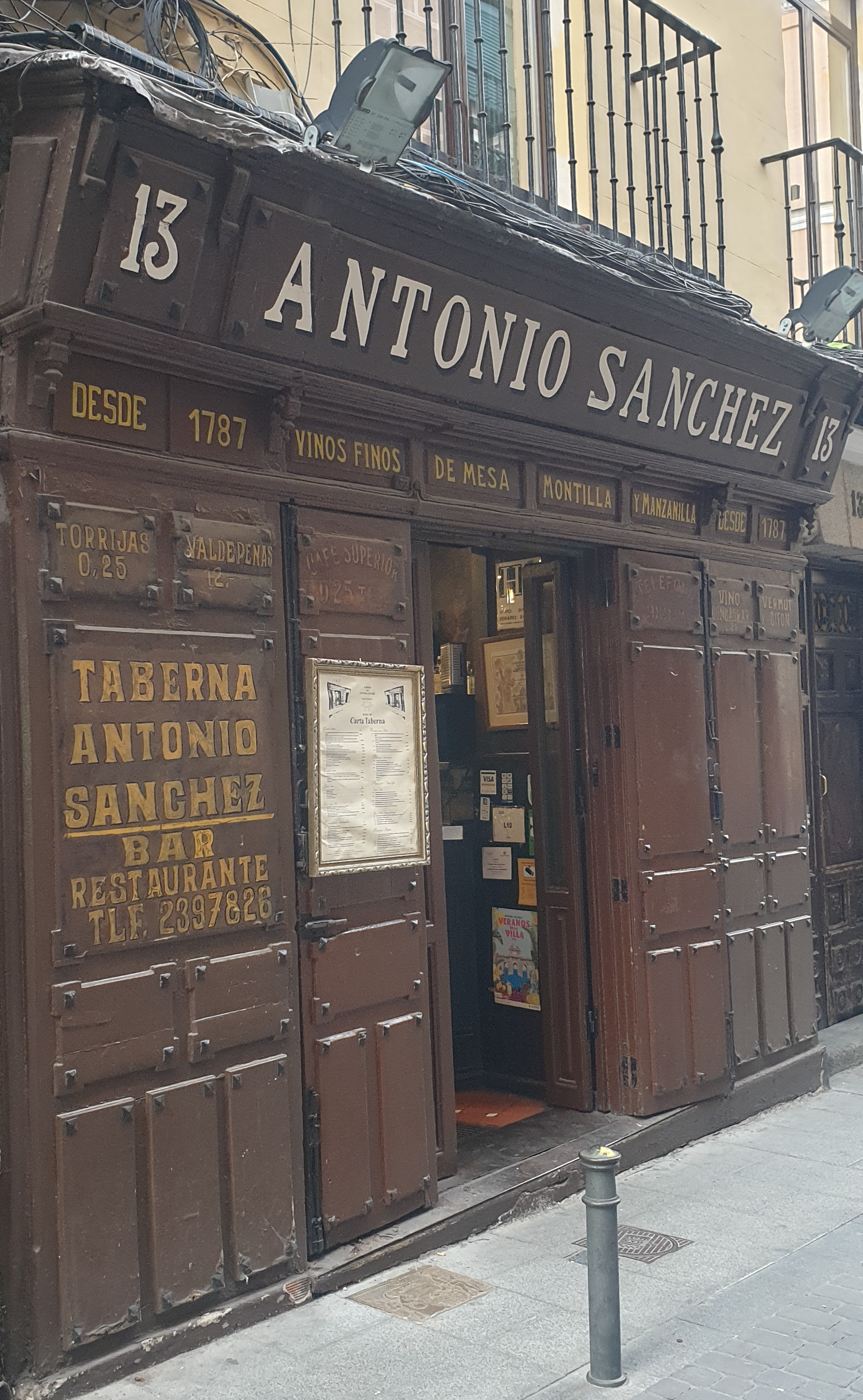
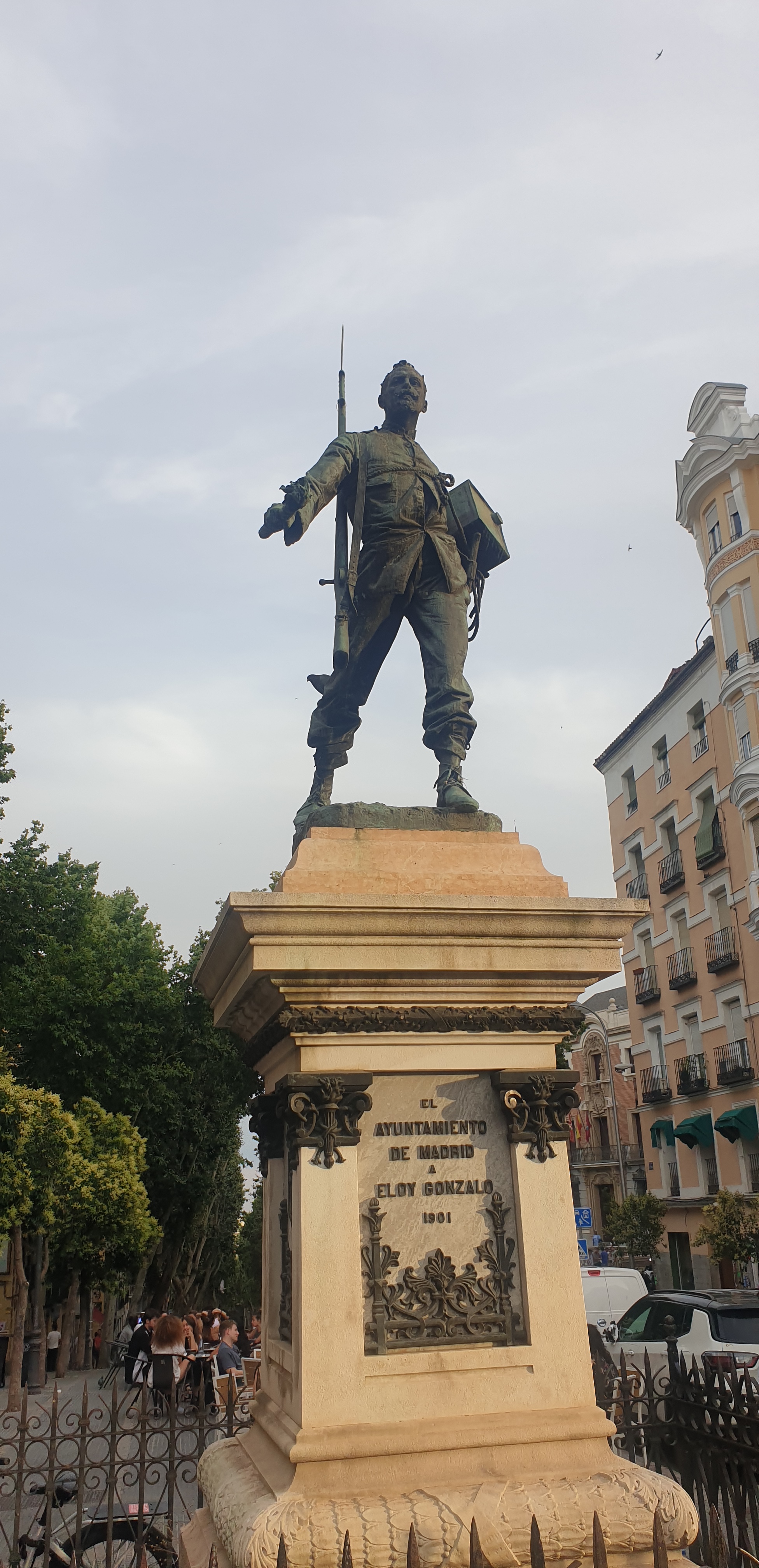
At any rate, the play was hilarious, well performed, even with the musical numbers and we really enjoyed it. After the play we enjoyed an apperitif at trendy Plaza de Cascorro and then had oxtail for dinner at Madrid’s oldest tavern, Antonio Sanchez!
If you have not read this play or seen it in the theatre or in various film versions, do it. You are welcome.
“I do not approve of anything that tampers with natural ignorance. Ignorance is like a delicate exotic fruit; touch it and the bloom is gone.”― Oscar Wilde, The Importance of Being Earnest
Stop. Breathe. Breathe again. In that time, did you miss anything? A multimillion-dollar deal? A major life event? So what is the rush? What is the constant need to be doing something? It is going to be ok, even if you stop to breathe for a few minutes.
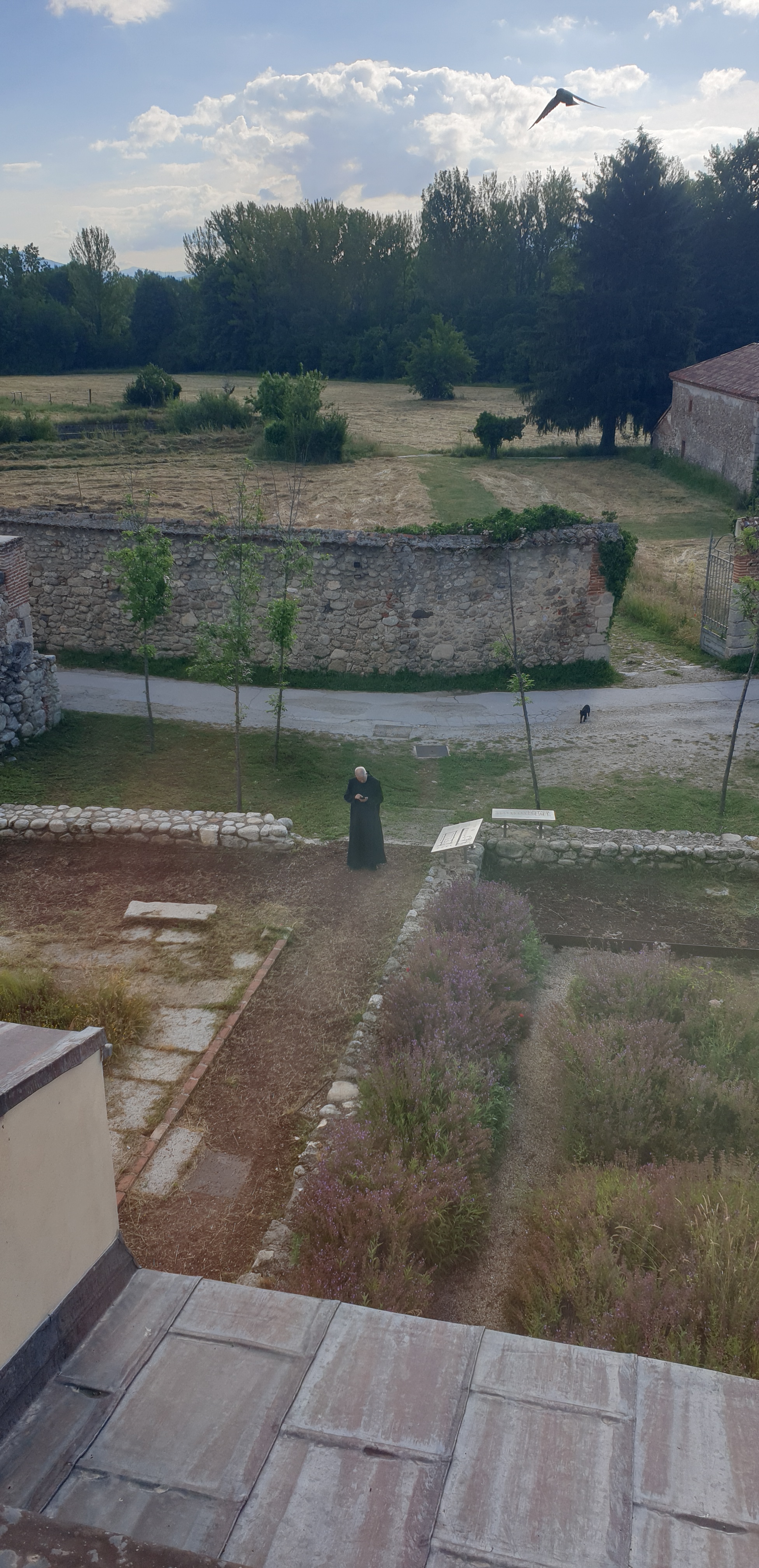
Of course, if you want to take that to a really healing level, you should take a few days off for a silence retreat, a technology detox, a news cleanse, a silent retreat, call it what you will. For the last five or so years, I have had the privilege of taking a few days off and heading North, over the Guadarrama mountains to the Monasterio de El Paular.
Although the Benedictine monks ask you to pray with them at least three of their five prayers, I always enjoy going to all five, including the 6:30am Maitines. There is a great beauty in reciting the Psalms and praying together in a slow, contemplative rhythm.
When you are not praying you are free to go hiking in the mountains. This year I went up to the Reventón for the first time to check out El carro del diablo, a huge rock with a legend about the cathedral of Segovia and, you guessed it, the devil. I also went up to the Puente de la Angostura bridge which I had not visited in years.
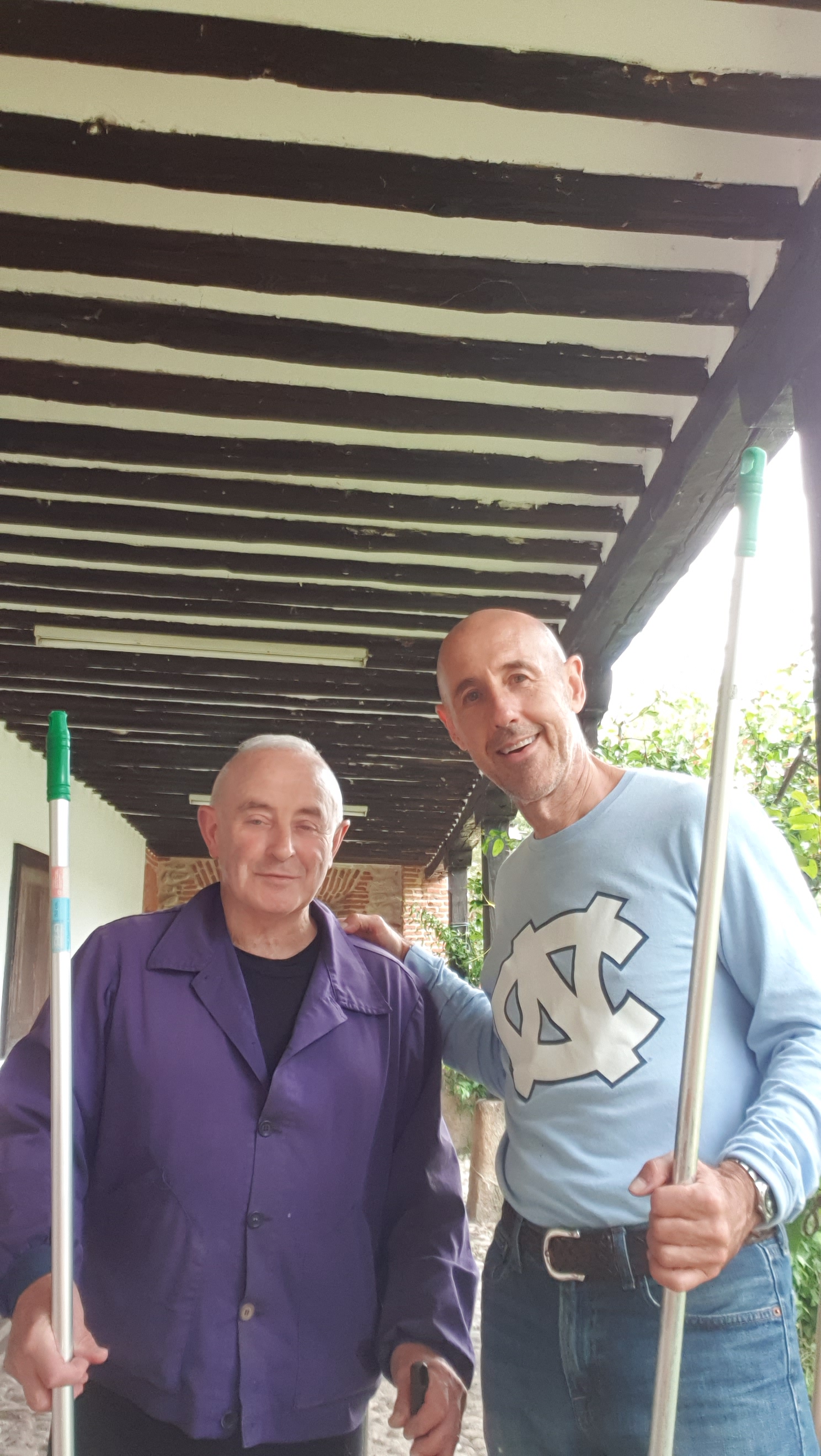
A particularly healing aspect is when the monks ask you to work with them. This time we had to sweep the farmhouse porch for the upcoming fiesta of St. John’s dinner. Brother Enrique and I spent the morning cleaning and fixing up area for the party.
The rest of the time you are meditating, reading, writing, enjoying the Vicente Carducho paintings in the cloister, praying. It is an amazing experience. You should try it. Here is the link for the monastery or find one near you!
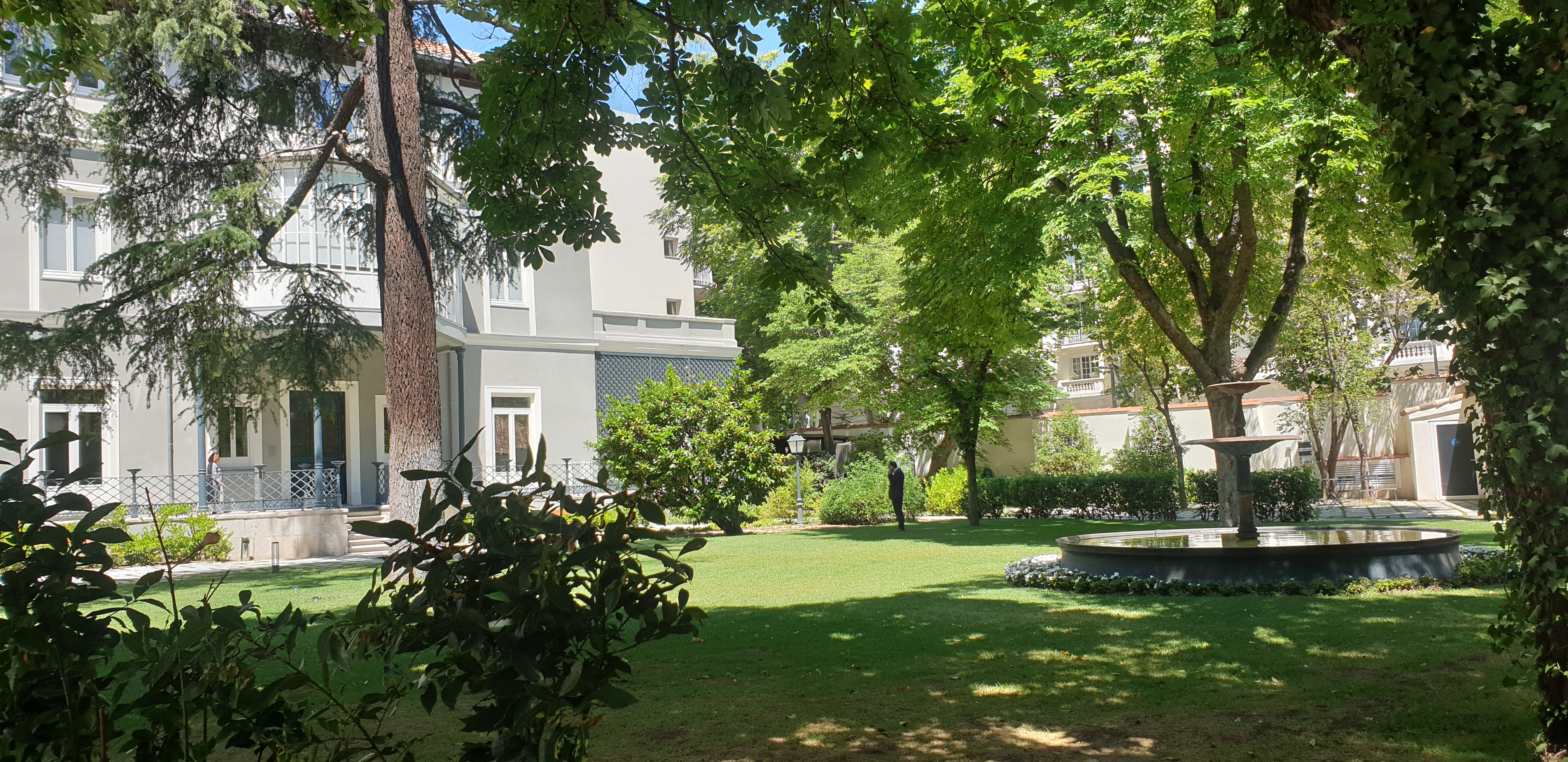
Few things are as rewarding as walking around the concrete jungle that is a city, and finding an oasis, a quiet corner, a patch of grass, trees. Madrid, as beautiful as it is, is still a concrete jungle, and the other day I discovered the Fundación Ortega-Marañón, one such oasis, literally around the corner from my mom’s house in the Chamberí neighborhood.
José Ortega y Gasset is considered Spain’s top 20th C philosopher and Gregorio Marañón was a humanist doctor. Their respective nonprofits joined forces and merged in 2010. They are housed in an old palazzo with a beautiful garden and in what used to be the Residencia de Señoritas, a women’s college dorm which sits right behind the palazzo. They have done a beautiful job with the construction, preserving both the palazzo and the dorm.
Yo soy yo y mi circunstancia, y si no la salvo a ella no me salvo yo.
José Ortega y Gasset
During my visit, there was a great exhibition on the Revista de Occidente, Gasset’s literary magazine. With the title Claridad, claridad, it explained the trajectory and writers that participated in the magazine. It was very well done, and I was all alone. After my visit I was able to sit in the garden and read my book, what an oasis in the city.
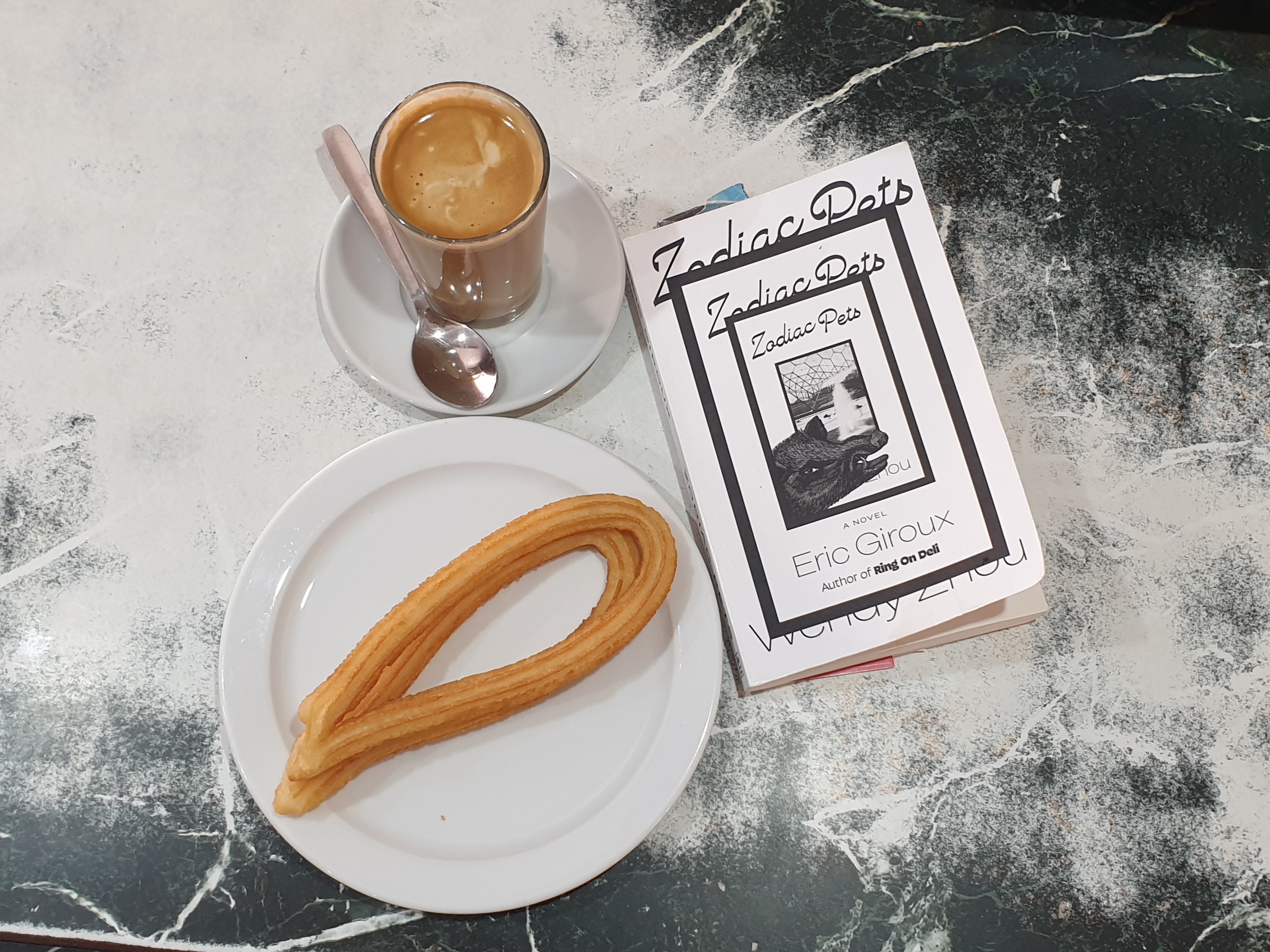
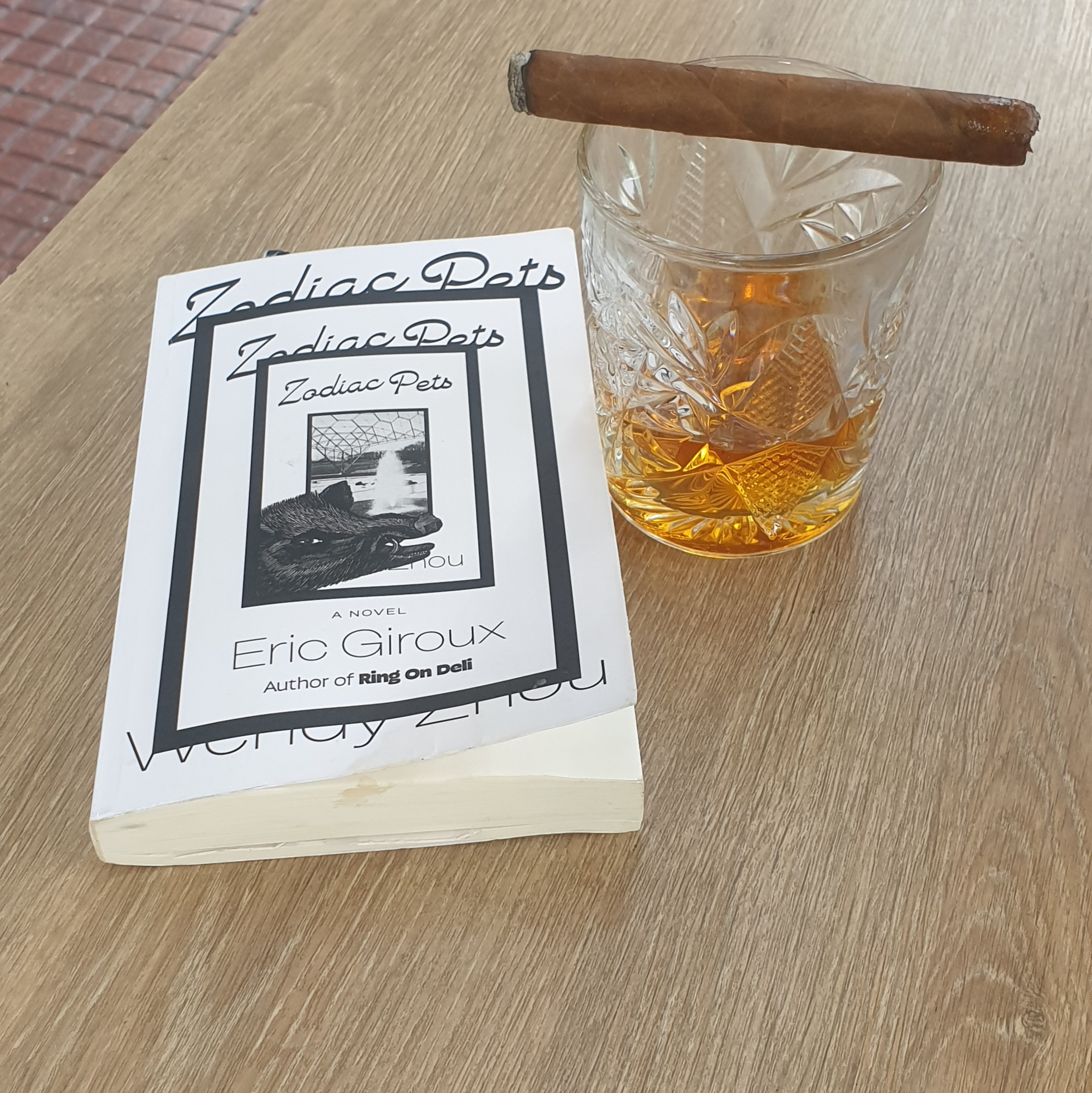
Eric Giroux has done it again. Sophomore novels are tricky; some are just a copy of the first, some are rushed, and most are just not particularly good, but Giroux has been faithful to what worked in Ring on Deli and taken his work to a great new level of zaniness!
Zodiac Pets is a paradox, a hilarious, laugh out loud dystopian story set where the Boston suburbs bleed into rural New England. Parts Nancy Drew, parts George Orwell, Giroux masterfully blends the two, sometimes with dry humor, sometimes with brief notes on history, sometimes with jolting juxtapositions like Aristotle’s’ Academy and Cher sharing a page.
Gone is the teenage existential angst of Deli, replaced by a fresh take on a postmodern novel that would make Cervantes proud. Zodiac Pets, weaves a rich and inviting narrative from different points of the narrator’s life -sometimes addressing the reader directly! The political commentary has intensified, Giroux has grasped the zeitgeist of our time, and while still using local politics as a platform, the aim is national.
Zodiac Pets is a coming-of-age story disguised as an observation of modern politics in the US. Or is it the other way around? At any rate, the sides, the interwoven stories, the parenthesis are all just as good as the main thread, they are part of the structure of the story, adding texture, depth, and warmth. If you are looking for a Summer read, look no further.
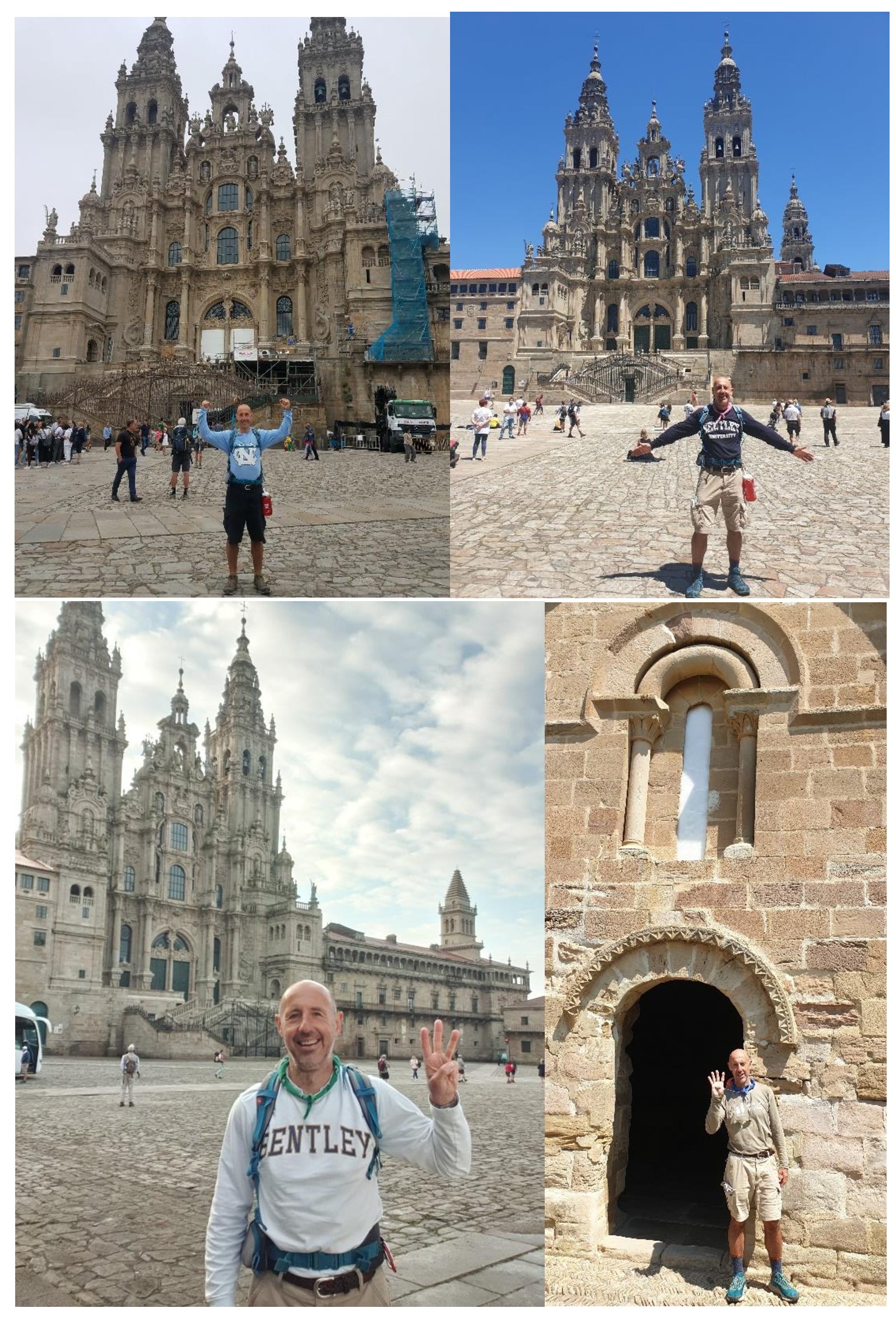
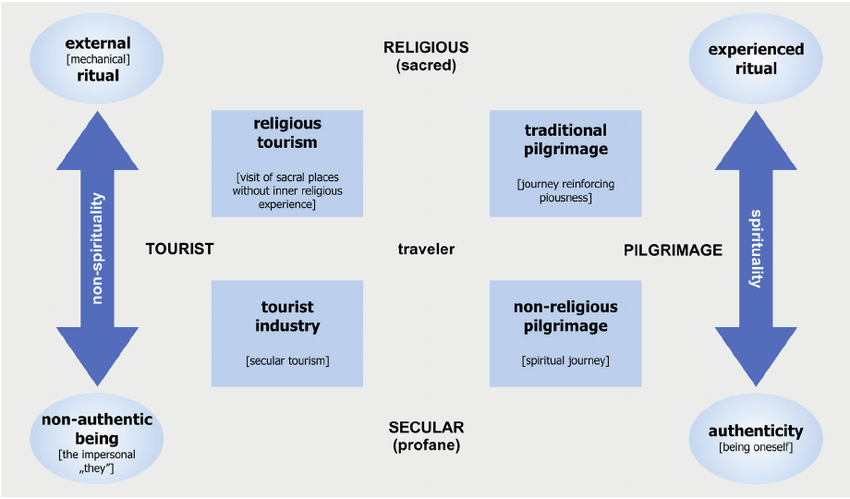
Is there a right or wrong way to do the Camino? Spoiler alert: no, everyone does their thing. There is a lot of talk about this, and social media really likes to push extremes. If you go to the Camino pages on any platform, you will see what I am talking about. Pilgrims who walk from St. Jean or further beyond think they are better than folks who start in Sarria, stay in luxury hotels, eat gourmet meals, and have a luggage delivery service. This is obviously not true, but having said that, there is a difference between a pilgrim and a tourist, and that is ok.
Like everything else in life, you are going to get out of the Camino as much as you put into it.
It boils down to how willing you are to have your life changed; how open you are to being changed, and how much you are willing to do to have that experience. I remember the first time I stepped into an albergue and realized I had to share room -and bathroom- with complete strangers, something I had not done since college, a few decades before. That was a first eye opening and humanizing experience, never mind walking for over thirty days with a pack on my back.
The problem arrives when you are on a pilgrimage trail, but you have chosen not to be a pilgrim, or you are not willing to put in the effort to be a pilgrim, or you do not know the difference (I once saw a young lady walking in her bikini carrying only a water bottle, good for her!). There is no such thing as a perfect pilgrim, maybe if the only thing you are carrying is a chunk of old bread and a Bible, according to The Way of a Pilgrim, a 19th-century Russian mystical text (reference Richard Rohr’s Daily Meditation: The Way of a Pilgrim).
Before you start the Camino, ask yourself what your purpose is in walking to Santiago. Do you just want to check off this item on your bucket list, but have no desire for a spiritual journey? That is fine but be aware that you will walk with people who might have a deep spiritual purpose on the Camino. Likewise, pilgrims need to be aware that not everybody on the Camino is there on an inner journey but might just be there for the fun experience, the food, and the thread count on their bedsheets.
The whole purpose of a pilgrimage is letting go of the ego, a lot of that happens through letting go of other stuff… all your clothes -you only need a few, your privacy, a nice bed. It is easy for your ego to think that you are the best pilgrim, or that the only good pilgrims are the ones who stay in your Albergue. For more on this read about the Cosmic Egg here.
At the end of the day, it is all about tolerance. Yes, there is a difference between a pilgrim and a tourist, it is a mindset and attitude issue, but that is all right, we can all share the path.
Here is an interesting chart I found on Researchgate: Tourism – pilgrimage continuum based on spirituality and authenticity by Ivo Jirásek



































 Antonioyrocinante's Blog