Why is football (soccer) the leading sport in the world?

Why is football (soccer) the leading sport in the world? Why is the World Cup one of the most watched events in the world? There are a few factors, which might surprise my American readers.

Yes, football is low scoring, but that is part of the beauty of it, each goal is precious and celebrated. American football has a weird scoring system which devalues each score. Basketball averages 70 points per game, so unless you have a final basket deciding the game, the final score is not so dramatic. Also, since the court is indoors and relatively small you cannot have a massive audience. A major tennis final might also be exciting, with each point going back and forth.

The low scoring factor also makes for suspense. A winning goal might come at the last minute -literally! (For example, Andres Iniesta’s World Cup winning goal at the 2010 final)

We also have ties, but that is only on league games, not cup, and not championship games.

All it takes to play soccer is a ball, and some are even made from plastic bags. This means that children even in the poorest neighborhood or village play soccer.

When you become a football fan, you will follow your team in all their competitions: national league and cup, and if your team is any good, in their European or Latin American championship (Champions League or Libertadores). You will also follow your national team in their continental and world tournaments (Euro, Americas or World Cup). This team is made up with your country’s best players regardless of their club affiliation. In football countries you basically inherit your allegiance from your parents. I remember my father taking me to the Bernabeu stadium in cold winter afternoons. However, there are exceptions to this rule with even some Madridista (Real Madrid) and Culé (Barcelona) marriages!!

I am passionate about soccer. Although I never played enough to be a good player, I have always loved it. I got the opportunity to coach in 2005 and I have been coaching on and off since.

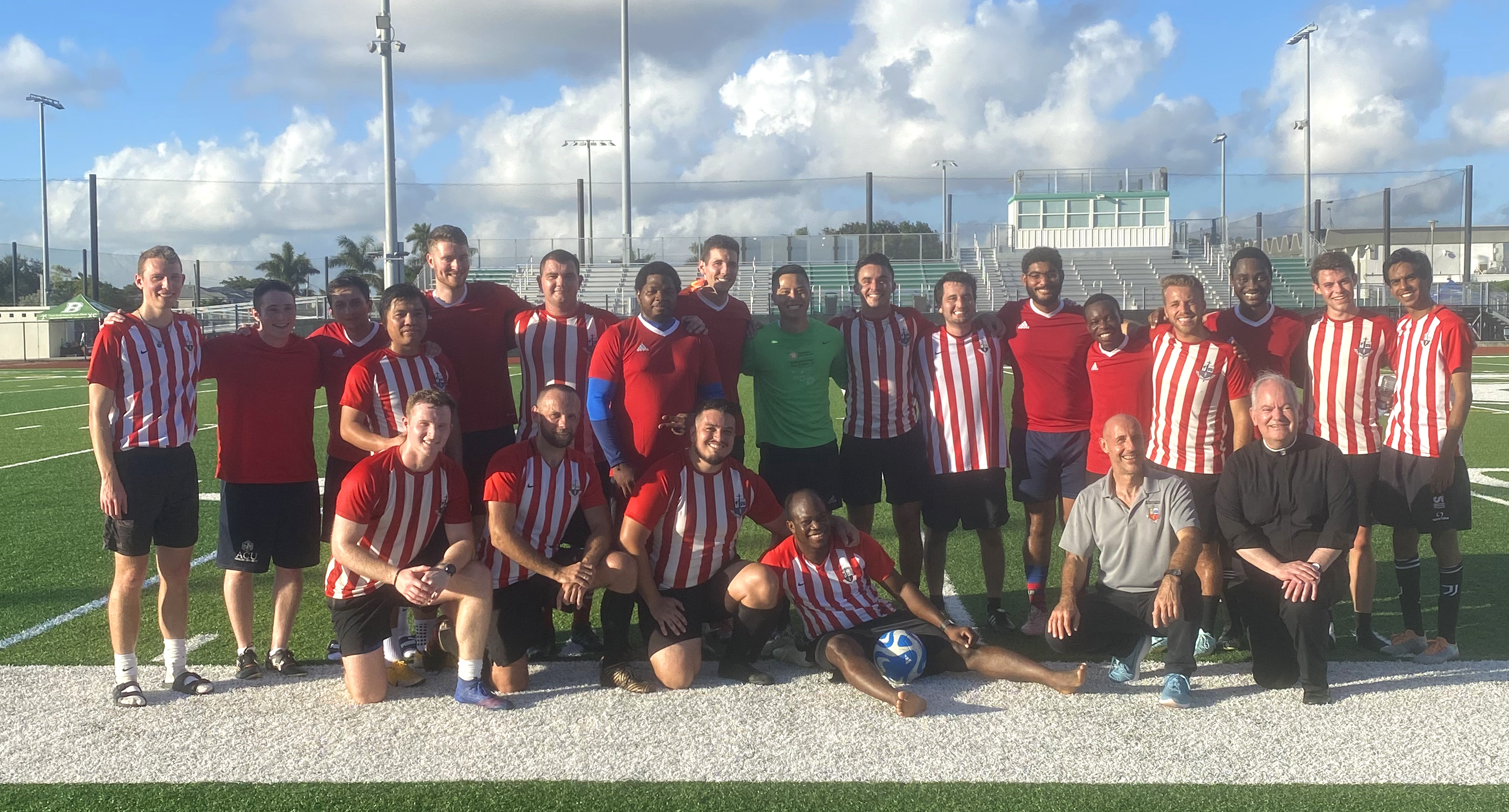
We recently played our Fall game against the Miami seminary in Miami. Since we won both games last year, we were a bit sleepy for the first half, moving the ball around but without decisive finishing. 0-0 at half time. We had to wake up and we did, scoring three goals. By the end of the game, exhausted, we allowed a goal. 1-3 is a good result, and I am super proud of the boys.

The players did not order their shirts on time, so the old players played with our traditional red and white (Atletico de Madrid, Athletic de Bilbao) (not a fan) shirts, while the new players who did not buy their shirts had to play with temporary (red) shirts – fortunately the refs were ok with it if they were not blue. You will notice this in the photos, grrrr. Speaking of photos, cred. Jonathan Arias.

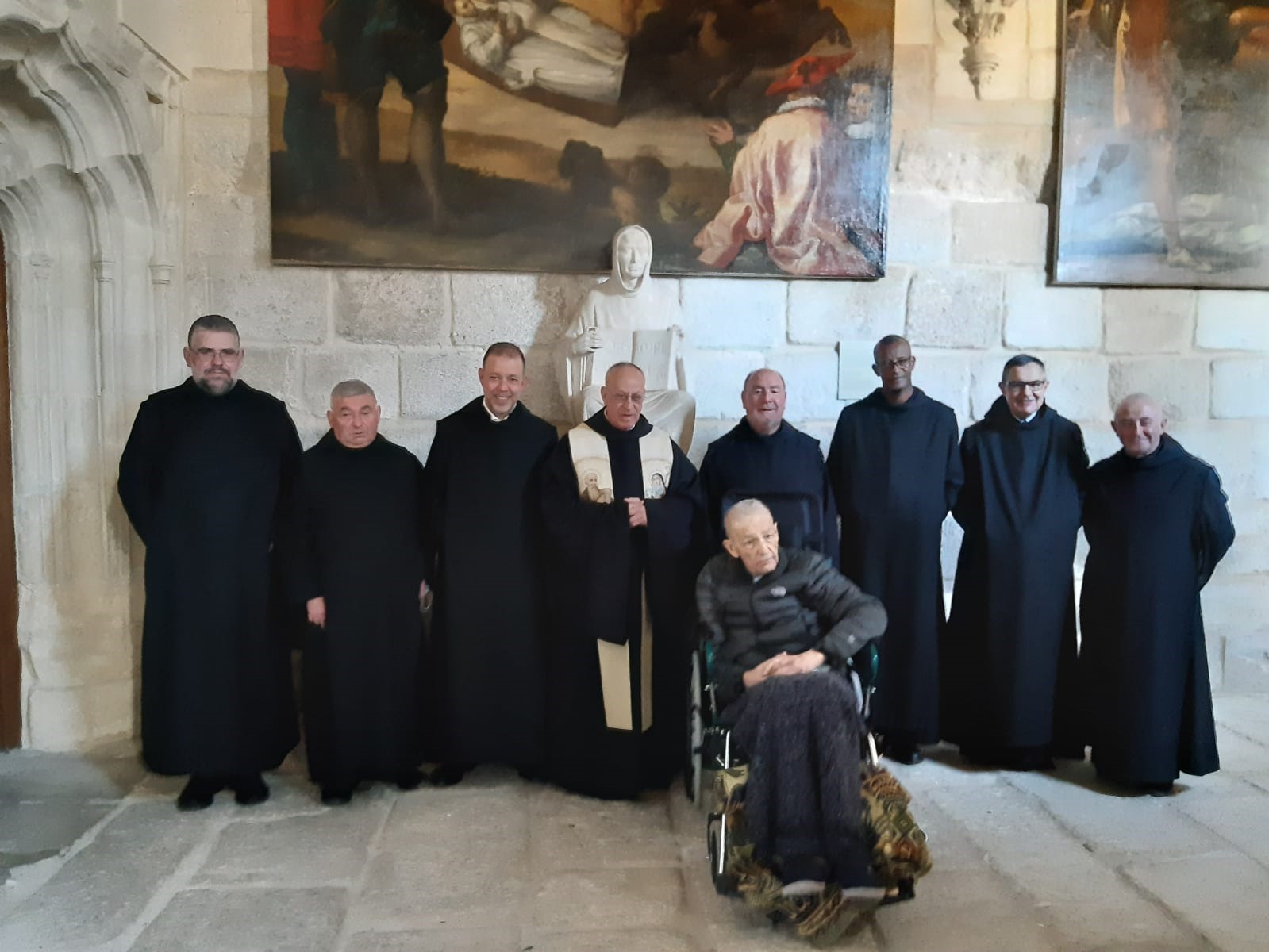
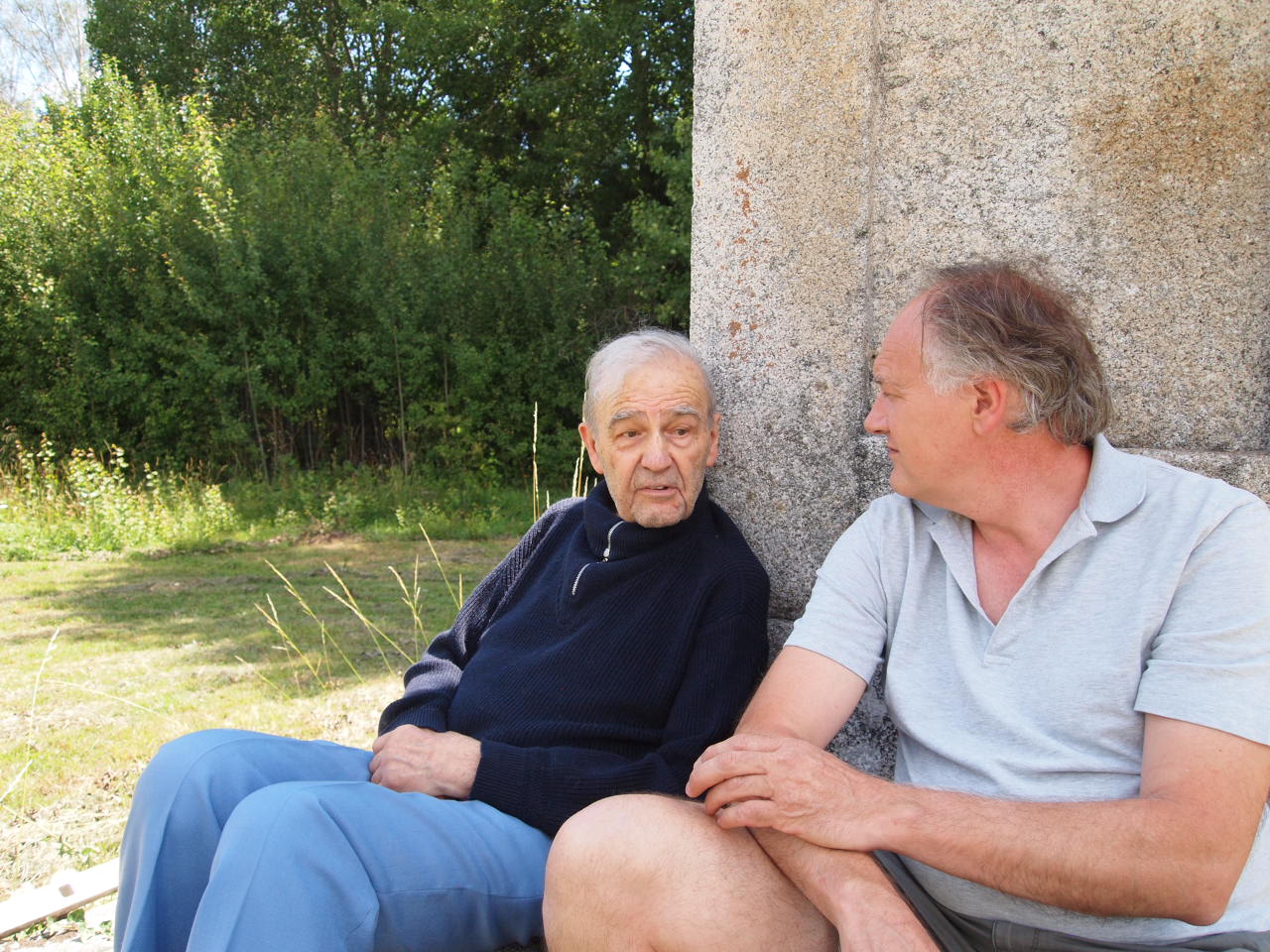
R.I.P. Brother Eulogio.

Nuestras vidas son los ríos

que van a dar en el mar,

que es el morir:

allí van los señoríos

derechos a se acabar

y consumir;

allí, los ríos caudales,

allí, los otros, medianos

y más chicos,

allegados, son iguales,

los que viven por sus manos

y los ricos.

Jorge Manrique wrote these lines in his Coplas por la Muerte de su Padre in 1480, the late Middle Ages, the cusp of the Spanish Renaissance (Spain, like me, is a bit of a late bloomer, and we consider 1492 as our start date for the Renaissance if you want to be technical about it).

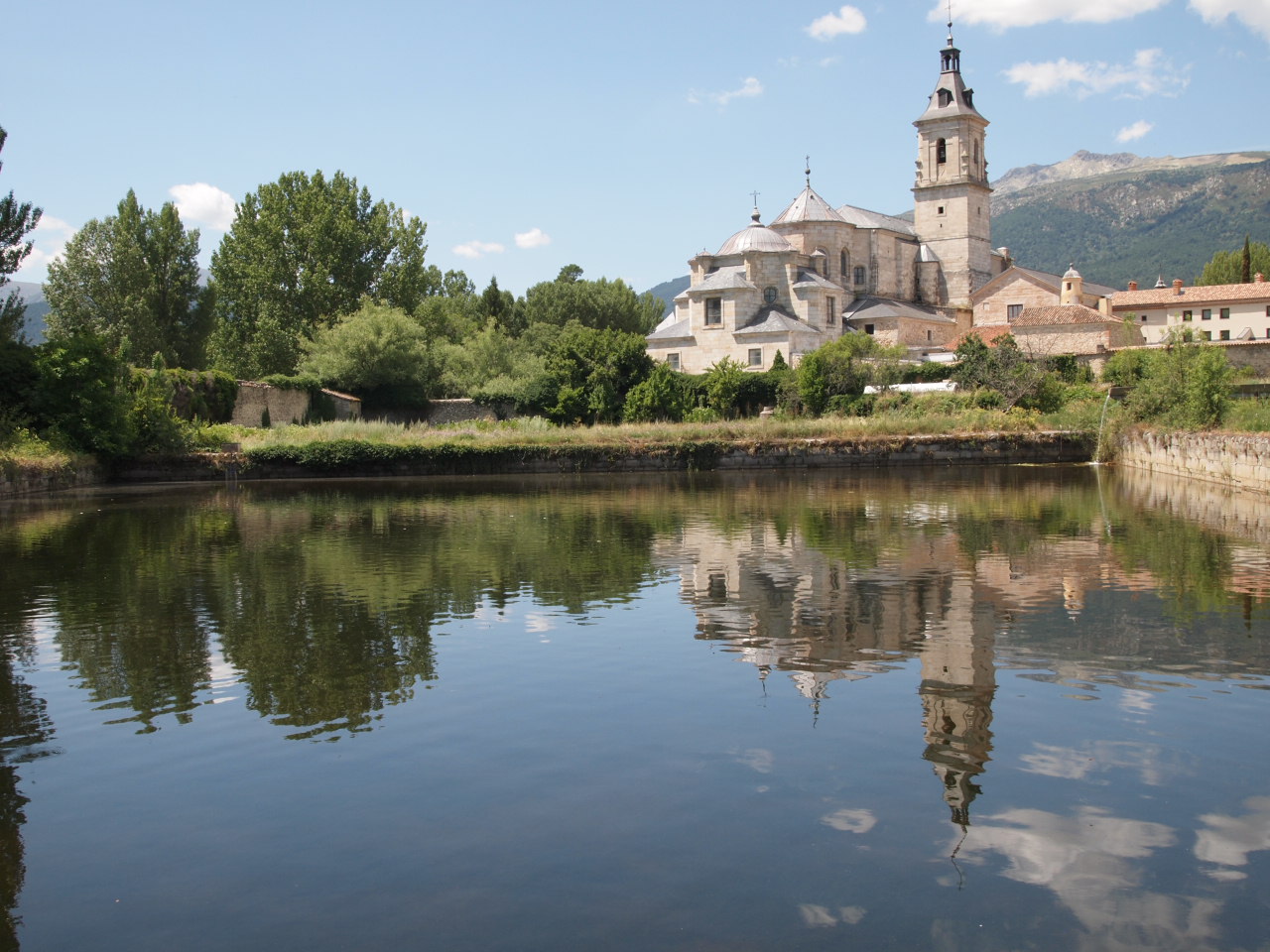
But these are the lines that jump in my mind every time I hear of someone passing; the best friend of one of my students three days into his honeymoon, family members of dear friends, Matthew Perry, and last week Benedictine monk Brother Eulogio in El Paular Monastery.

Brother Eulogio was a spiritual force of nature, a spiritual power who would ask you point blank questions or nonchalantly point to the spot he wanted to be buried in the Monastery’s cloister. I have written about him before (click here) and he was one of the many reasons I love to go on retreat to El Paular.

Brother Eulogio pushed me in my quest for peace. Although in his later years he was wheelchair bound and did not recognize me, he kept his aura bright. I remember one of our last conversations was about the gifts each one has and how to find comfort in our gifts. It was in the “little” chapel, a tiny chapel where the 11 monks and whoever is staying with them pray their daily prayers, only using the big chapel for high mass on Sundays and special holidays.

The beauty in Brother Eulogio’s spirituality was the joy, simplicity, and casualness of his asceticism, his humanity and humility. He could answer what you thought was a deep question with a wave of his hand or think about it for a second and go into a deep explanation. I will miss our walks in the orchard, or in the cloister.

I hope to visit your grave in the cloister of the monastery soon.

British geopolitics in Spain during WWII; Walter Starkie and “El British”

My dad could not stop talking about Walter Starkie. I never gave the fellow much consideration, that was my dad’s thing. My dad even found and bought some of his (many) books. But a few days ago, my aunt passed along a brief bio of Starkie –particularly in his time as Director of the British Institute in Madrid (attached). And I loved it! This fellow did more for Britain than you would think.

Mise en scene: Spain during WWII is a neutral country, at least on paper. After all, Franco won the (in)Civil War in 1939 with help from Hitler and Mussolini. Having said that, when Hitler asked Franco to let him transport his troops and tanks by train to Algeciras (next to British Gibraltar -but that is another story) to get to North Africa, Franco -to his credit- said no. But back to our story.

So, in a neutral but Axis friendly country, in 1940, during WWII, what could Britain do to exert some sort of “soft” power in Spain? The answer: send a phenom of nature, a genius, a virtuoso (literally), a wonder, and let him do his thing. Make sure he looks unassuming, a roly-poly, jolly, violin-playing academic fellow. Give him a fairly vague title like British cultural representative. Finally, give him carte blanche to do as he sees fit, oh and a generous budget, I am sure.

Ironically, Starkie was Irish, from a family of scholars and artists, he graduated from Trinity College in Dublin, with honors in Classics, History and Political Science, oh, and first prize in violin from the Royal Academy of Music in Dublin! After graduating he stayed at Trinity teaching Italian and Spanish. Samuel Beckett was one of his students! During WWI in Italy, he played violin for the British troops and met his wife. Back in England Y.B. Yeats made him director of the Abbey Theatre. From there he was sent to Madrid in 1940.

Starkie soon founded the British Institute – El Instituto Británico, “El British,” where my father, my uncle, and my aforementioned aunt went to school as children of a British Embassy employee (read more about my grandad here). Eventually my sister and I would also go to “El British.” Starkie made the school a center for conferences, concerts, presentations, so forth, which is precisely what Britain wanted in Spain: a cultural beachhead in Nazi friendly Madrid. Not only that, but as a Catholic (remember, Starkie was Irish), Starkie soon made friends with influential Jesuits Heras and Otaño, and eventually with government ministers. In fact, one of Starkie’s biggest victories was to have English as a language option (together with German) in Spanish secondary schools.

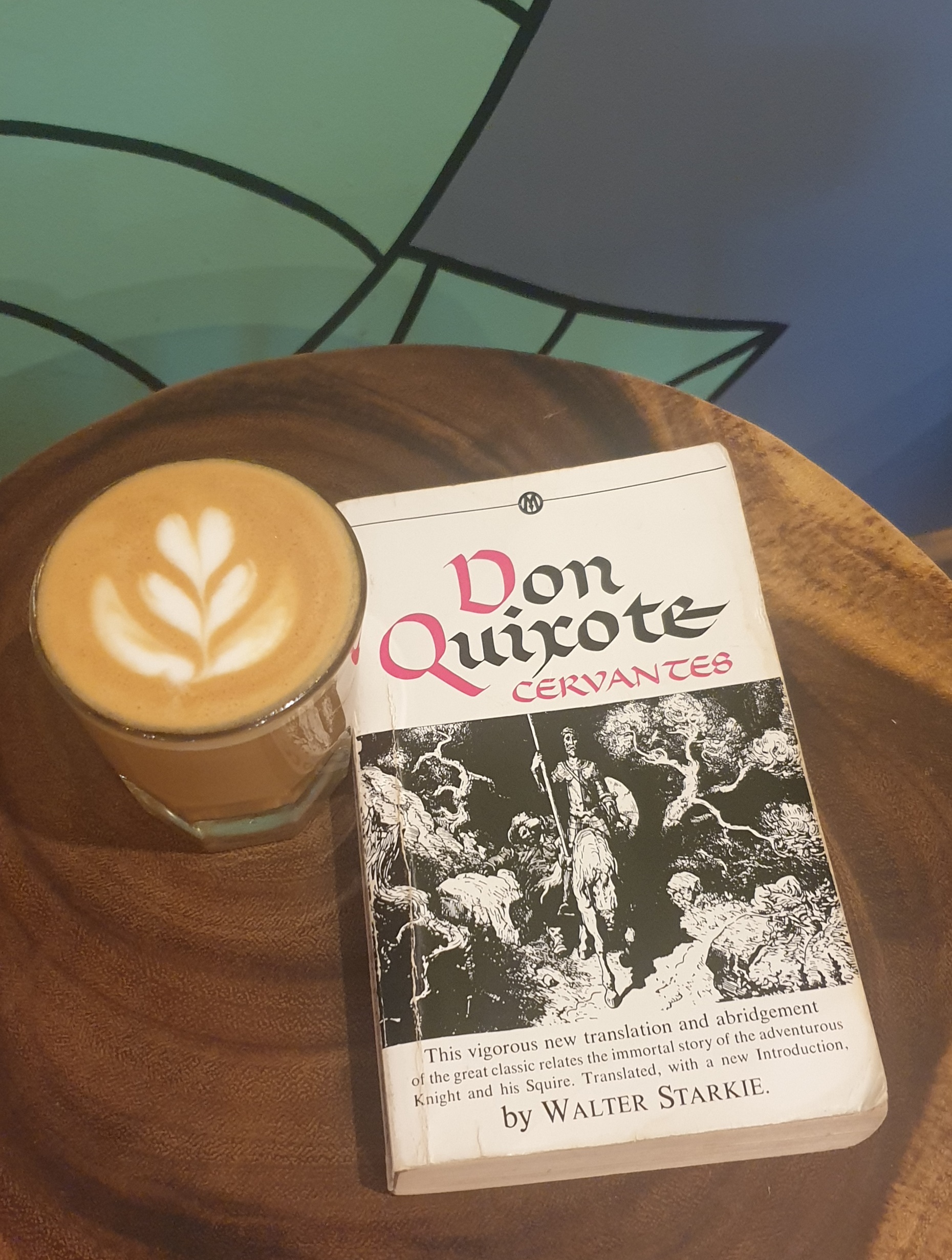
On any given day, Starkie could meet with a Spanish government official, play the violin with gypsies, whom he loved and wrote his most famous books about (Raggle-Taggle: Adventures with a Fiddle in Hungary and Romania (1933), Spanish Raggle-Taggle: Adventures with a Fiddle in Northern Spain (1934), and Don Gypsy: Adventures with a Fiddle in Barbary, Andalusia and La Mancha (1936)), host a conference, write or translate a book -like Don Quijote, and then go home, which served as a safe house for Jewish, Gypsy, and other prosecuted refugees on their way to America.

I asked my uncle what he remembered about Starkie. He told me how the Embassy’s country house was used as a safe house for downed plane crews rescued by the French resistance who were on their way back to the UK to fly again. But to get to this country house one had to drive by a gypsy settlement. Because of the friendship between Starkie and the gypsies, nobody ever dared go near that house to investigate what was going on, why there were cars and vans coming in and out at all times of the day and night, another point for Starkie!

So, besides the eventual victories on the battlefield, Britain scored a major victory in WWII by sending Walter Starkie to Spain.

El Greco, a proto-Impressionist and the new exhibit at the Norton Museum of Art.

Confession time: I like the Impressionists, but as a collective, it is not my favorite artistic movement. I like and appreciate the Impressionists individually, but I am not crazy about them as a whole. I can explain.

I am privileged in that I am a supporter of the Prado Museum through their Amigos del Museo del Prado program which is (mostly) fantastic. The main advantage of this “membership” is free access to the museum, which I do take advantage of frequently, plus I love showing the museum to friends and in Tonxo Tours.

So, I often get to see El Greco’s work. Domenico Theotocopulos (1541–1614) was born in Crete, moved to Venice, Rome, Madrid and eventually Toledo, where he would flourish. One of the many interesting things about El Greco was how much nineteenth-century collectors and artists loved his work. Why? Because he was an Impressionist avant la lettre!

Picasso and Renoir were blown away by El Greco, here was someone painting how he wanted to paint more than what he “saw”, a very unreal, conceptual art, and around three hundred years before them!

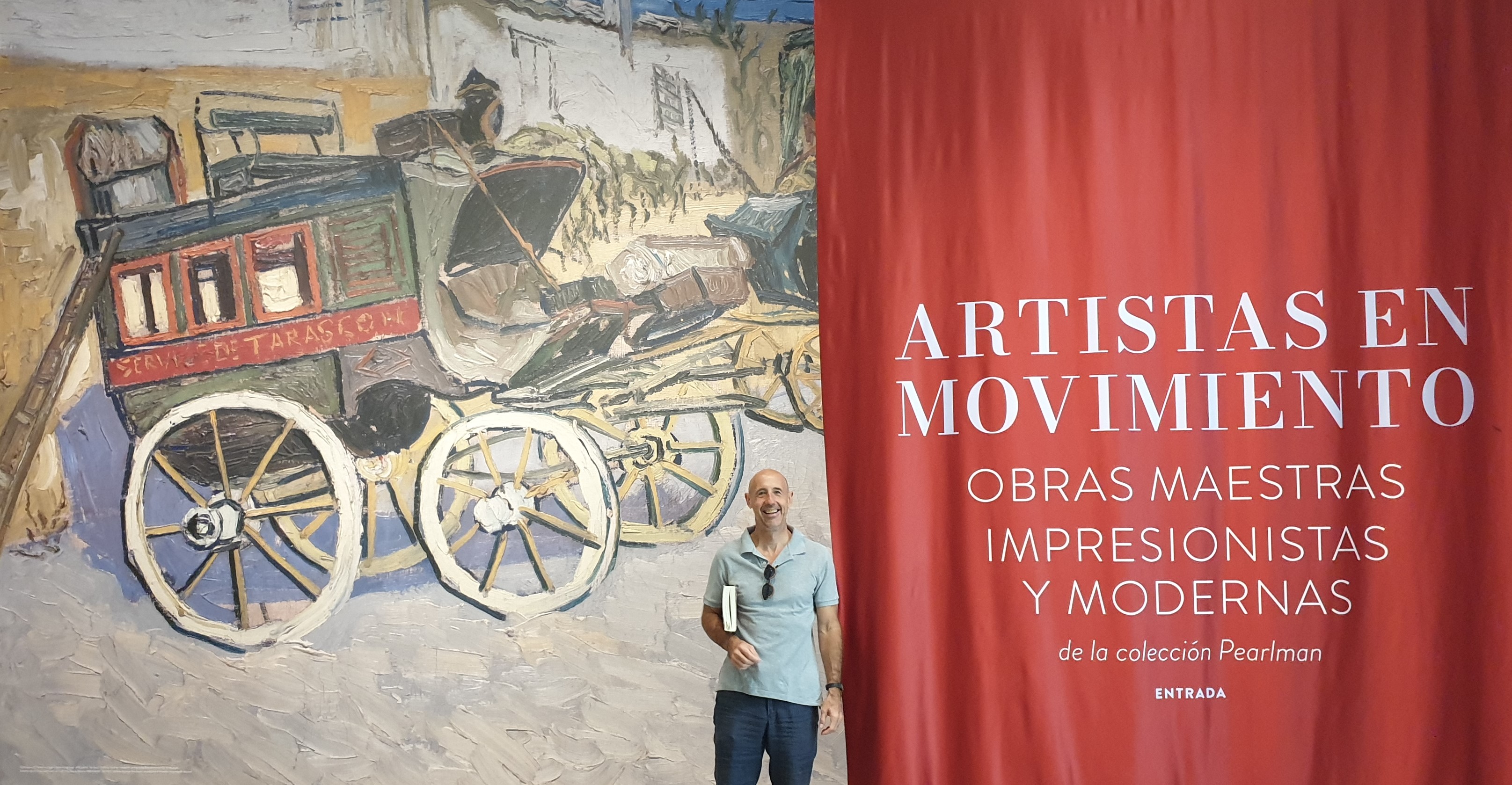
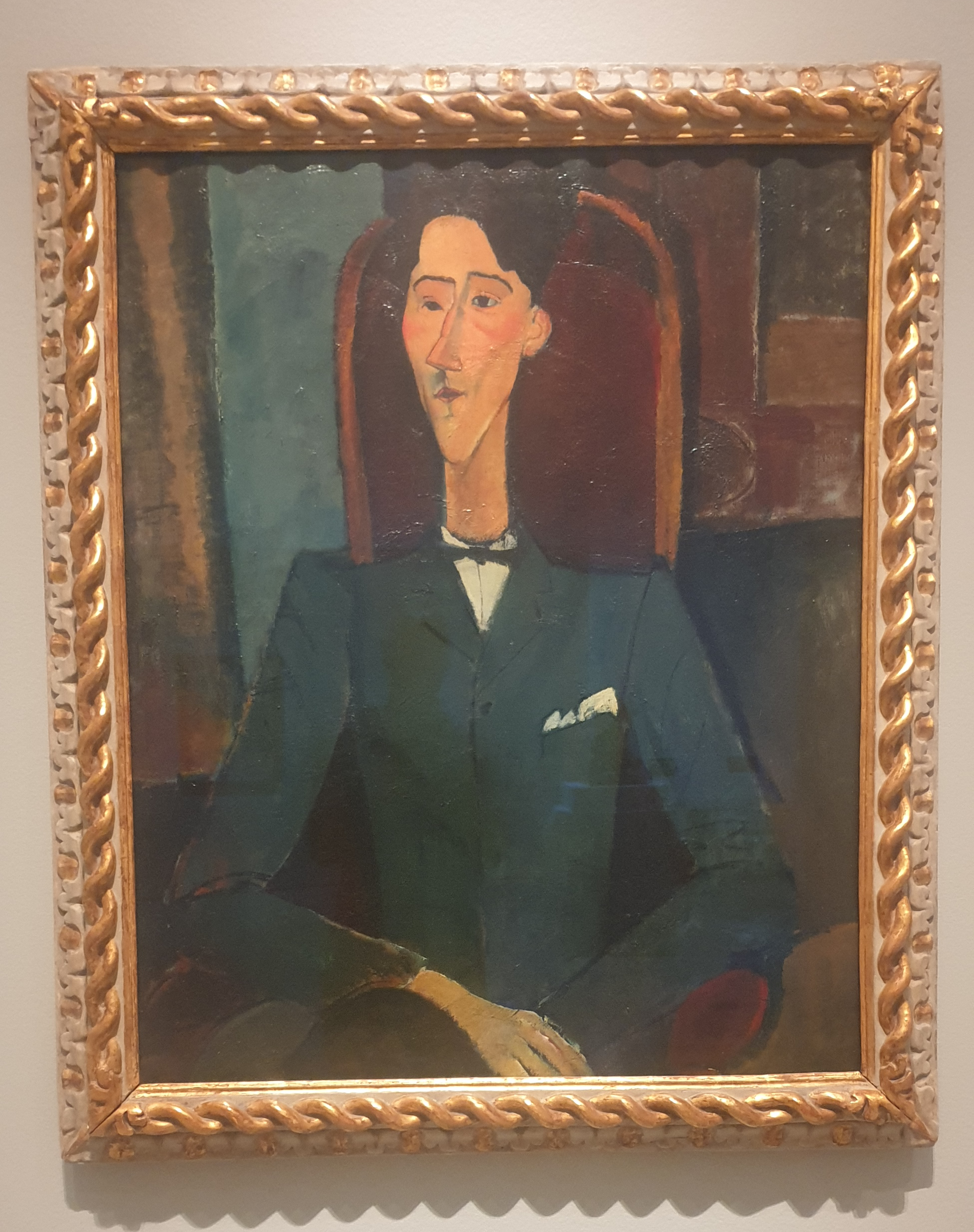
Why am I pontificating thus? you ask. Well, I recently had the opportunity to visit one of my favorite places in South Florida, the Norton Museum of Art in West Palm Beach. They have just opened a new exhibition titled Artists in Motion: Impressionist and Modern Masterpieces from the Pearlman Collection. It is a smaller exhibit with some niece pieces: a Gaugin wood carving, a van Gogh, some Cezanne, a couple of Modigliani, etc. My favorite was a Modigliani portrait of Jean Cocteau -yes, you could say it is very Grecoish.

When I am at the Norton, I always enjoy walking around and checking out the permanent collection, the gift shop, the sculpture garden, it is all a very rewarding and enriching, my blood pressure goes down. As I have said before many times, an oasis of culture and beauty in South Florida.

On the importance of keeping the flame of curiosity burning strong.

Stay curious my friends

Hmm, the Interweb is full of encouragement to keep you curious, who knew? And yet we continue the death scroll of doom on social media, we stick to our thoughts and convictions, we are unable to change our minds, we are right, and we already know everything.

The other day I went to a lecture about the martyrs of La Florida given by my dear friend and colleague Fr. Cristian Sáenz SJ who is a scholar of Early Church History, and he mentioned that his hobby was researching the martyrs of La Florida (I have attached the lecture below, because it is awesome, and he is awesome!). But this comment got me thinking about the importance of keeping the flame of curiosity burning strong regardless of your age.

For me that involves not only reading across different disciplines; from current events and pop culture to Enlightenment and Romanticism texts, to articles about the films we watch in Film Club (pro tip: go to Google Scholar, there are many available academic texts that you can access skipping the self righteous academic databases) -and obviously the films themselves, but to then see if there are any dots there to connect. You would be surprised.

The key process here is to digest and process all new information, how it makes you feel, does it change anything? Does it agree or disagree with previously held beliefs? This digestion happens in silence, in contemplation, or in conversation.

Although I am focusing here on intellectual curiosity, go ahead try new food, listen to new music, talk to people you have not met before. In other words, push beyond your comfort zone, try new things and experiences. You are welcome.

Keep calm and stay curious

The best cardio workout

It is swimming, of course, and I’m back at it!

Swimming does not hurt your joints, it really works your core, resistance to water tones muscles, you have to really focus on your breathing, etc. etc.

As is customary with me, I was a late adopter, a late bloomer, unlike my sister who was winning swimming championships in high school.

I did not start swimming as a workout until my second year of college when they built a pool. My brother Theo and I would go for a swim almost daily. In my mid 30’s in Madrid, I was schlepping to Chamartín for the amazing 50mts length pool. Back in the US I swam on and off, eventually swimming at the Wellesley YMCA on my way back to Boston from work. Of course, UNC has a phenomenal pool where I loved to swim. I love open water swimming because you don’t have to turn around. In Naples I enjoyed swimming on the Gulf side. Here on the Atlantic coast, I have to wait for the ideal conditions, which are exceedingly rare; no rip tides, no choppy water, no Portuguese Man o’ war, etc. Sadly, in the last 3 years I have only managed to get out about a dozen times.

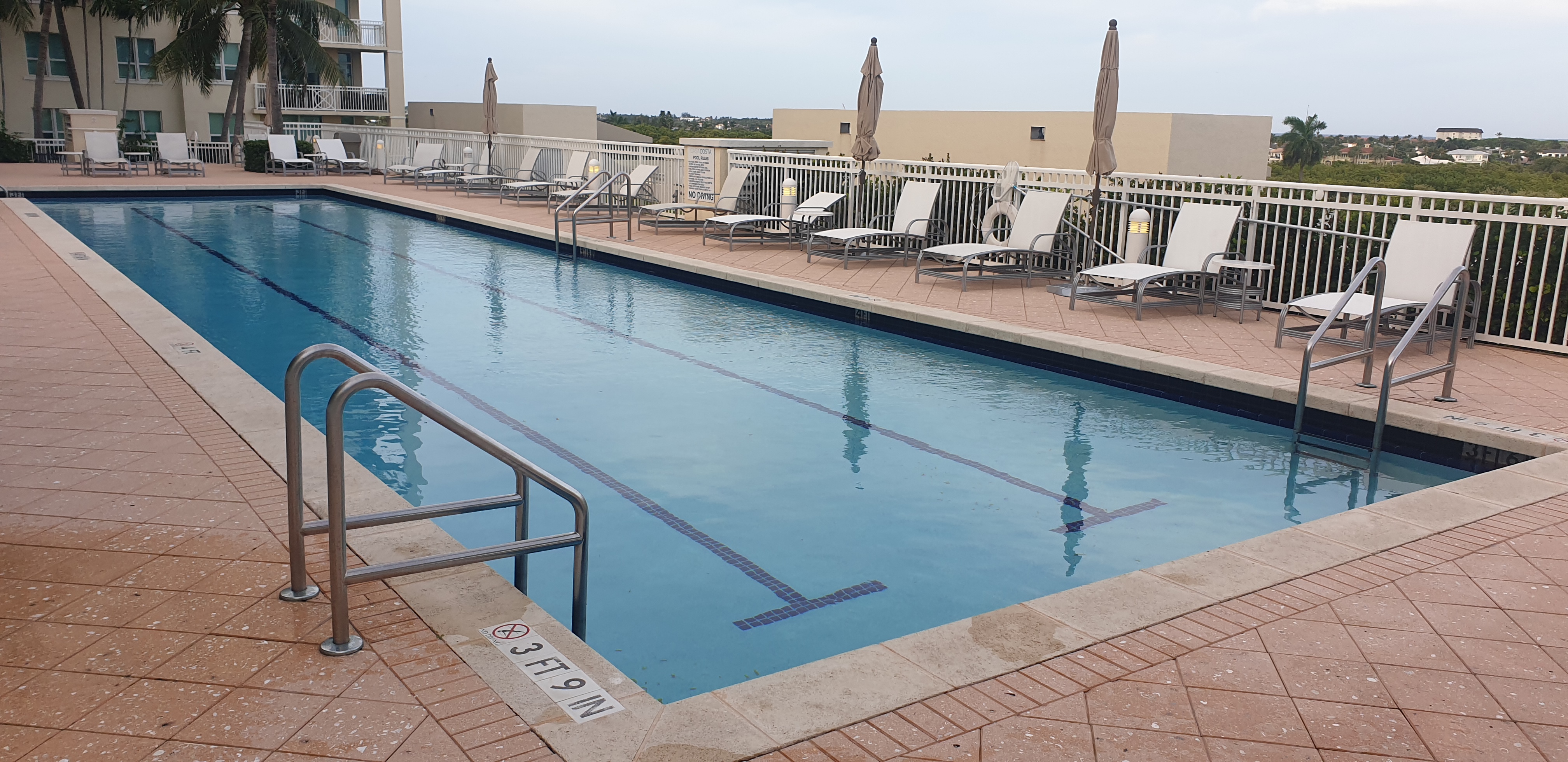
But the apartment building I have moved to has a lap pool! So, despite my less than perfect technique and my lack of practice, I’m back in the pool and swimming more and more.

If you can get access to a pool, throw on a swimsuit and go swim some laps, you are welcome.

On the importance of silence.

Here is a paradox: We are surrounded by silence, and yet we choose not to listen to it. Our lives are lived at full volume all the time. Our devices keep chiming, beeping, buzzing. My new pet peeve is when you are having a conversation with someone, and they keep looking at their (smart?) watches to see all the notifications coming in. They might be physically in front of you enjoying (¿?) a coffee, but their attention is on everything coming into their watches!

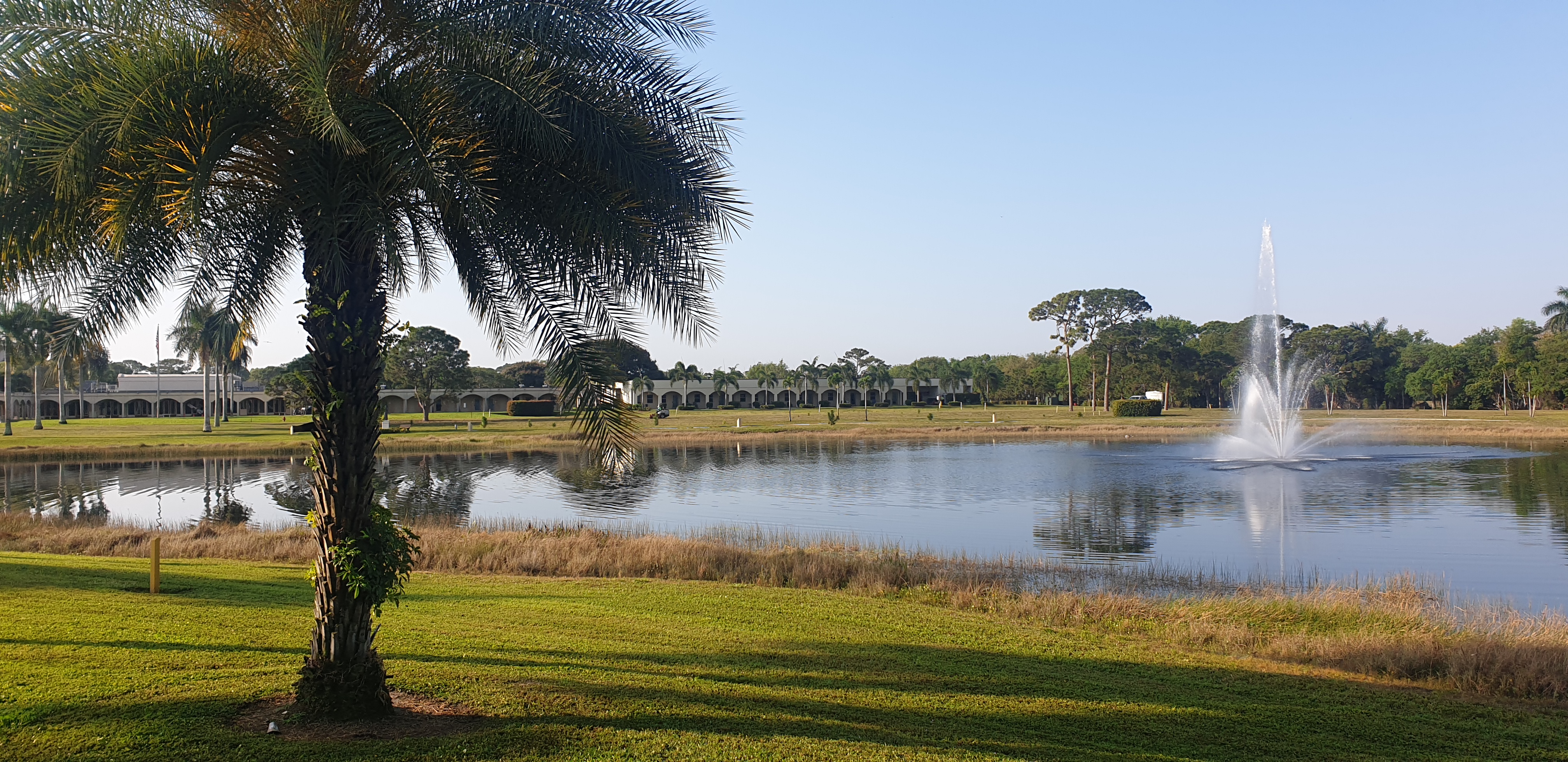
I like to think of myself as a minimalist (although my recent move demonstrates that I am not very good at it –although I try). I live alone, no TV, no pets, and yet I make my breakfast watching the previous night’s newscast on my tablet. I check out the news, this blog’s stats, incoming emails, the weather, Facebook and Instagram (follow me on Tonxob) on my different devices a few times a day. But I do try to listen to the silence: more and more: in the car I do not turn on the radio nor CD (yes, it is old like me), I do not listen to my earphones at the gym nor when I am running, walking or paddling, and of course I meditate a few times a day, where one is dealing with the noise inside the head. In the mornings I walk across campus to make myself a coffee, and that five minute walk by the pond has enough silence to carry me until lunch. In my classes we start with a minute of silence, just to center ourselves and transition to Spanish. You have to make the effort to find the silence or the noise will eat you up!

This post comes about because one of my students recently asked me to help him with an independent study translating Cuando todo calla, El silencio en la Biblia by my colleague and exiled Bishop of Managua Silvio Baez. I also recently picked up Shusaku Endo’s novel Silence, just because of the title!

But I crave silence. I miss the school assemblies at Seacrest Country Day school when we would sit in a Quaker circle and only speak if we were so inspired (although it was not a religious school). I miss the silence of the Camino, of the Paular Monastery.

It takes practice to listen to the silence, oh but the rewards, the clarity, the peace are totally worth the effort. Try it!

Here is a beautiful video on the rewards of listening to silence. It is Villanova’s Fr. Martin Laird’s chat : Out of silence something is born that leads to silence itself. It is a bit long, but definitely worth it

My 21st move and Frasier

The landlady from whom I have rented for the last three years did not renew my rent. So, I had to find a new place. If you did not know this, inflation in South Florida is crazy. After COVID, when inflation surged across the world, many folks chose Florida’s lack of personal income tax as a way to compensate for inflation -that, and the very lax and libertarian attitude. People rushed to South Florida, provoking mad inflation. Finding a place in my budget was tricky, I had to seriously downsize from a townhouse to a tiny apartment for $200 more than I originally paid for the townhouse, yikes. Fortunately, it includes water and internet, and it has all sorts of amenities. I can’t complain, just compared to my miniscule Boston Back Bay studio when I started this blog a little over ten years ago, this is the lap of luxury.

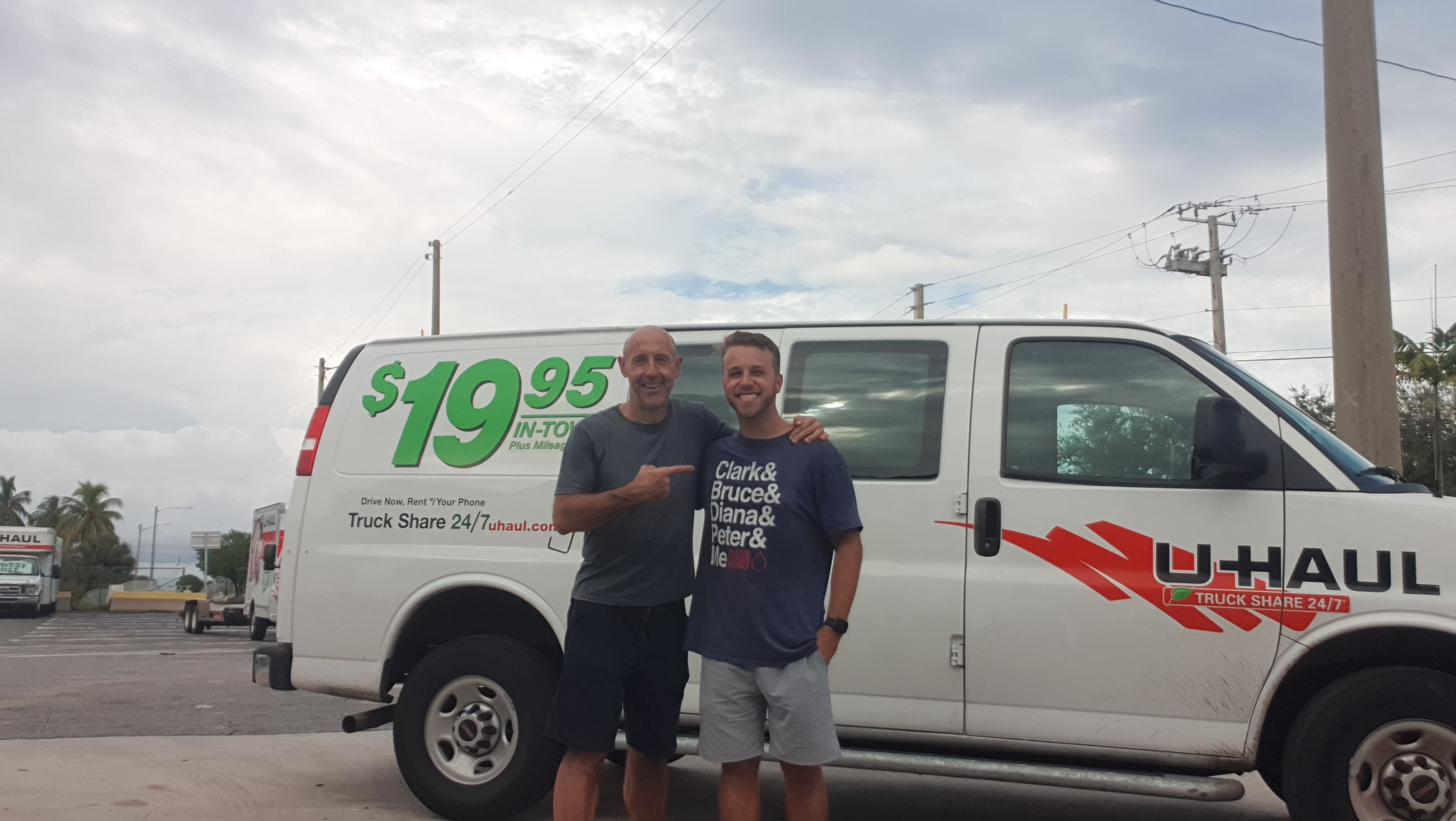
Move #21 was a total nightmare. The apartment owner’s association does not allow moving on weekends, and I had planned my move for a Saturday, so I had to rush to move in on a Friday, they charge $100 to use the cargo elevator, etc. . Not only that, but although the apartment was freshly painted and had some new appliances installed, the previous tenant had left behind his furniture, and the fellow who was supposed to take it away for the landlady reneged at the last moment, leaving the clearing out to me, and to Tyler a wonderful old student who volunteered to help me on a Friday, God bless him.

Moving, it does not matter if 2 miles (my case) or 2 countries is very stressful, right up there with with divorce, death of a loved one, illness, and so on. Add a bucket full of variables kicking in and you have the move from hell…

I think my only TV reference in all of this blog was to the 90s series Frasier, when Frasier, Kelsey Grammer, recites Alfred Lord Tennyson’s Ulysses. No spoilers: Frasier is a radio psychiatrist, but more importantly a hilarious snob, a gourmet, pedantic, bon vivant (you might also know him from Cheers, where he spun off from), at any rate, he lives in a fancy apartment in Seattle where he dukes it out with his equally snobbish brother Niles (David Hyde Pierce). So, with some obvious differences, I did fancy that I was making a Frasier move living in a fancy apartment building.

I am finally settled in, and I actually just had a go at the sauna and steam room, I do feel a bit like Frasier Crane, now I just need to have the rest of the great cast of the show. Here is a clip from Youtube of Frasier for you:

On cuff links, a sartorial detail.

If you are a keen reader of this blog, you might remember that I mentioned before that my dad was an international banking executive. This added to the fact that his brother-in-law (my uncle) was a top tailor (to the king and other celebrities) means that my dad was always impeccably dressed. Top it all off with the fact that we lived in London in the early to mid-eighties where he had access to Jermyn St. Shirts, and you get the full picture.

As would be expected, I inherited his shirts as soon as they were slightly worn, which was awesome! But there was one main issue with these shirts: they had French cuffs that required cuff links…

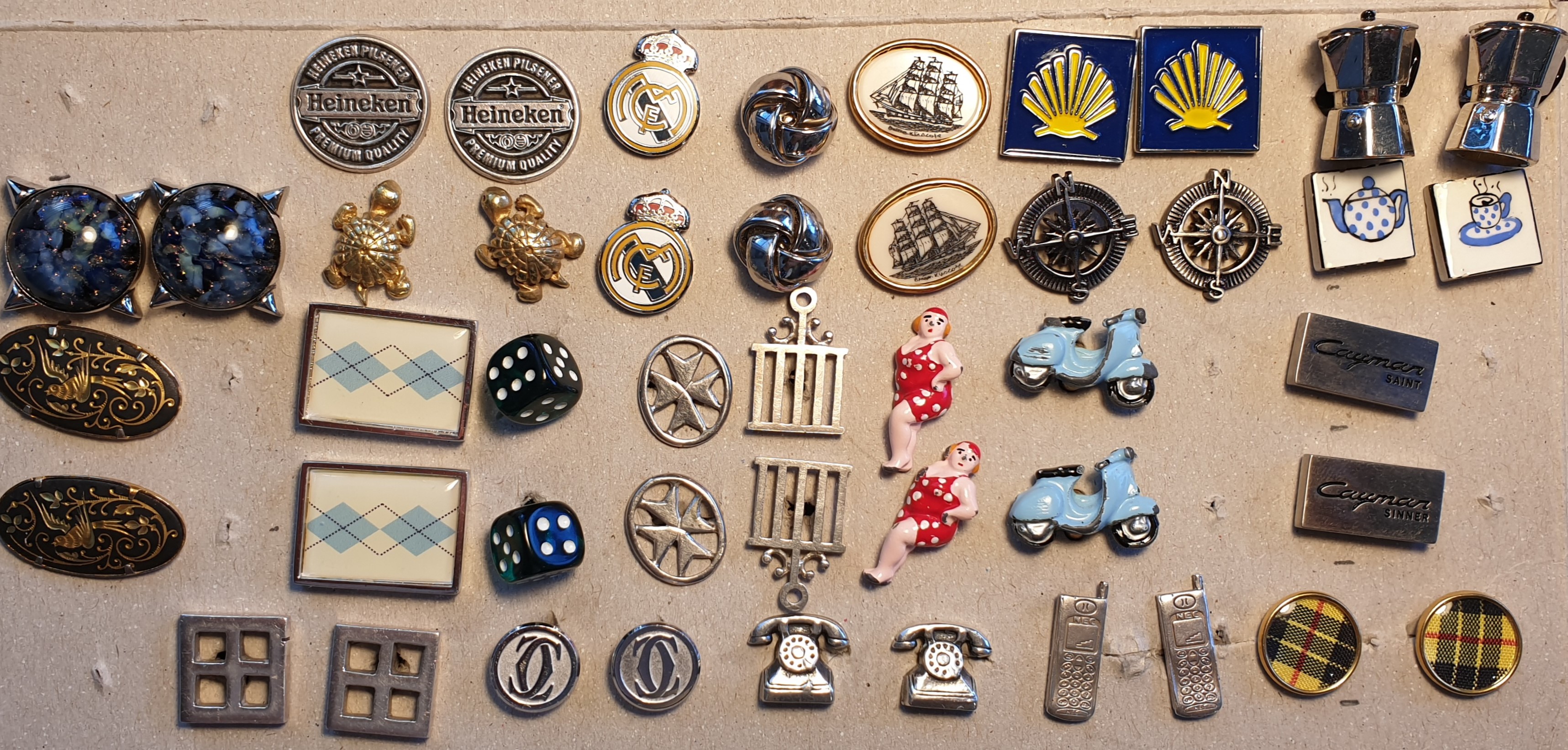
So, over the years I have accumulated a little collection of cuff links, mostly given to me, some purchased, some exchanged with other cuff link wearers, some lost, some broken.

Hard core traditionalists insist on wearing “chain” cuff links where a small chain holds together the two buttons. The problem with these is that they take much longer to put on since there is no place to leverage power to push the button through the buttonhole. Stiff cuff links with a swinging barrette are easy to slip on. A third variety are silk knots, these come in many colors and combinations and are fairly easy to put on, although they are frowned upon by serious sartorialists, I occasionally wear them with no shame!

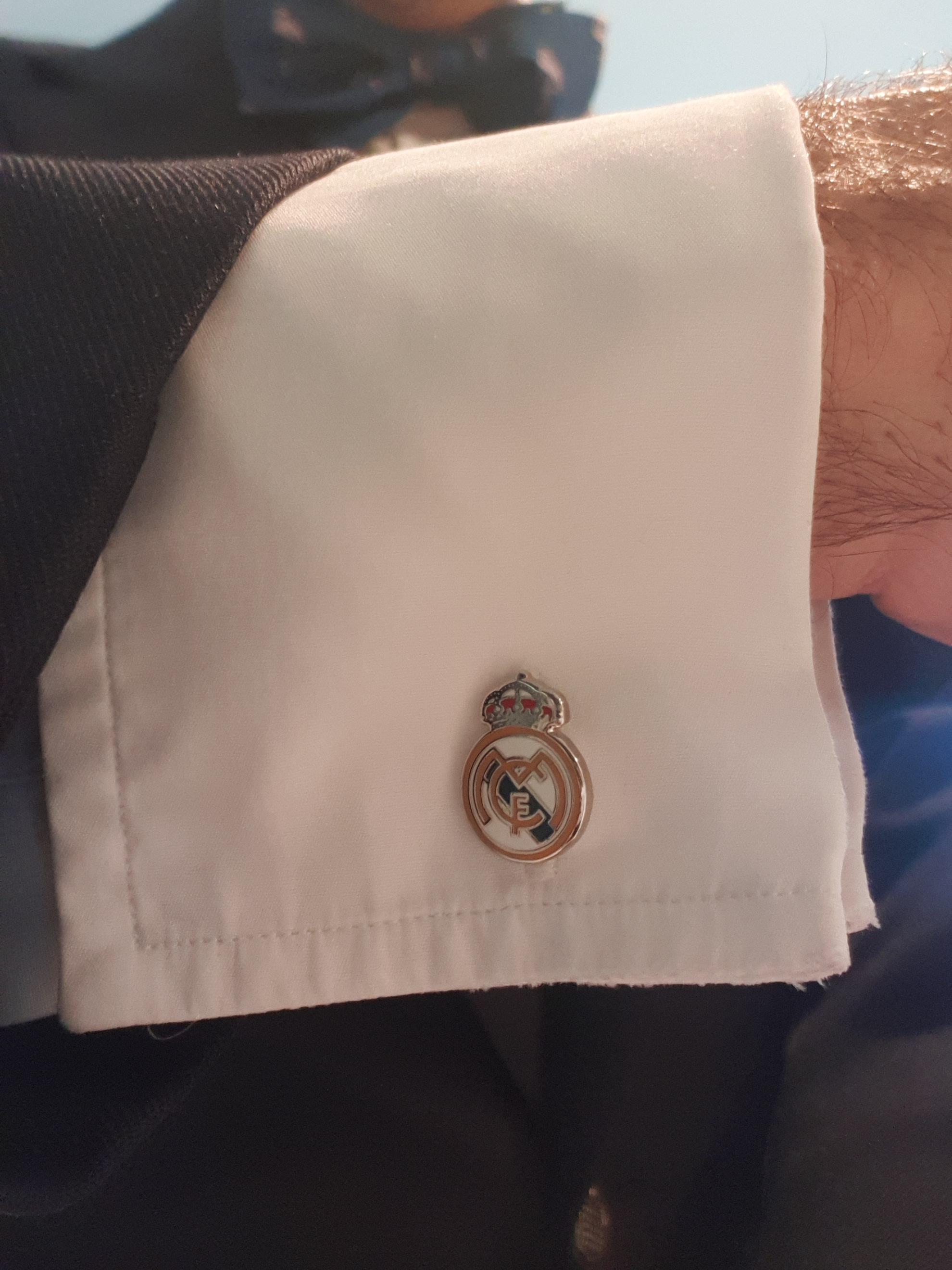
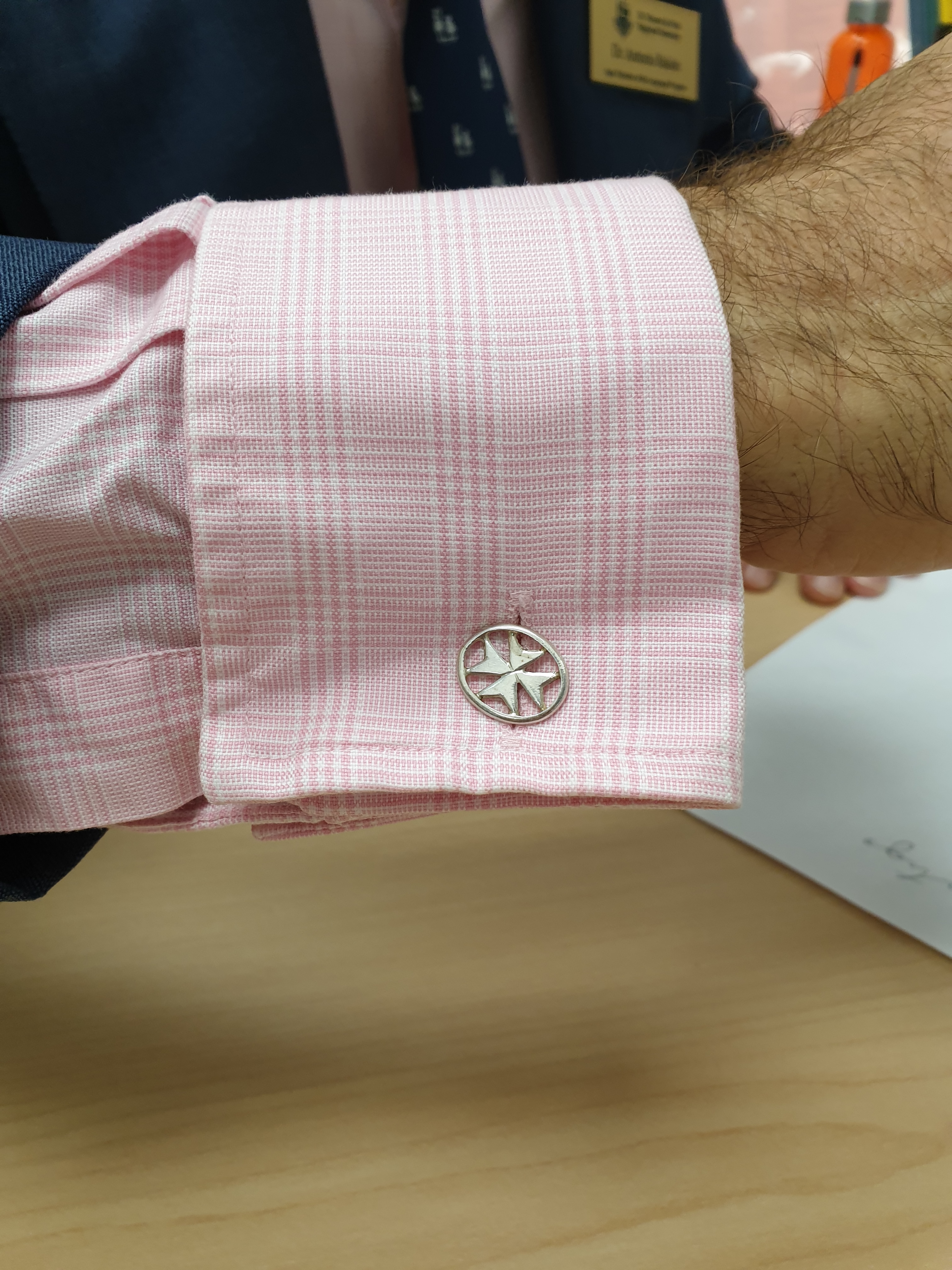
An added plus of interesting cuff links is that they are automatic conversation starters, you just need to pay attention to the wearer of cuff links to see if there is a story there. You guessed it, many of mine do have stories, from just showcasing my passions: coffee, Real Madrid, the Camino, etc., to personal stories of who gave them to me, etc.

Can you guess my favorite cuff links in the picture? Hint: My girlfriend gave them to me so I would not lose my true North…

Do you wear cuff links? What is your story? Share in the comments below!!

Ask not what your country can do for you… Jury Duty

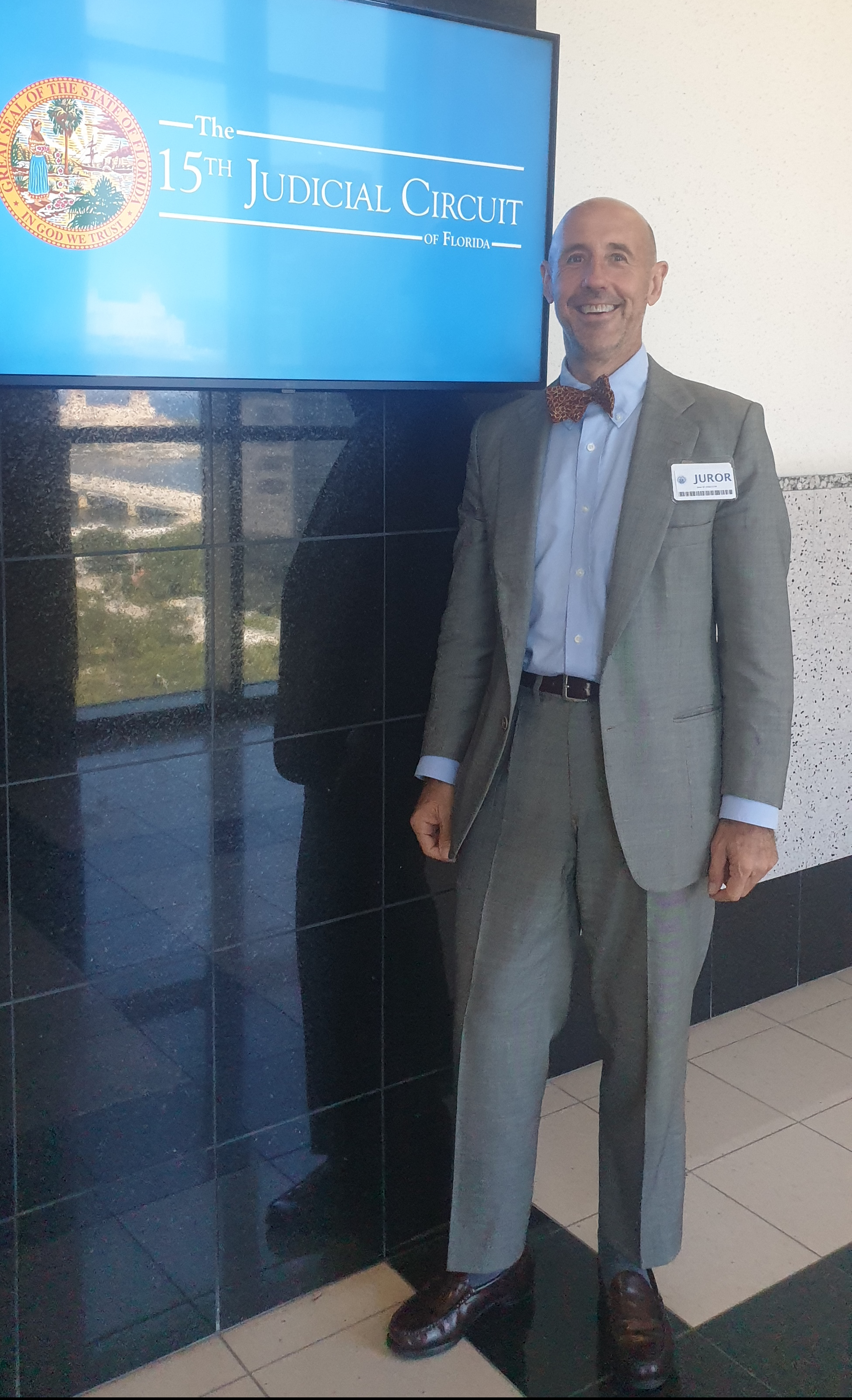
The first thing the judge asked was to raise our hand if we were happy to be there -I was- but nobody raised their hand, so I didn’t either, I was not going to be the first one to be kicked out of jury duty.

My summons for jury duty came in the middle of the Summer, when I was in Spain, so I postponed it to Sept. 11th. Coincidence? We know there is no such thing.

I was surprised that I was on the first call for jurors, I was not expecting that. Another thing I was not expecting were the views from the 11th floor of the West Palm Beach Courthouse. Amazing!

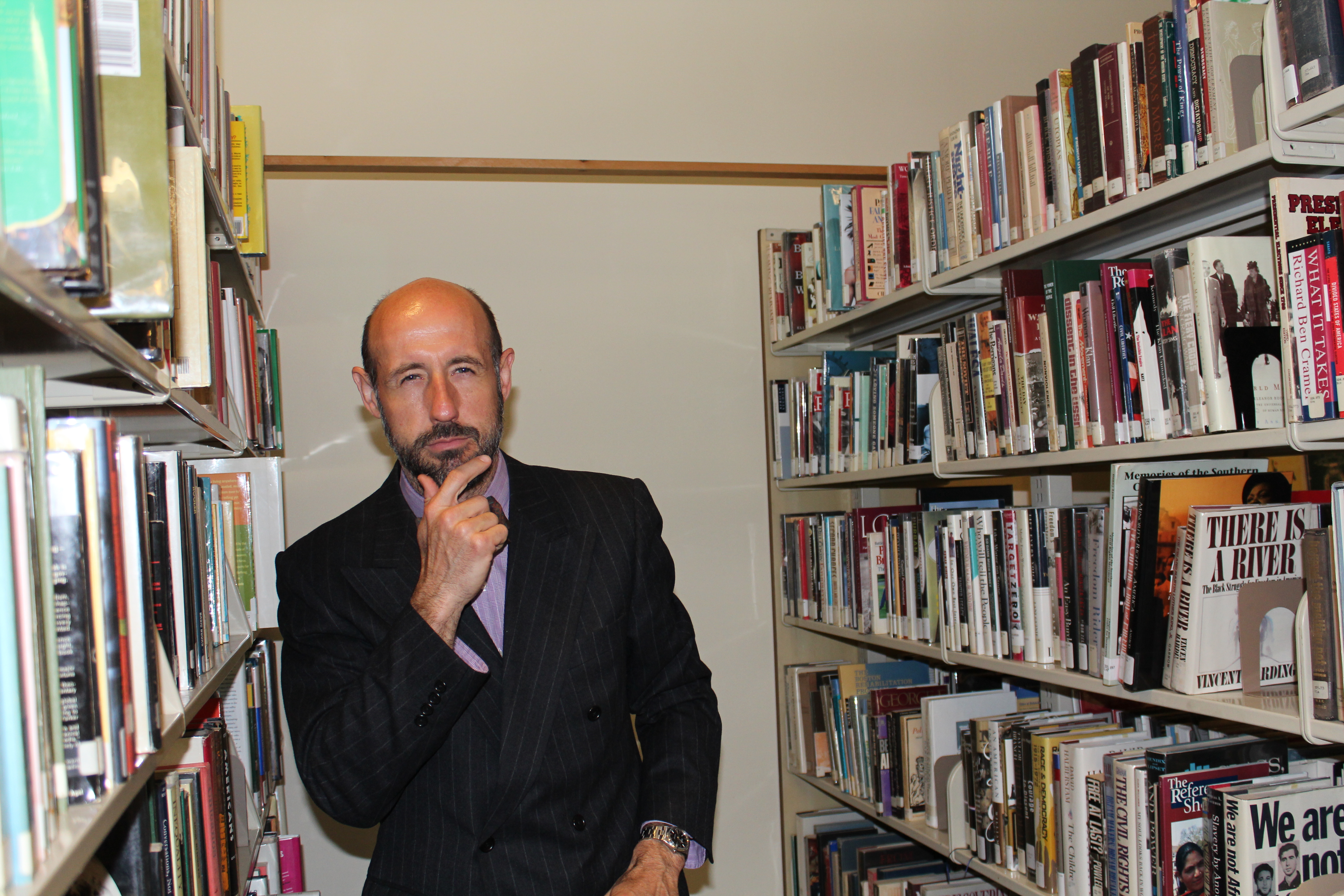
The case in question was a criminal case involving stalking. Obviously neither the prosecution nor the defense wanted a hyper-educated, suit and bow tie wearing old professor on the jury panel. But I still had to wait all day and answer all sorts of questions before getting released in the afternoon with the other 20 people not chosen: the wife of a polo player from Wellington (Polo capital of the world, a neighborhood of Palm Beach), a Louis Vuitton sales advisor, and all other sorts of interesting and not so interesting jobs…

Happy to have done my duty as a citizen. Fortunately, I will not be considered again until next year.