Celebrating a quinquennium of Film Club; Paul Thomas Anderson.

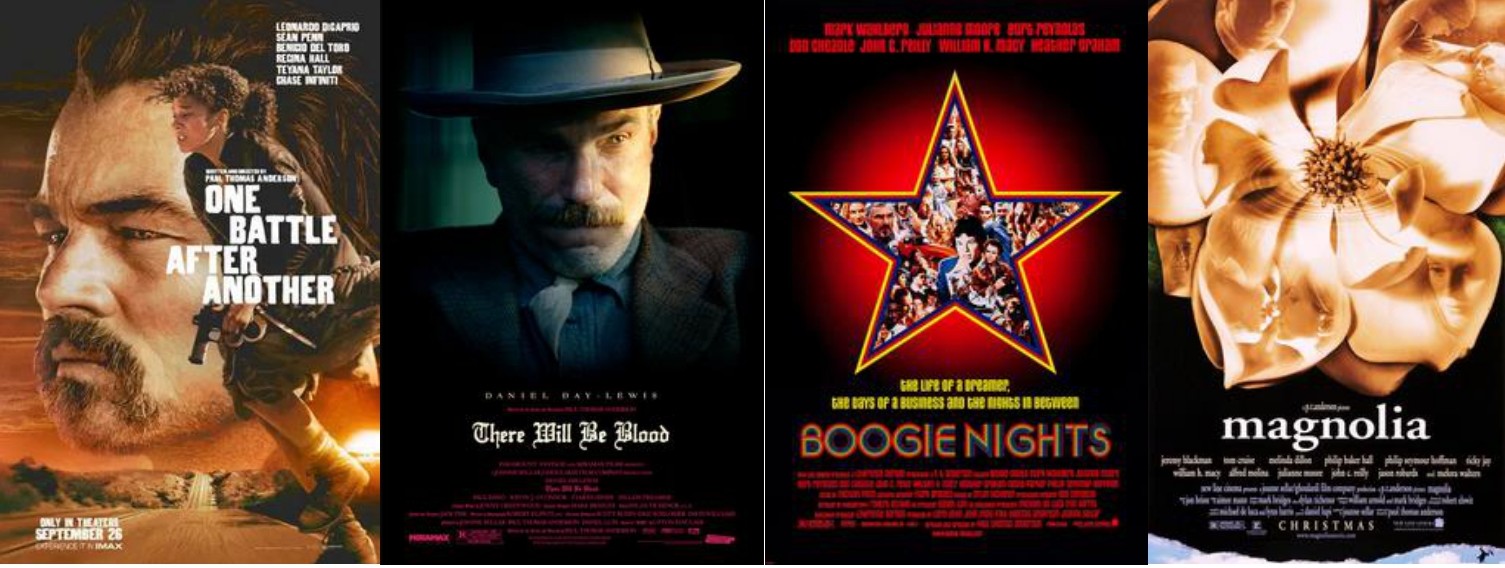
PTA collage

When my dear friend (and old student) Guille invited me to join Film Club, I would never have guessed we would have made it to five years, and now, here we are! Happy 5th birthday, Film Club!

Film Club works by having the four members rotate in choosing a theme for the month. We then select four films within that genre/theme/director/actor, etc., and, after viewing the films, we meet to discuss them.

We recently spent a month exploring the work of Paul Thomas Anderson, watching Boogie Nights, Magnolia, There Will Be Blood, and the recent One Battle After Another. Although every month is special and enriching, this month was mind-blowing!

Boogie Nights (1997), in my opinion, was the weakest one of the lot, maybe because it is the oldest. Still, an amazing cast that works beautifully together —Burt Reynolds, are you kidding me? Here you see the seeds of what will become PTA’s signature moves.

I remember seeing Magnolia (1999) alone in a long-ago-lost movie theatre in Madrid (Cine Bogart) and being amazed at the cris-crossing narrative, Tom Cruise’s performance, Julianne Moore (who also nailed it (metaphorically, and literally, if you know what I mean) in Boogie Nights), and Philip Seymour Hoffman, among others.

There Will Be Blood (2007), I also saw when it came out, and I remember being amazed at Daniel Day-Lewis’s performance, but then again, who wouldn’t be? This is a masterpiece of cinema. With Daniel Day-Lewis, you do not need the clutter of layering narratives; he takes care of the film, based on a Upton Sinclair novel.

Finally, the very recent —I only missed it in theaters by a few days— One Battle After Another, with a flawless performance by Leo DiCaprio, although (sorry, spoiler alert) Sean Penn unexpectedly ends up stealing the film. This film beautifully encapsulates PTA’s evolution, masterfully blending drama with subtle comedic hits. The film shows a more mature, minimalist approach, ditching the multiple story lines to focus on the protagonist and antagonist (you figure out which one is which!)

There is a driving thread in all those films; they all deal with family, particularly messed-up families (Which I would dare say is most of them!): surrogate families, broken families, children adopted for profit (literally), etc. Paul Thomas Anderson, if you are reading this, I have a therapist who is probably cheaper than making all those films….

Here is to another five years of Film Club!
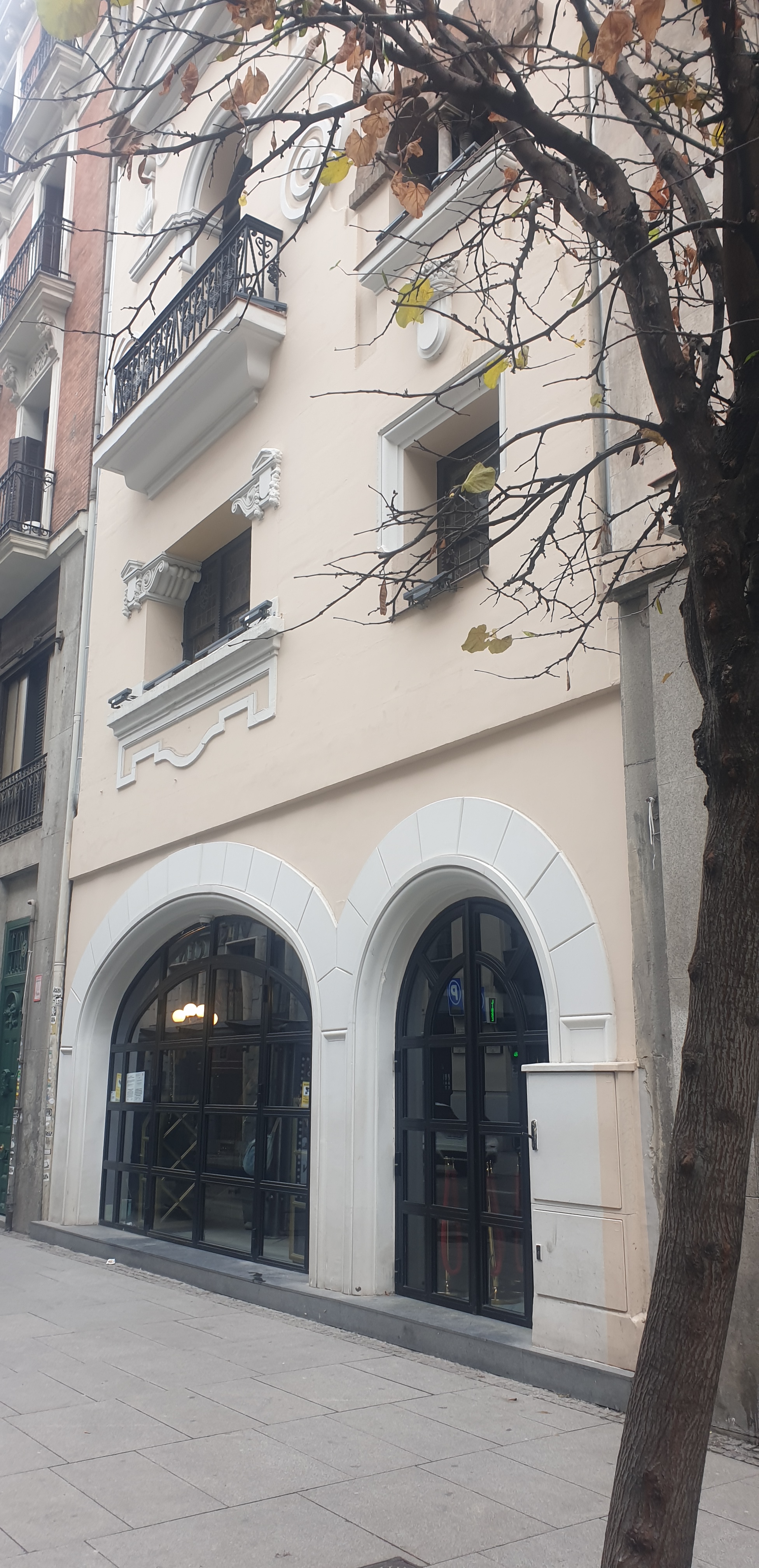
The old cine Bogart in Madrid

Book neutrality program

In my first full-time job at a fund manager in Boston, brilliant people surrounded me. One of those individuals was a portfolio manager named Forrest Berkley, who was brilliant and, fortunately for me, very patient. One of his adages, which he personally did not keep, was that of paper neutrality. The idea is that for every paper that came into his office, another one had to leave. This was easier said than done; his office was full of stacks of research reports from stock markets around the world! But I liked the idea, and I would occasionally mention it as a joke when I threw away some paper.

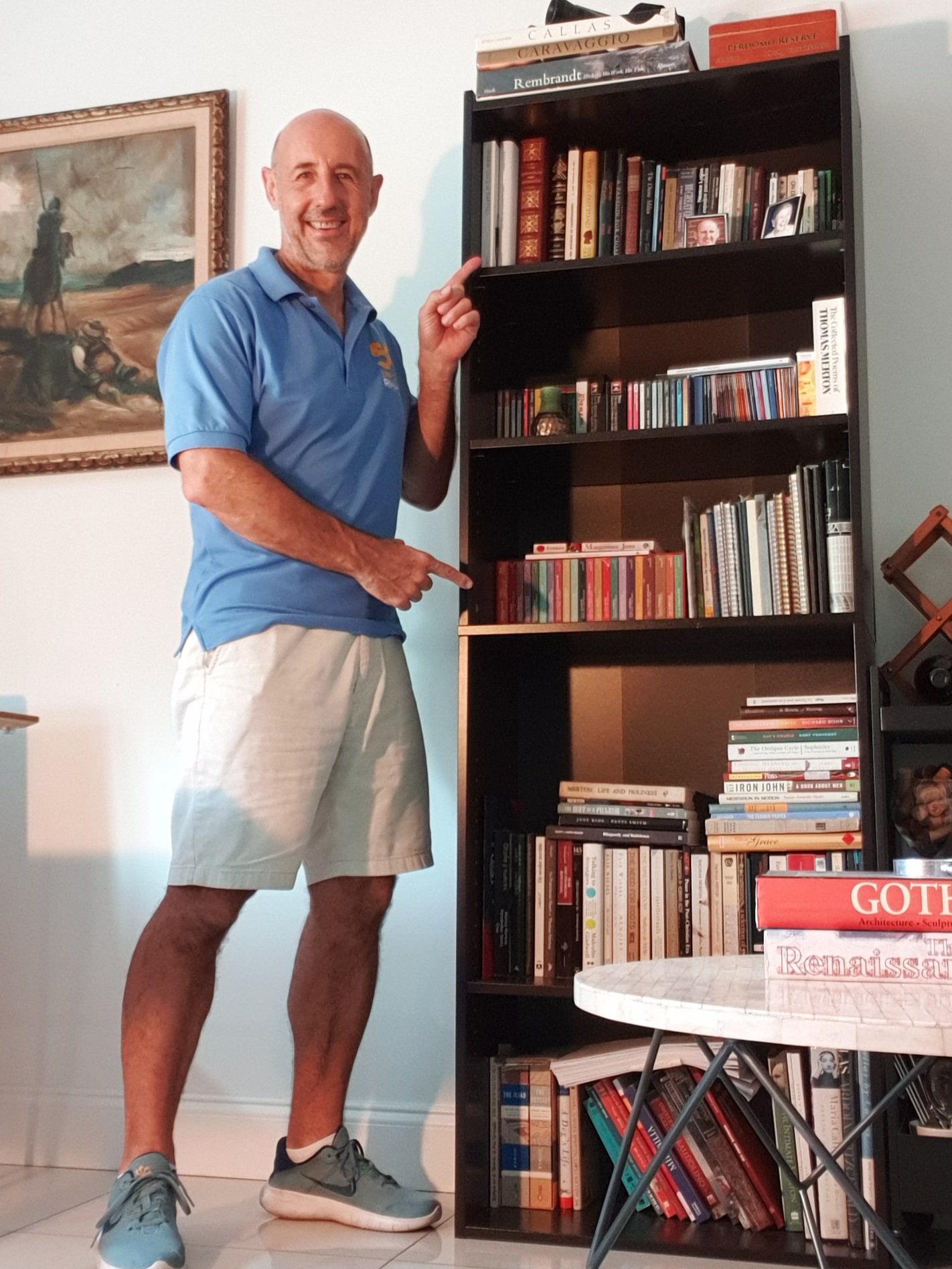
Now that I am older, I have realized that I need less and less to be happy. I have become a bit of a minimalist. While having lots and lots of books might make you look smart, you really do not need them. Once you read a book, you are rarely going to return to it for reference or to re-read it. Let’s face it, how many books have you re-read? In my case, in over 40 years of reading, I have only re-read a handful of books.* So once you read a book, give it away, donate it, sell it, you do not need it.

In that spirit, I have evoked Forrest Berkley’s old adage, and I now have a self-imposed 100-book neutrality program at home. This means that I can only have 100 books at home at any given time. This requires a lot of reading and a lot of donating and giving away books. Does it work? Yes, more, or less, sometimes I might be a bit lenient, but then I remember, and I carefully go over my shelf. Picking out books that I know I shall never get around to reading, cleaning out doubles (I just gave away a Thomas Merton repeat to my yoga teacher, Paritosh), and getting rid of books I have read.

So, unless you like collecting stuff as a hobby, implement a neutrality program. For each blank that comes into your home/office/whatever, another item has to go. You are welcome…

  • Voltaire, Candide
  • Hemingway, The Old Man and the Sea.
  • Gabriel Gárcia Márquez, Crónica de una muerte anunciada
  • Omar Khayam, Rubaiat
  • Unamumo, San Manuel Bueno, mártir
  • Federico Gárcia Lorca, La casa de Bernarda Alba
  • Cervantes, Don Quijote

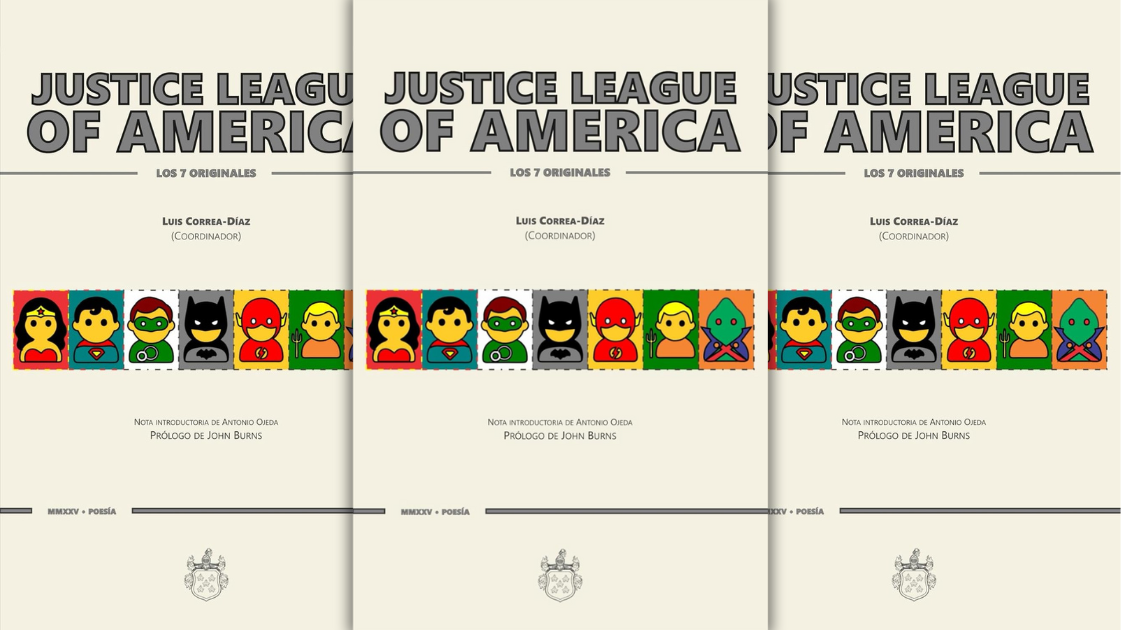
Justice League of America: Los 7 originales, and Latino Book Review

Once you find something that you are passionate about, go all in; get involved, make friends who share your passion, and join a club or association. This will make your projects much more rewarding. You are welcome. My main hobby, which is also partly my job, is literature, words, and everything related to that: books, poetry, narrative, etc., etc.

If you follow this blog at all you know that I enjoy writing book and film reviews when I find something interesting to say about them. Since my job is also scholarly and academic, I also occasionally write book reviews for academic journals (see here).

Luis Correa-Díaz is a professor, a corresponding member of the Real Academia de la Lengua both in Chile and in the US, and a great poet and friend whom I follow. If you have a good memory and you read this blog, you might remember that I have reviewed some of his latest books (La Valparadisea, El escudo de Chile, and Valparaiso puerto principal).

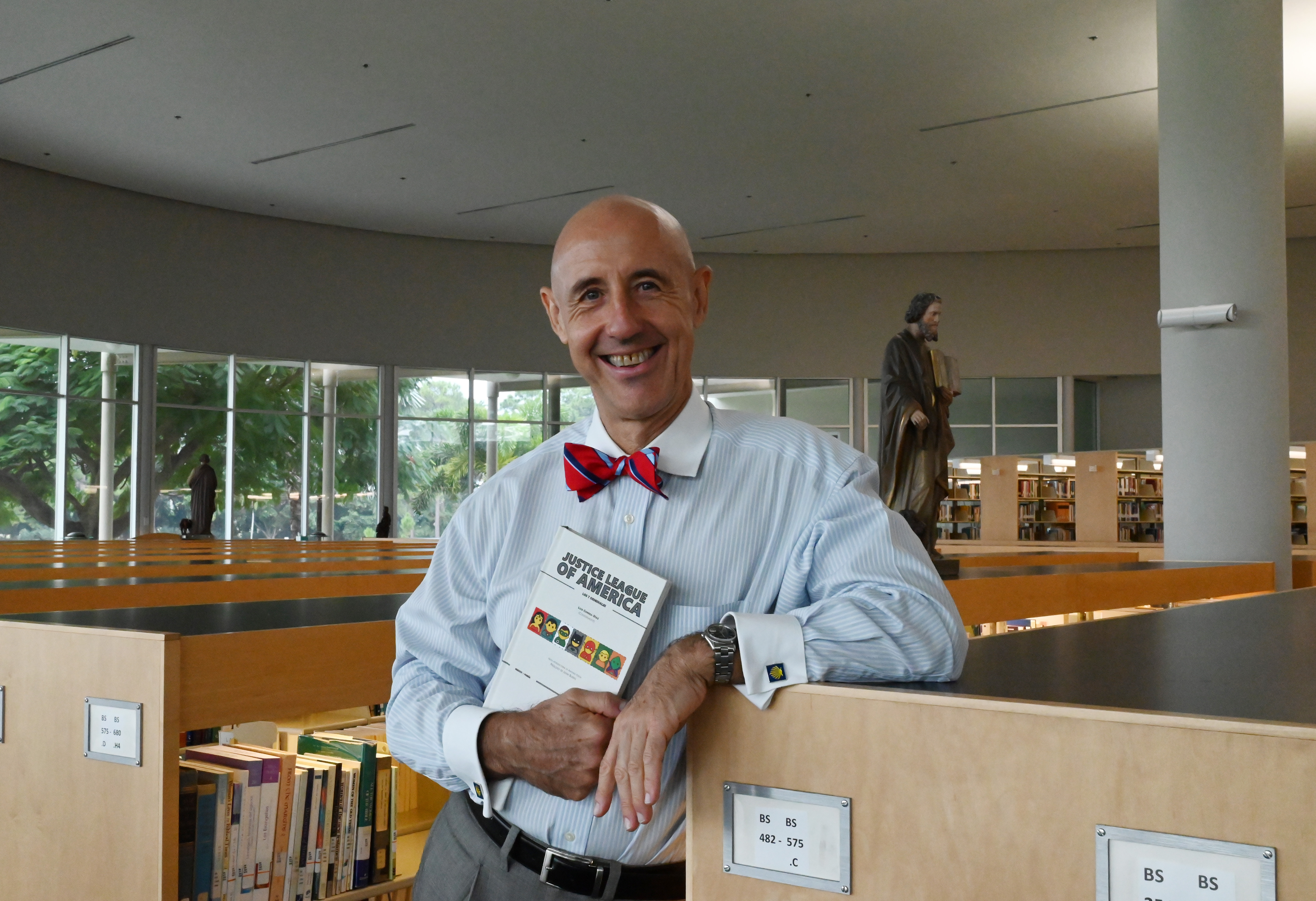
Because I enjoy everything Luis Correa-Díaz writes, I recently bought his most recent project: Justice League of America: Los 7 originales, a bilingual compilation of Hispanic and Latino poetry. I liked it so much, I not only wrote a review, but sent it to the influential Latino Book Review for publishing, which they miraculously did!

You can read my review here.

Hope you like it.

A trio of lectures on linguistics.

Clarification: I am not a linguist. I did have to take a linguistics course as part of my PhD coursework, and, of course, it is difficult not to become a linguistics aficionado when studying literature, or when teaching the Spanish language.

Taking advantage of the cultural powerhouse that is Madrid, I recently attended three different lectures (at two different venues) on Spanish linguistics.

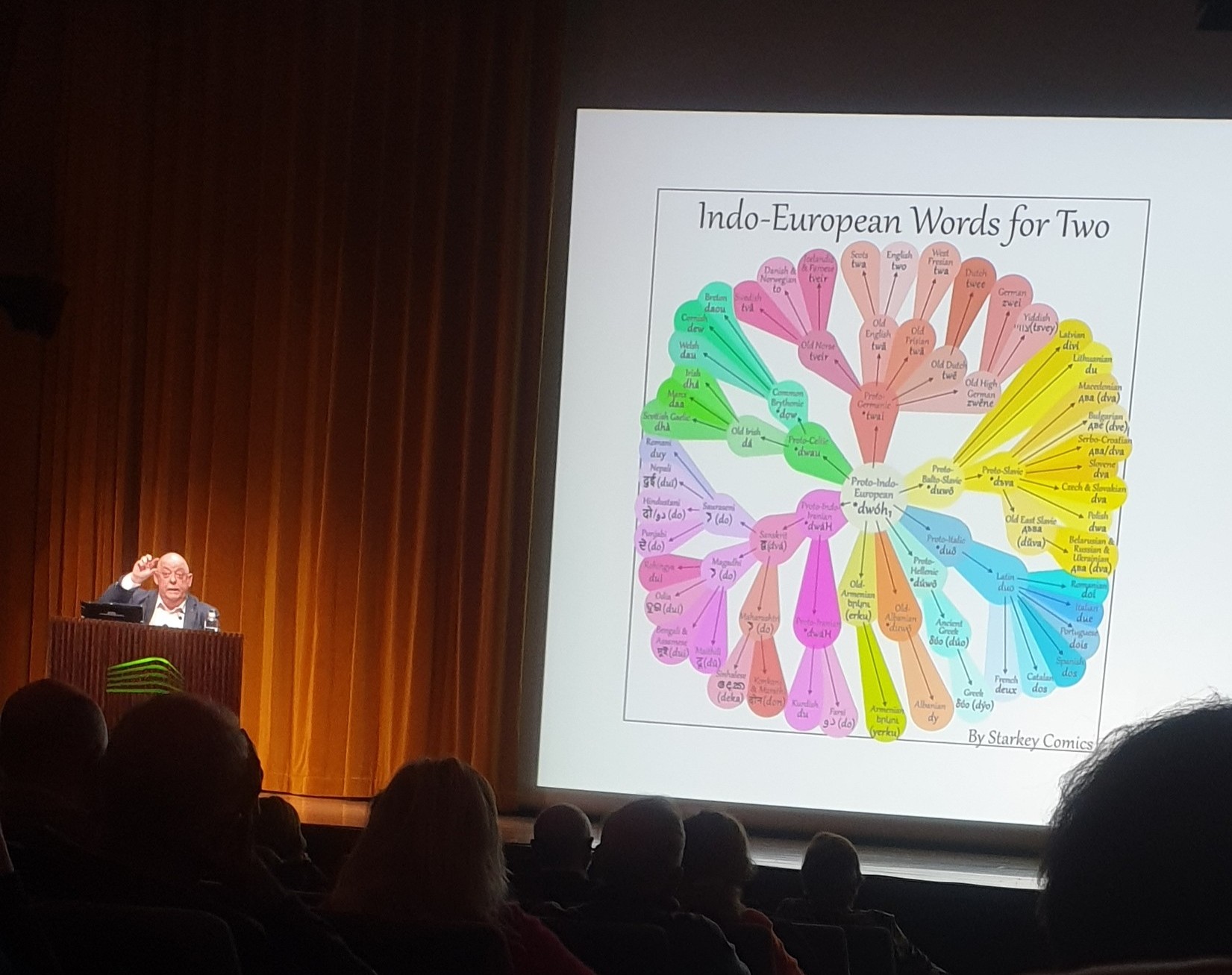
The first one at the Fundación Juan March was a general but excellent introduction to the Indo-European origins of European languages: ¿Qué es el indoeuropeo? La familia de lenguas indoeuropeas, by Complutense University Professor Juan Antonio Álvarez-Pedrosa. In his conference, Álvarez-Pedrosa explained the history of the study of Indo-European languages, dating back to Sir William Jones in 1786, and how he discovered connections between Sanskrit and ancient Greek, the methodology used to track the origins of languages, and how linguists have historically worked. It was a surprisingly enlightening session.

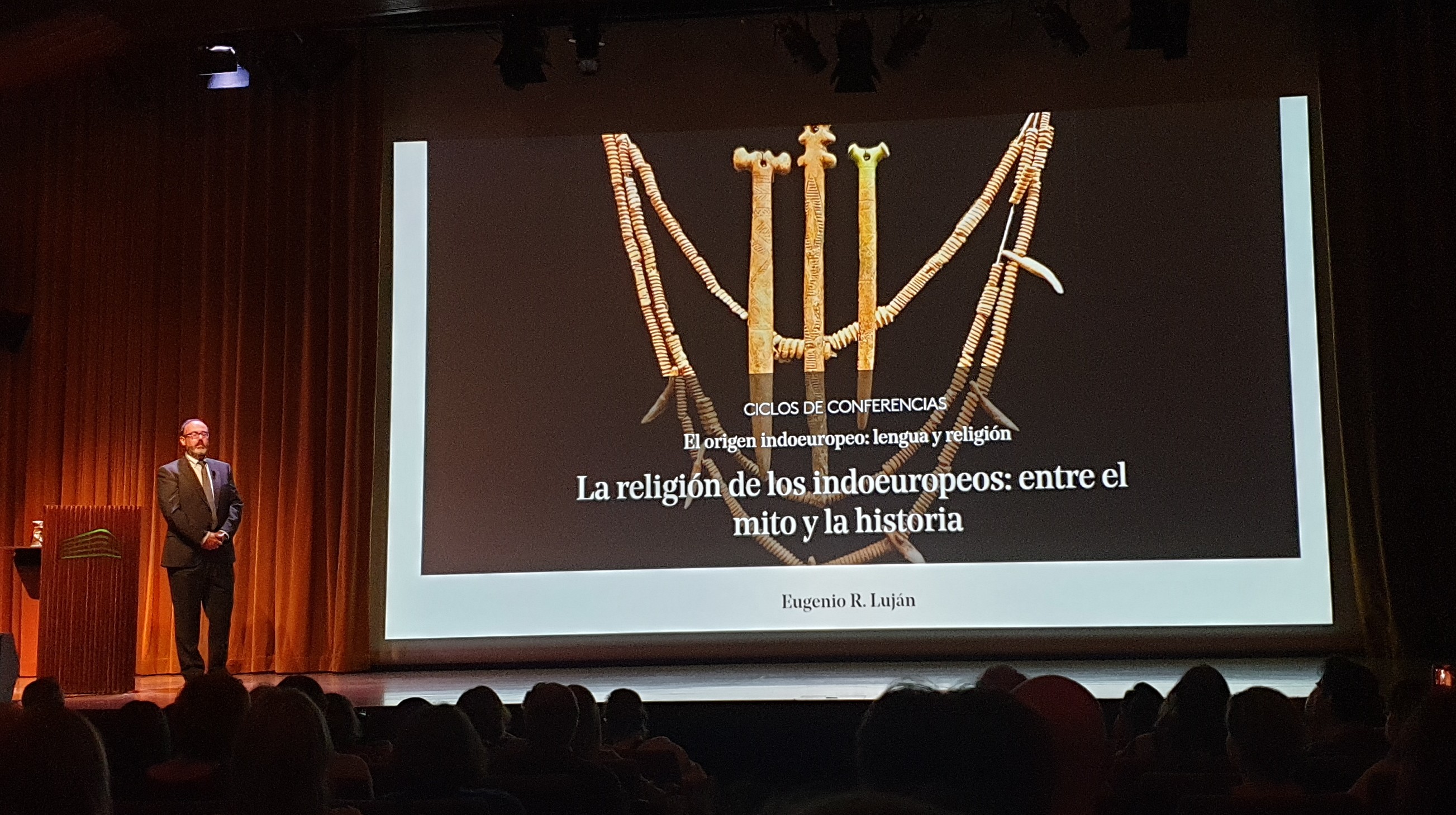
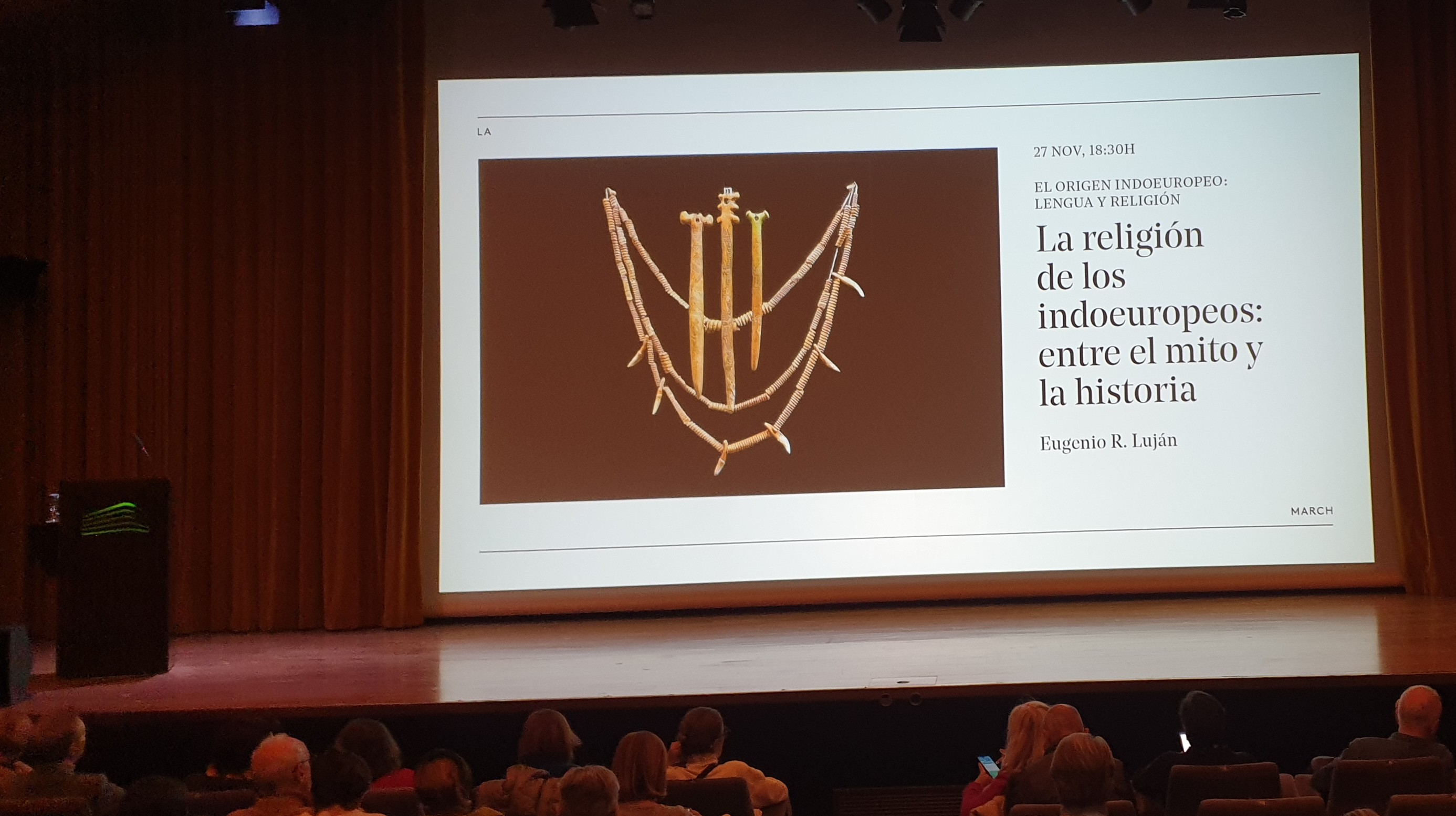
The second lecture in that series, La religion de los indoeuropeos: entre el mito y la historia, was given by Álvarez-Pedrosa’s colleague at the Complutense, Eugenio Luján. Luján explained the collaboration needed between archeologists and linguists to understand the cultures of different ancient tribes, mostly based on Adolphe Pictet’s theory. I did learn that the wheel was used for making ceramics before it was used for transportation! Stuff one learns in lectures on linguistics!

Luján then explained the connection between religion and linguistics based on the three levels of Hierarchy, War, and Production (of children, that is, basically, Love). I did find this section a midge of a stretch, but that is research and academia for you, pushing the envelope.

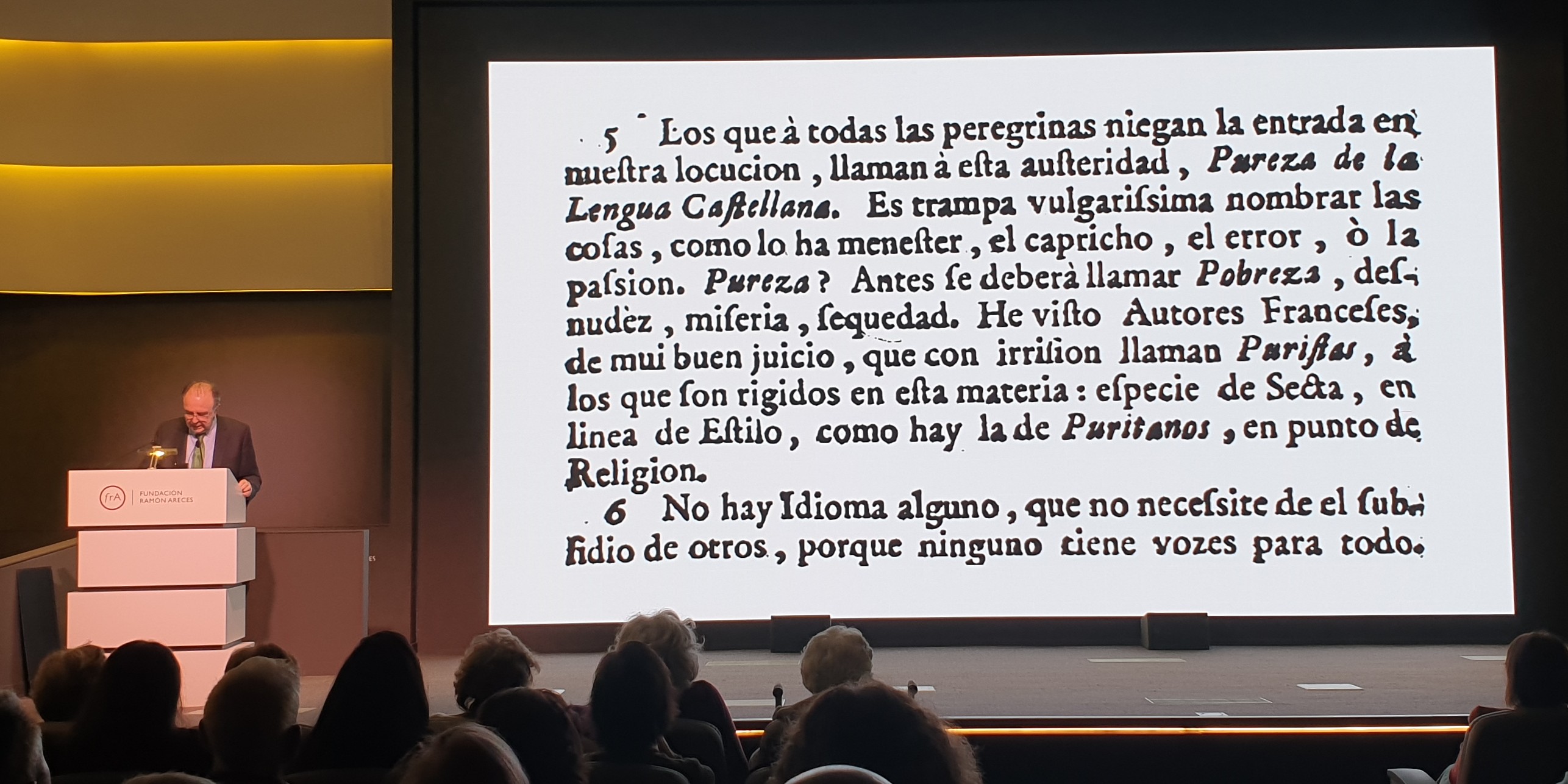
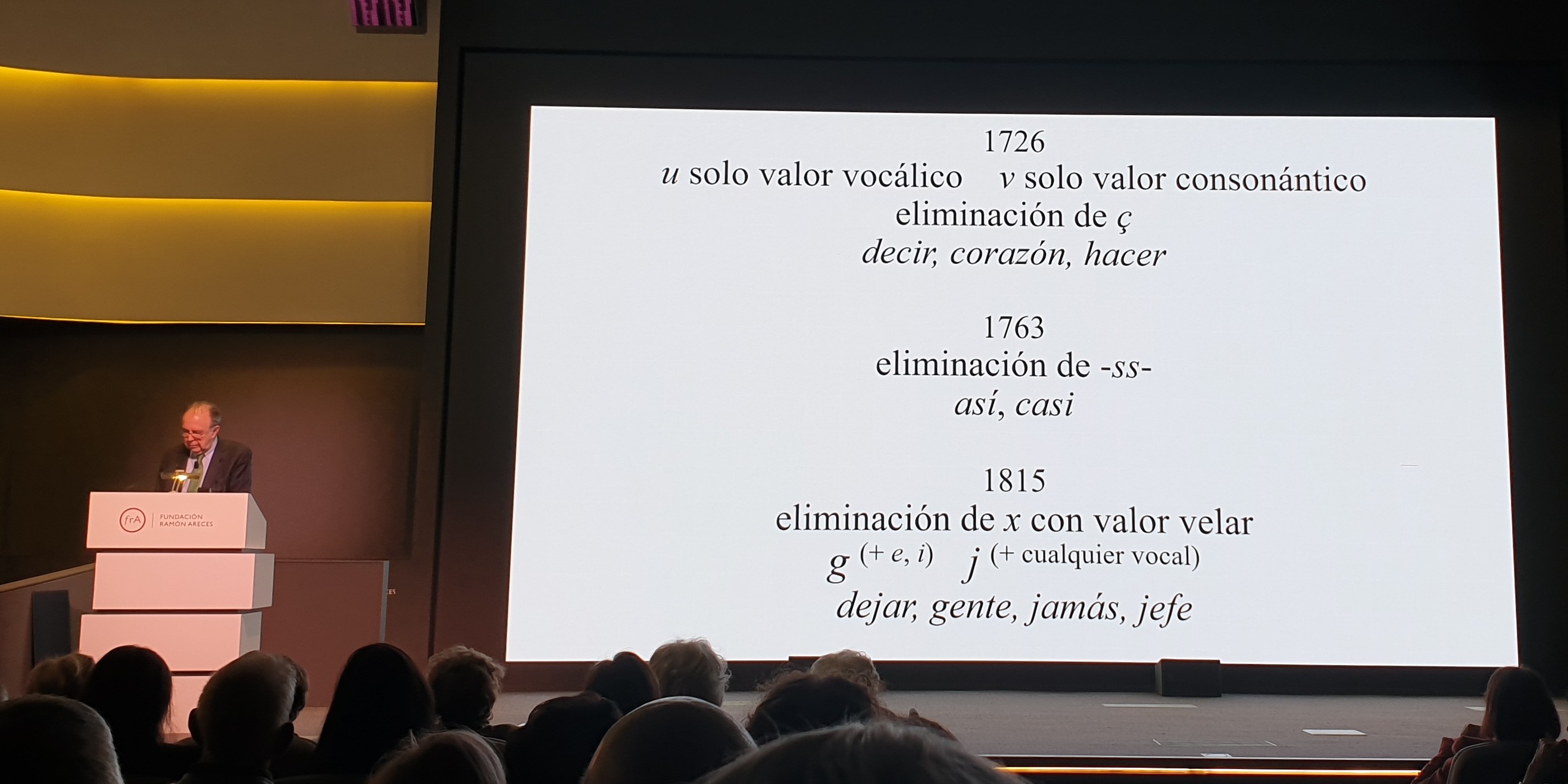
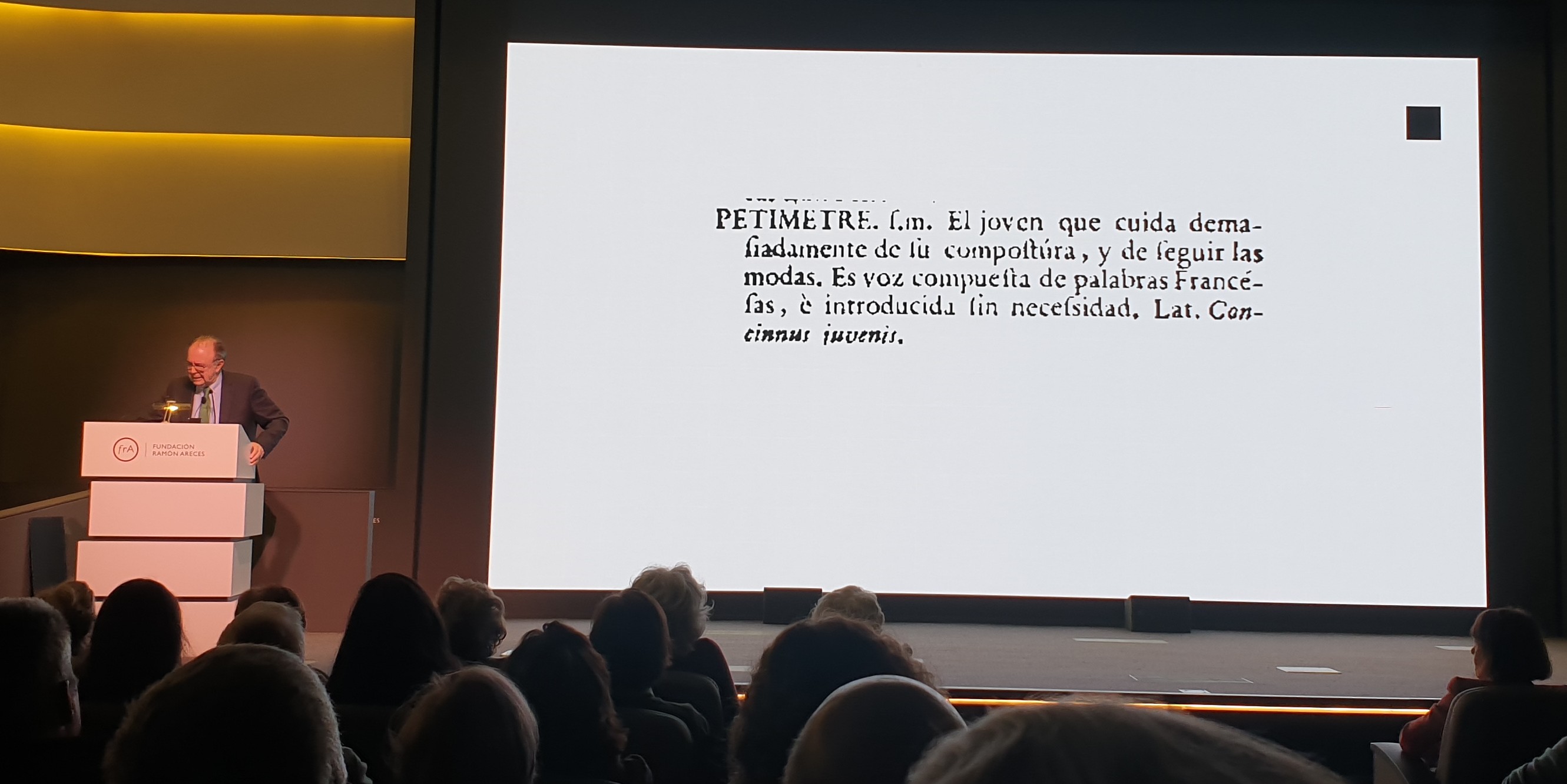
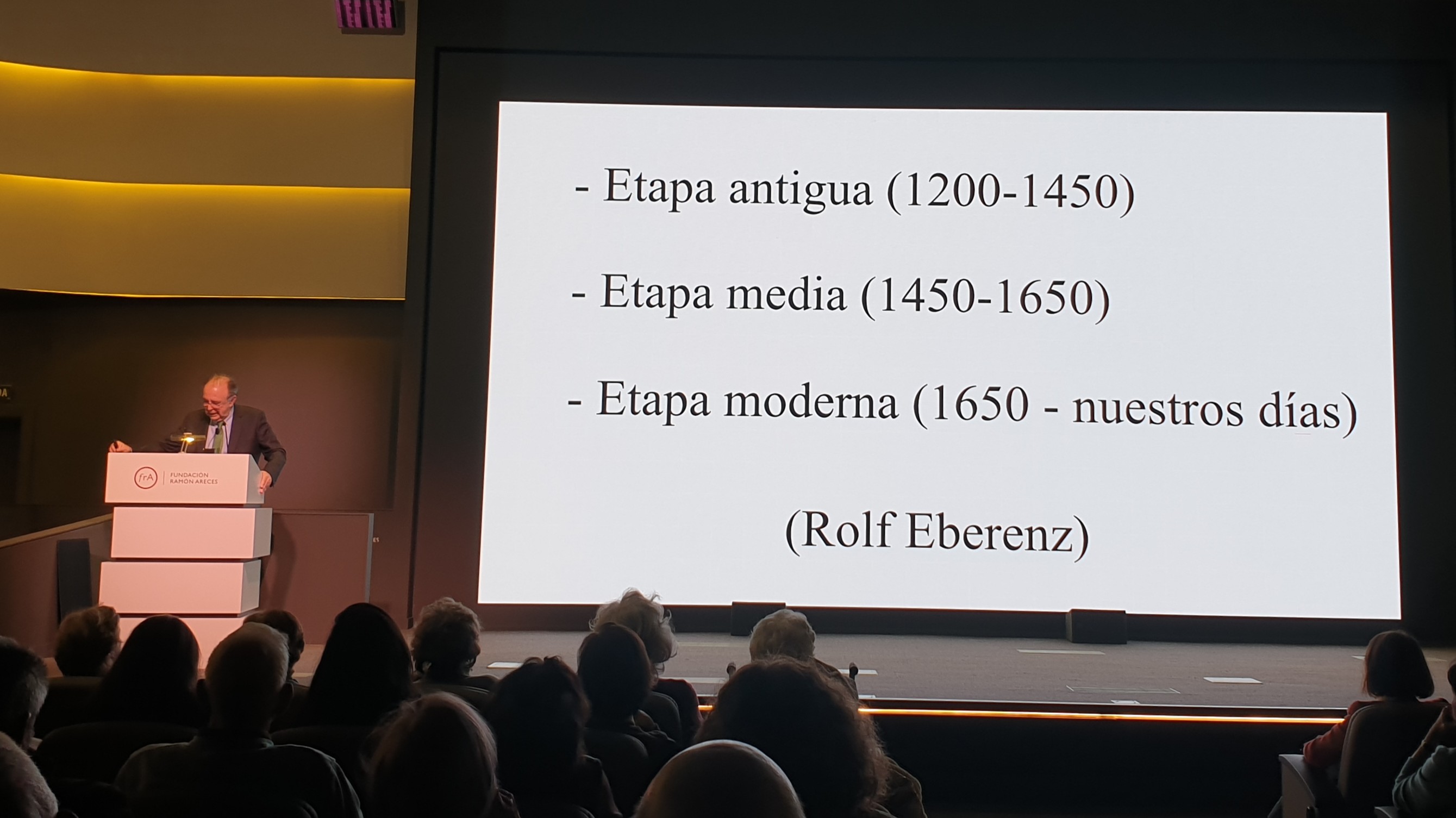
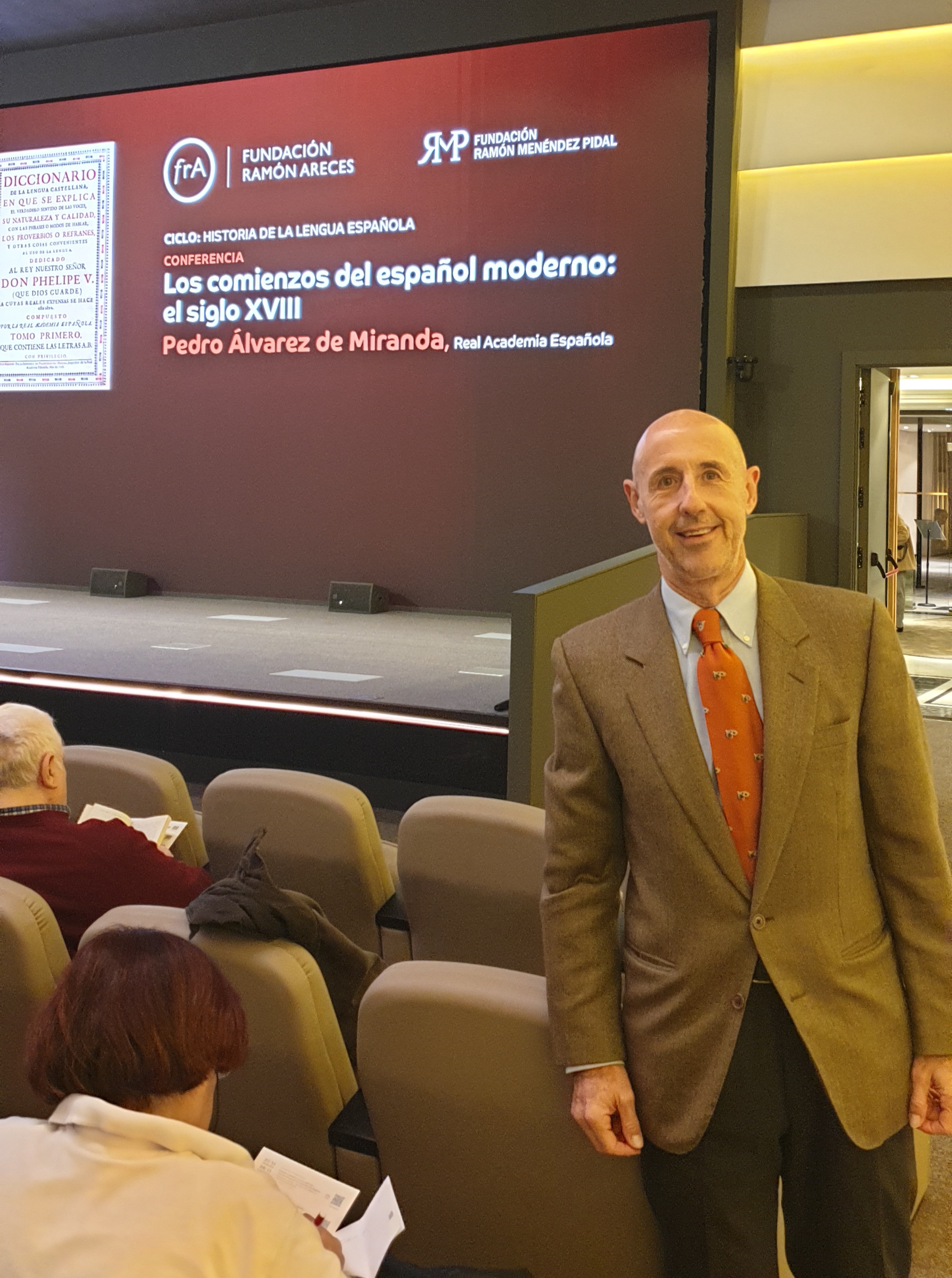
The third lecture was not connected. It was at the Ramón Areces Foundation by Real Academia de la Lengua member Pedro Álvarez de Miranda: Los comienzos del español moderno; el siglo XVIII. This lecture was by far the best! Álvarez de Miranda, with apparently endless knowledge, explained the evolution of the Spanish language in the 18th Century, leading us to “modern” Spanish. He referenced the work of Ramón Menéndez Pidal, Américo Castro, and Rafael Lapesa. He also explained the important work of the Jesuits and the missionaries in America, the novatores who were scientists in early 18th-century Spain, and, of course, the work of Benito Jerónimo Feijoo and of the Academy of which he is a member.

All in all, a great trio of lectures. Let me know in the comments if you have any questions.