
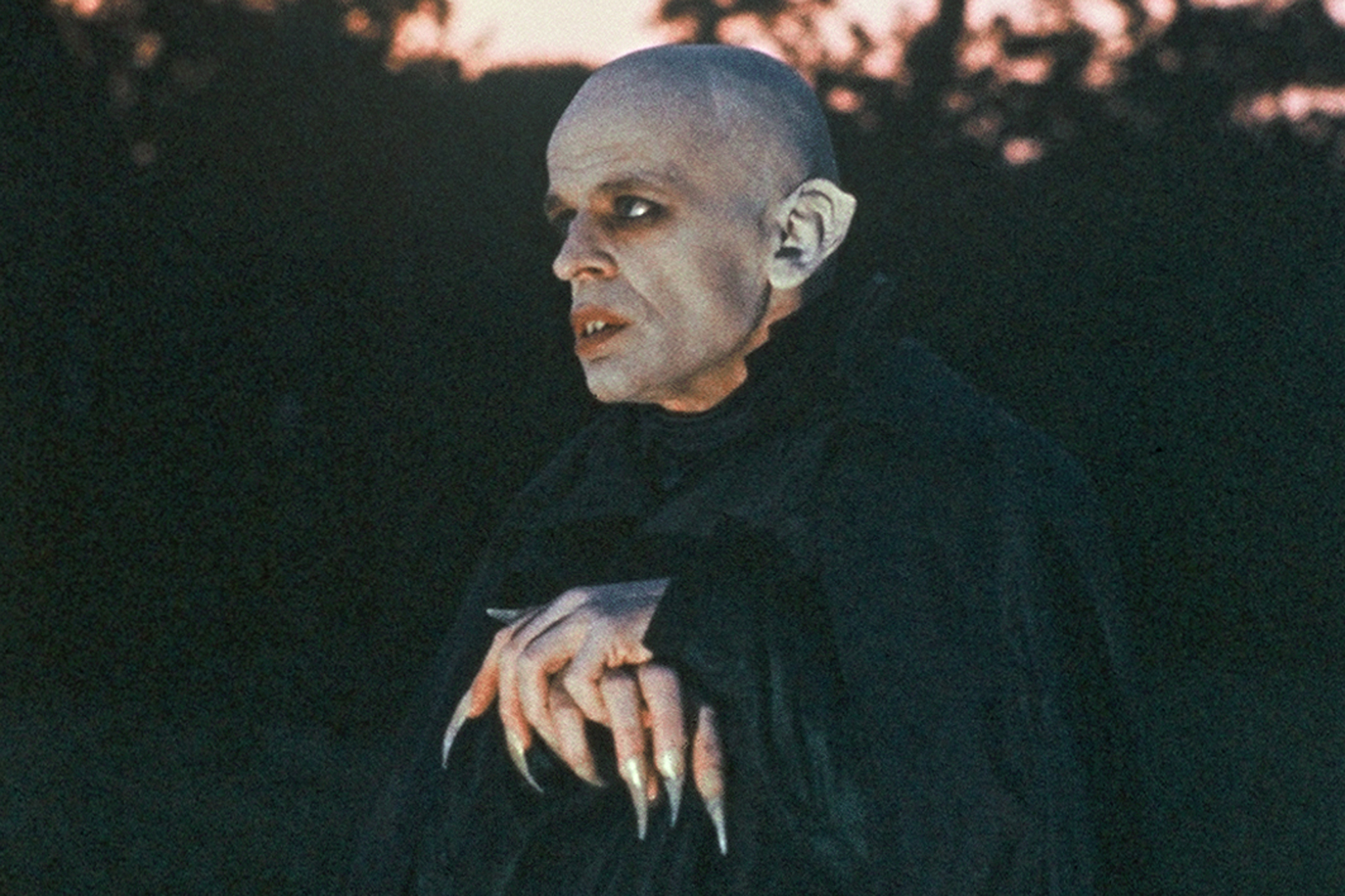

There is a scene in Nosferatu (1922) where Count Dracula is looking across his window at Lucy Harker. When he slowly retreats from the window, his hands are awkwardly positioned in a sort of sideways traffic-stopping gesture. This is the key move in Michael Jackson’s (who was a big fan of Count Dracula) Thriller video dance sequence. There you have it, now let’s talk about Hegel’s influence on Werner Herzog’s Nosferatu the Vampyre (1979).
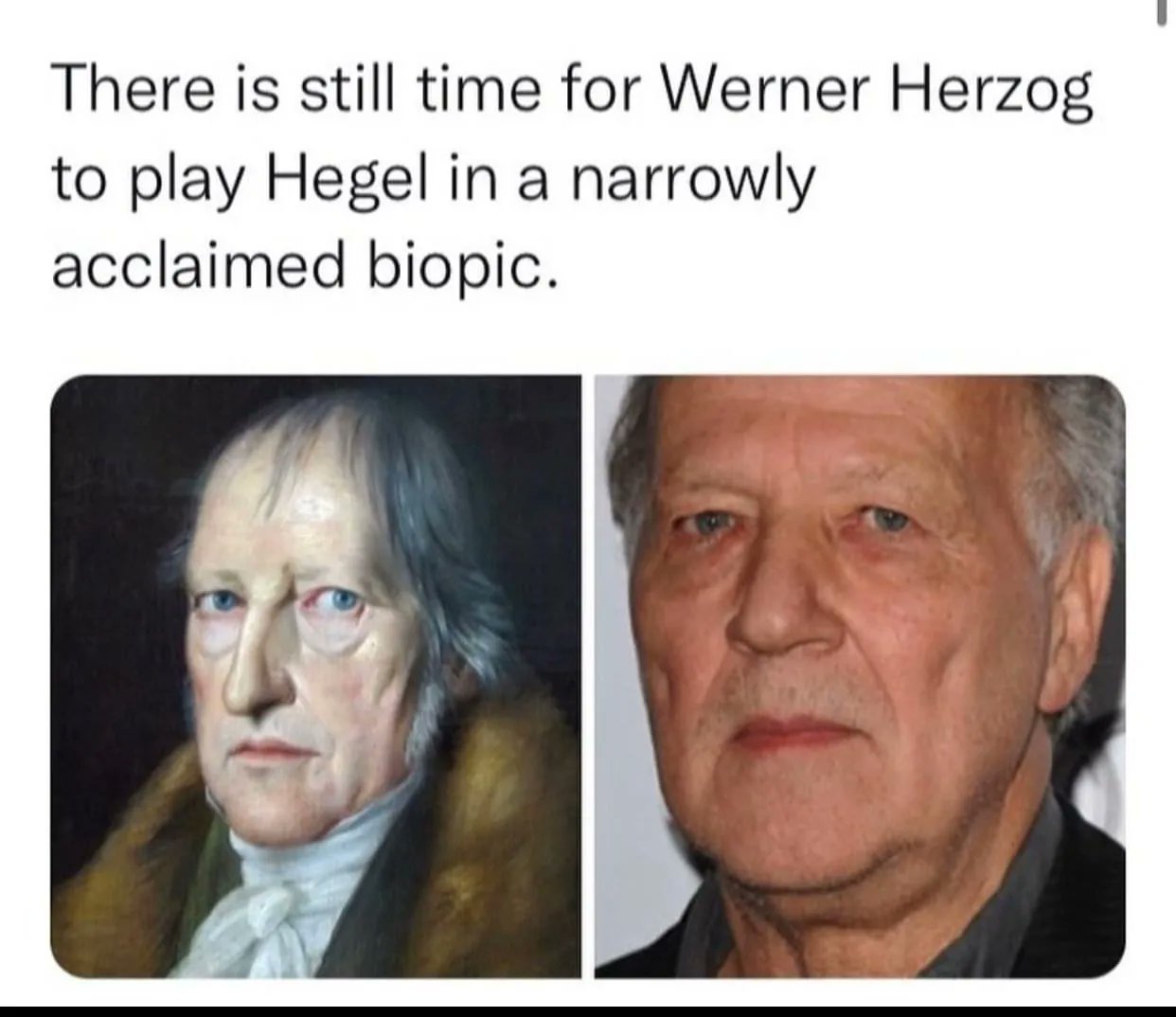
There is a nerdy viral meme showing side-by-side pictures of philosopher Hegel and film director Herzog —who look remarkably similar— asking when Herzog will play Hegel in his biopic. As with the reality surpassing fiction aphorism, there is more here than meets the eye.
The key scene in Herzog’s film is when Lucy Harker (Isabelle Adjani) has a conversation with Count Dracula (Klaus Kinski). This poetic philosophical dialogue exposes Herzog’s Hegelian philosophy:
Dracula: You must excuse my rude entrance. I’m Count Dracula.
Lucy: I know of you from Jonathan’s diary. Since he has been with you, he is ruined.
Dracula: He will not die.
Lucy: Yes, he will. Death is overwhelming. Eventually, we are all dead. Stars spin and reel in confusion, time passes in blindness, rivers flow without knowing their course. Only death is cruelly sure.
Dracula: Dying is cruelty against the unsuspecting, but death is not everything; it is more cruel not to be able to die. I wish I could partake of the love which is between you and Jonathan.
Lucy: Nothing in this world, not even God, can touch that. And it will not change. Even if Jonathan never recognizes me again.
Dracula: I could change everything. Will you come to me? And be my ally, there will be salvation for your husband, and for me. The absence of love is the most abject pain.
Lucy: Salvation comes from ourselves alone, and you might rest assured that even the unthinkable will not deter me. Goodnight.
In his Lectures on the Philosophy of Religion, Hegel takes a novel approach to salvation, taking it beyond the religious to the existential —even when Existentialism as such was being “invented” a bit further north in Denmark by Kierkegaard. The road to salvation in Hegel’s view is tied to one’s spirituality, one’s spiritual journey.
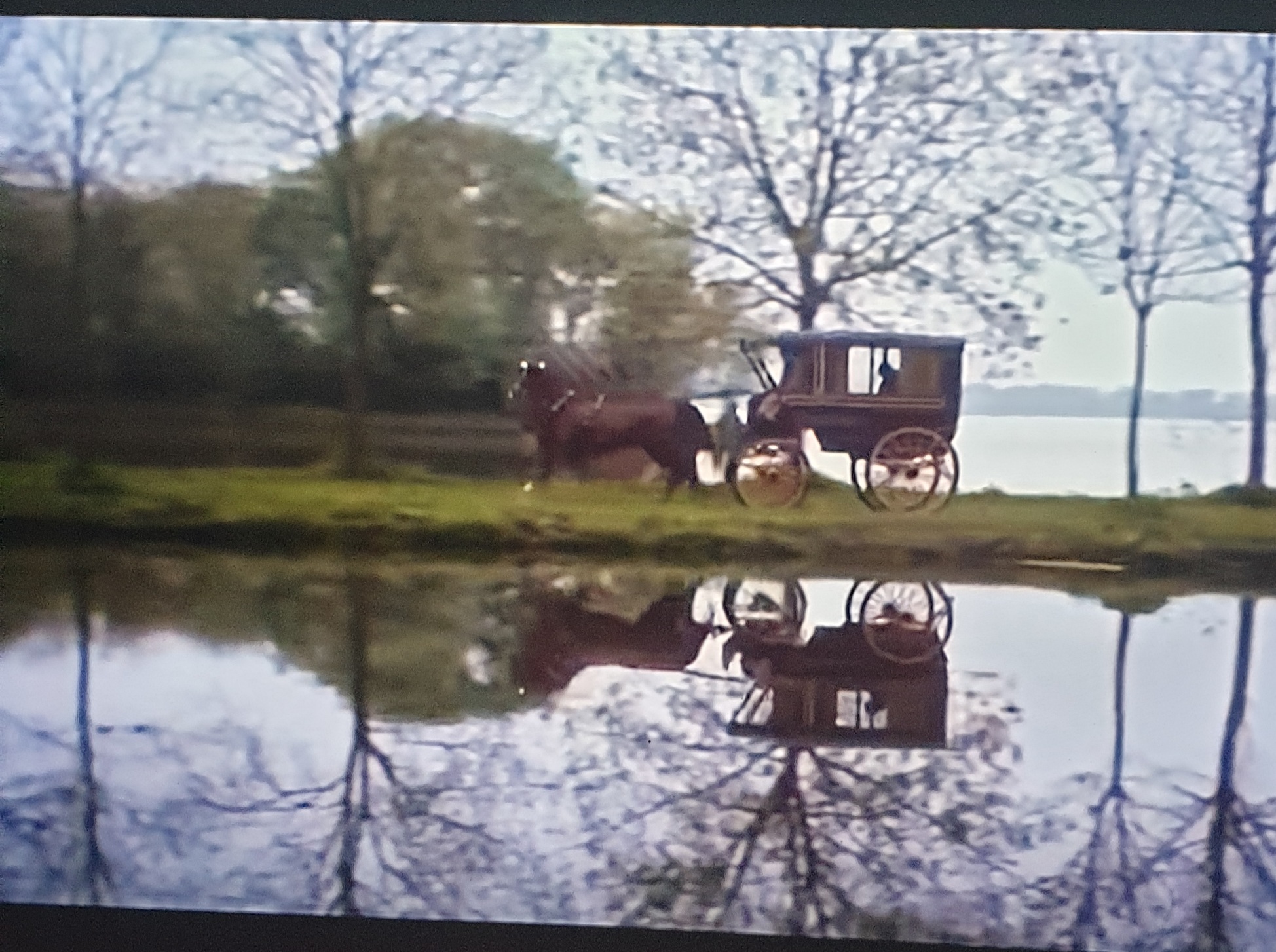
Other than in Transylvania, Bram Stoker’s Dracula takes place mostly in London, but the 1922 film Nosferatu takes place in the fictional German city of Wisburg, which is actually Wismar. In Werner Herzog’s Nosferatu the Vampyre, the Dutch towns of Delft and Schiedam serve as stand-ins for the German city of Wismar circa 1850. Having the story set in mid-1800s Germany allows the characters to more plausibly have read orstudied under Hegel. Ok, that is a bit of a stretch. But you get the idea.
Oh, by the way, I also saw 2024 Nosferatu, and I must be getting old and cynical, because I did not like it at all. All the AI neogothic, steampunk, everything (landscapes, backgrounds, the castle, blah, blah, blah), the exaggeration, the predictability, bilingual count Orlok (Romanian and English), the sexualization, the juvenile script: “Does evil come from within us, or from beyond?” Even that sublime scene between Lucy and Dracula in Herzog’s version becomes a gaudy monstruosity in this film. I found only one redeeming quality to this production: Willem Dafoe. If you want my ranking: 1979, 1922, and if you must, 2024.

 Antonioyrocinante's Blog
In my book, 1922 and 1979 share the top spot, though we could use some fresh Dracula takes to keep our cinephile snobbery well-exercised. Loved your blog post.
LikeLike