This summer’s obsession: Pine nuts.

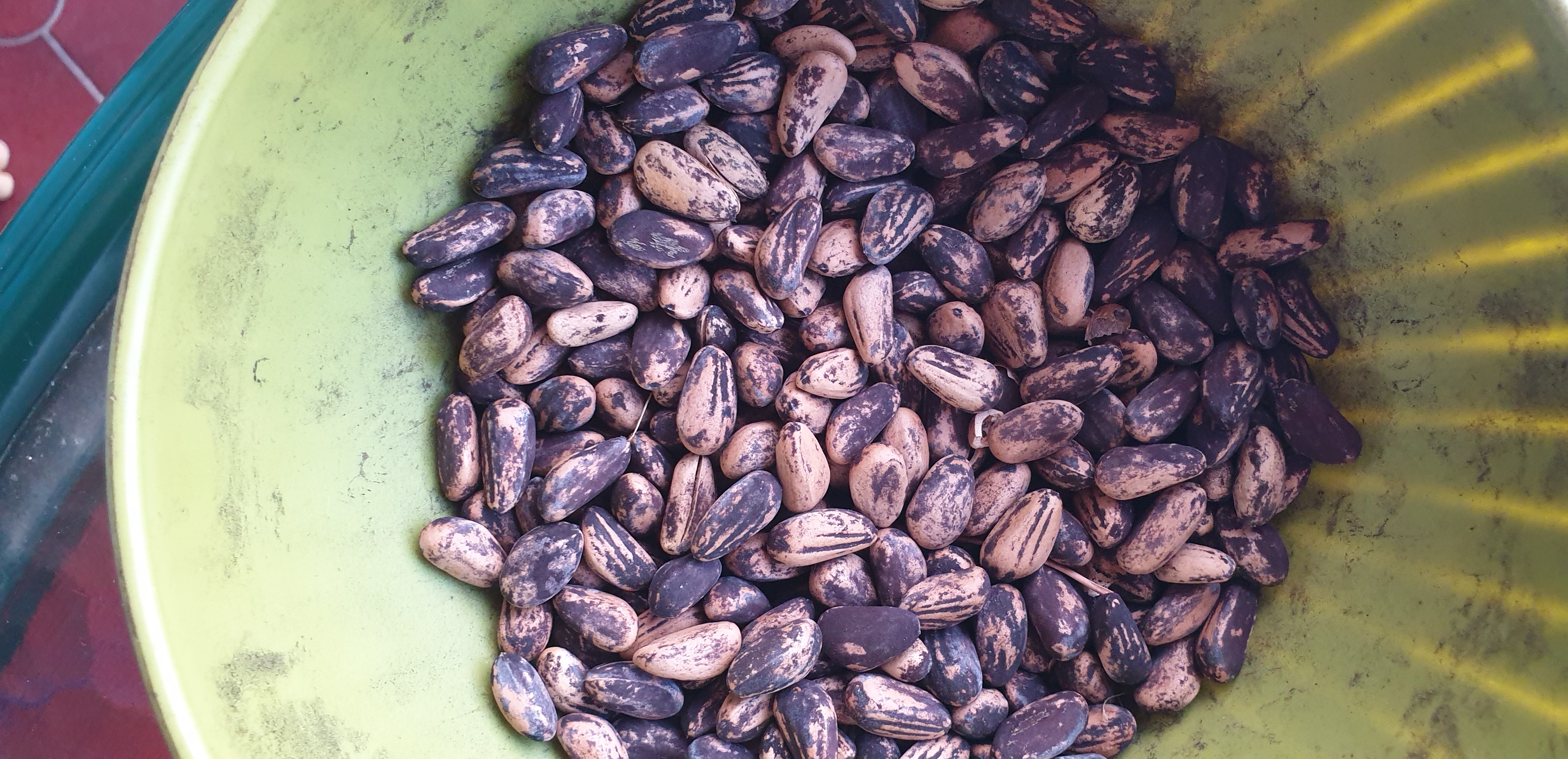
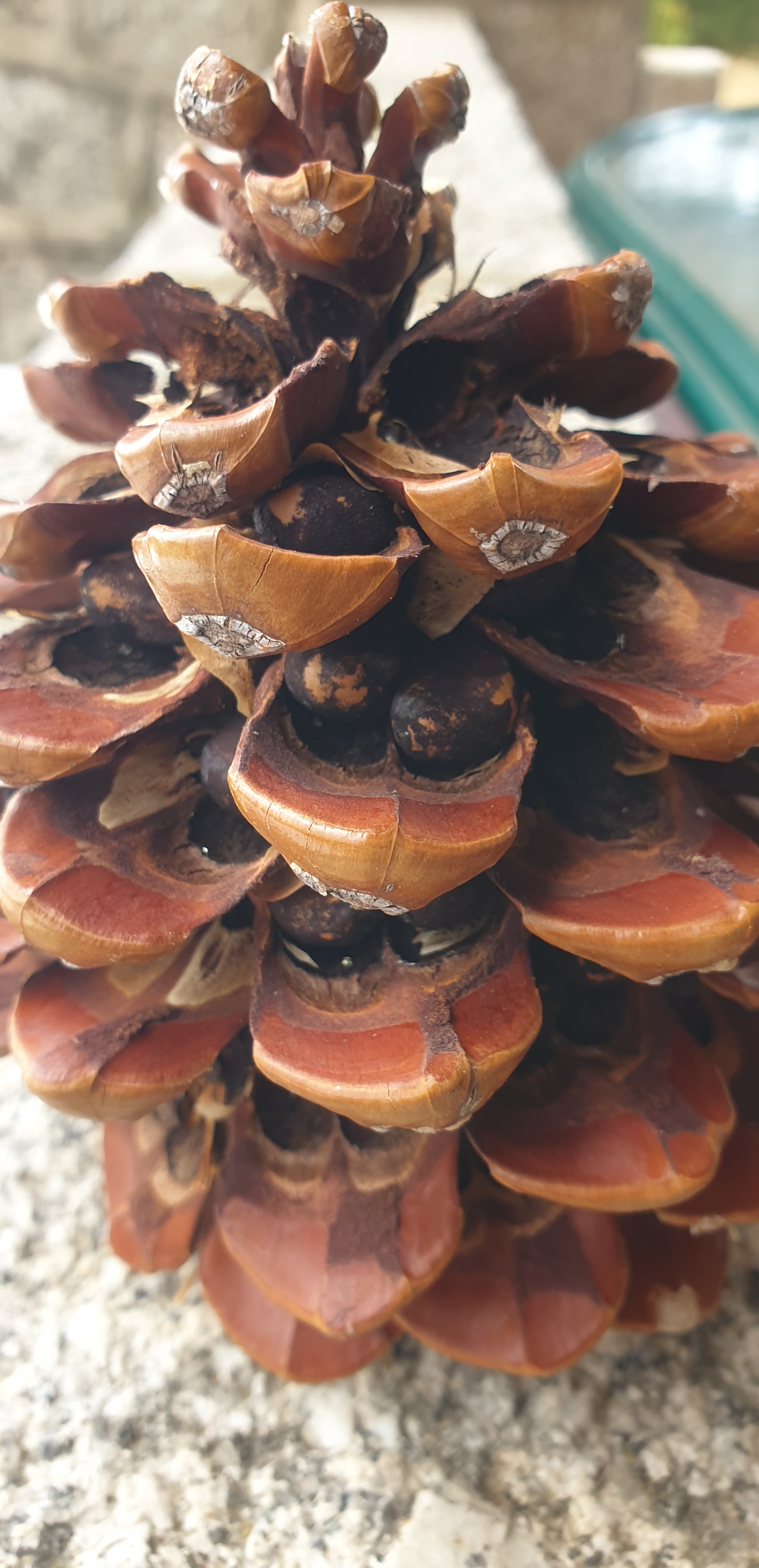
My mom’s garden has a handful of pine trees, and one of them in particular is a prolific producer of pinecones —with pine nuts, piñón (not all pinecones have pine nuts, depending on stress, gender (only female trees produce pine nuts), etc.) Also, pine trees do not make the same number of pinecones with nuts every year. The average number of pine nuts per cone is anywhere from 10 to over 100, according to the interweb.

This year, this one tree has an unstoppable quantity of pine nuts. So I started collecting them.

Possibly my favorite pasta sauce is a rich, flavorful pesto: the silky olive oil, the rich combination of cheeses, the fresh basil (with some parsley for extra color!), the tangy garlic, and to bring it all together magically… the pine nuts!!!

The goal: to make a kickass pesto.

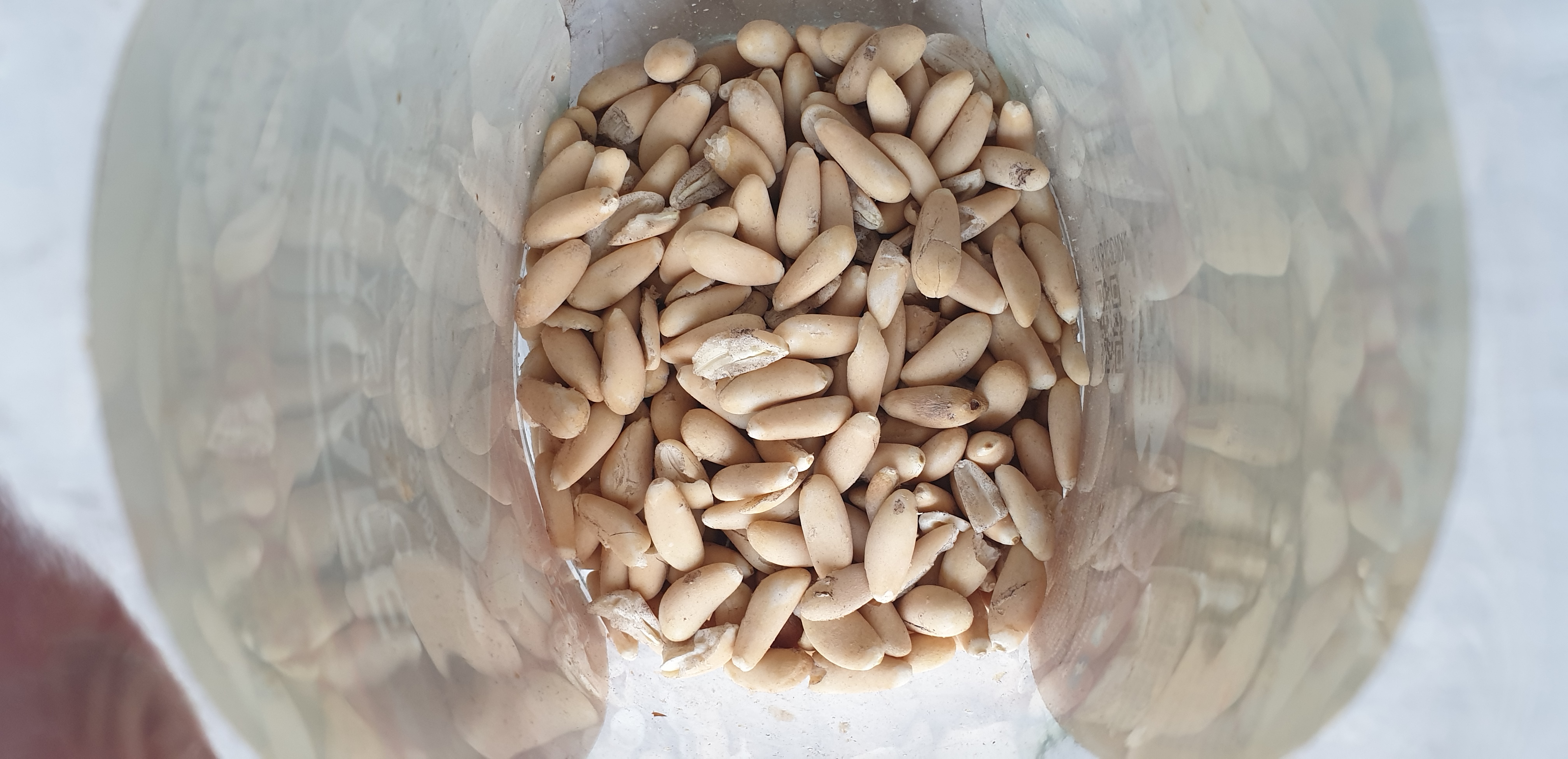
The process: to crack hundreds (thousands?) of pine nuts.

Chatting with our neighbor, a local guru who knows all there is to know about nature and country life, showed me his machine for cracking pine nuts.

I am not a fan of Amazon, but I’m in the middle of the country, and I need a nut-cracking machine; the old stone or hammer won’t cut it with the number of pine nuts I have to crack. So I ordered a machine. Although it is advertised as cracking pine nuts, these are too small for this machine, probably designed to break almonds, hazelnuts, walnuts, you know, bigger nuts than mine. I returned it to Amazon (sorry, no photo of the first machine).

Second machine: this one does fit and cracks pine nuts, but it pulverizes them. I try to go slow, but there is no way; the flesh of the nuts disintegrates with each swing of the lever.

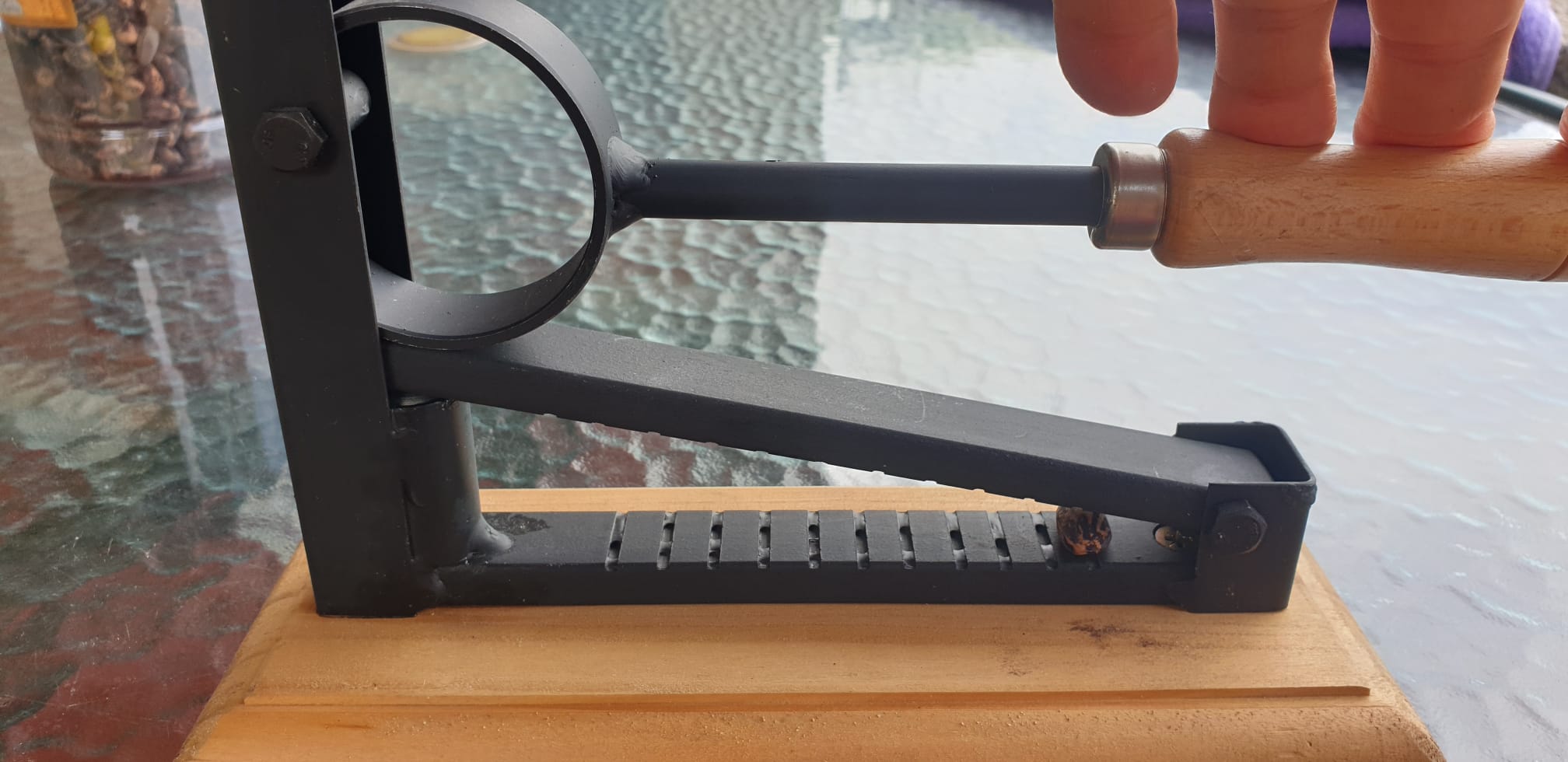
The third one I ordered is not from Amazon; it is from a hardware store on the other side of Spain. This machine has a much smoother cracking system, so you can apply pressure progressively until the pine nut cracks. One problem: like the first machine, even at its smallest setting, it does not crack pine nuts… The solution? A tiny board “lifts” the pine nut so the cracker part of the mechanism reaches it. Finally, the pine nut problem is solved!!

I’d better get cracking. Pesto anyone?

You should be meditating.

Stop, inhale, focusing on the air entering your nostrils or your lungs. Exhale, focusing on the air leaving your lungs or your nostrils. There, you did it!! For a brief time, you didn’t worry about what’s for dinner, your bills, the weather, what you were going to tell your boss, your customer, or your friend. You didn’t think about politics, and you weren’t scrolling through social media. You had a moment —albeit a very short one—of meditation. The trick is to do that exact exercise with your breathing for 5, 10, 20 minutes, or half an hour. The longer you do it, and the more often you do it, the better you will feel.

My dear friend Paco encouraged me to try meditating while I was in a deep, dark depression over ten years ago. It was not easy for a hyperactive fellow like me to embrace it, but now I cannot live without some quiet time every day. And although I have written about meditation here before, it was usually in passing while talking about health and mental health in general.

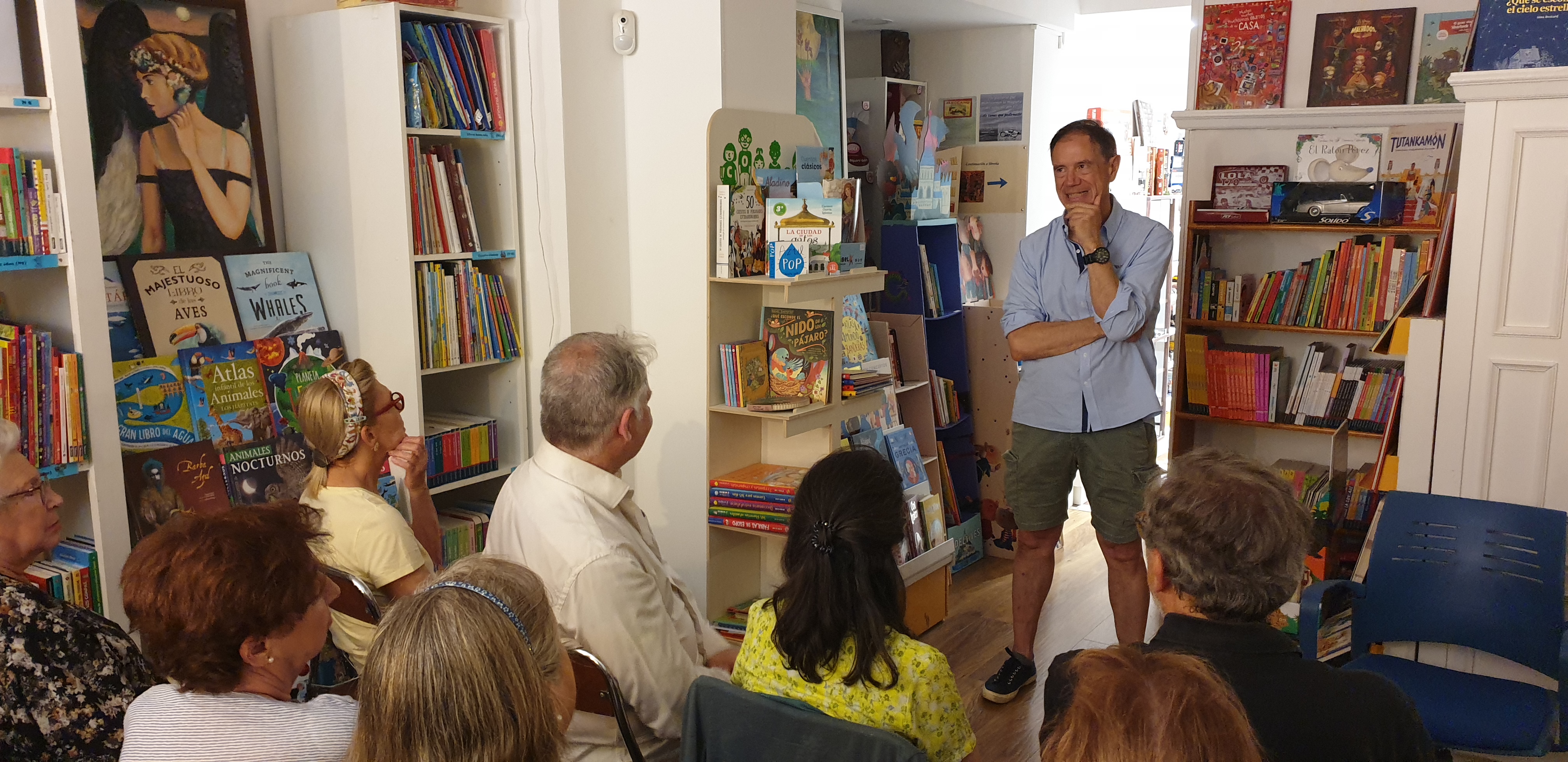
This all comes to mind because I recently had the opportunity to see and hear Paco give a presentation on Christian Meditation at the Antonio Azorín bookstore in El Escorial. He filled the room and had a wonderful talk. I originally thought the attendees were curious about meditation, but during the Q&A, I realized some of them were very advanced, although from different “schools” of meditation —see below.

There are many labels for meditation, just like there are many different philosophies and methods: Mindfulness Meditation, Mantra Meditation, Zen Meditation (Zazen), Vipassana Meditation, Transcendental Meditation (TM), or Body Scan Meditation. The ancient Fathers and Mothers of the desert, the early Christians, also developed a method of meditation which nowadays is called Christian meditation, or even centering prayer. Some recent Catholic proponents of meditation might be Thomas Keating, Thomas Merton, or Richard Rohr.

Whichever way you choose to sit down in silence is fine. Of course, nowadays you can use an app on your phone to time your sits, or to guide you. I have been using Insight Timer for years, and I love it!

Every class I teach at school starts with one minute of silence. This time is a buffer between whatever the students were doing before and class, between English and Spanish; it is a moment to regroup, to breathe, and for me, it is a minute of meditation.

Recently, Maria Popova also wrote about the importance of spending time alone and in silence, not exactly meditation, but close to it. Check it out here.

So carve out a few minutes from your day: when you wake up, before you go to sleep, in the middle of the day, or, paradoxically, if you are really busy, more than once a day. Whatever works for you, sit down, and start focusing on your breathing. You are welcome.

Oh, you should definitely check out this video of Villanova’s Fr. Martin Laird on the benefits of meditation. It is a bit long, but worth it!!

Puy du Fou (Warning Spoilers)

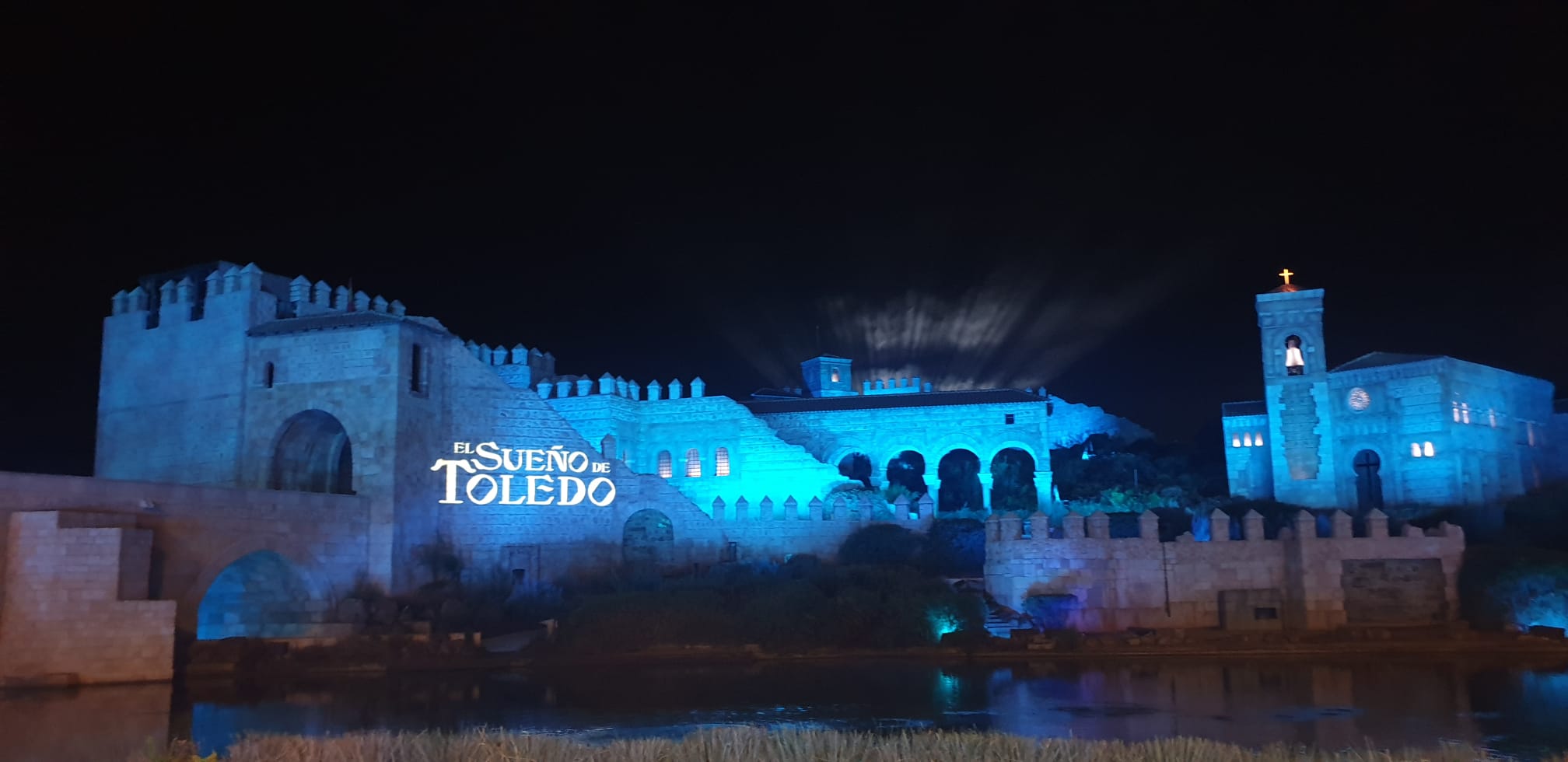
Puy du Fou is a theme park on the hills near Toledo. The original is in France, but the Spanish one seems to be the better one. It is a huge place where they perform historical recreations, but accented with dance numbers (fortunately, no singing). A group of friends and I went recently. The high point is the “Sueño de Toledo” night show. They have recreated the city of Toledo with the Tajo river (a copy of it, anyway) serving as a proscenium.

The show begins with an old man walking along the vast, open-air stage with his donkey. He meets a shepherd girl on the other side and starts telling the story of Toledo, only he skips the early history of the Carpetanians, and more importantly, the Romans! So they start the history of Toledo with the Christians and the Goths, that is when you realize that you are seeing a show and not a factually historic recreation. From there, they move to the Moorish invasion, which is when a group of Moorish girls walk into the ankle-deep “river” and perform a suggestive belly dance. I must admit, I was impressed when they walked into the water to do their dance number! And so they move through the history of Toledo. At another time, representing the building of the cathedral, two massive (make-believe) organs rise from the “river,” and then, paradoxically, flames start spewing from the organ pipes! I’m sure Bach would have been jealous. At another time, Christopher Columbus’s Santa María rises from the “river,” which is impressive, I must admit. There were plenty of horses, geese, goats and sheep, even pigs! Anyway, enough spoilers.

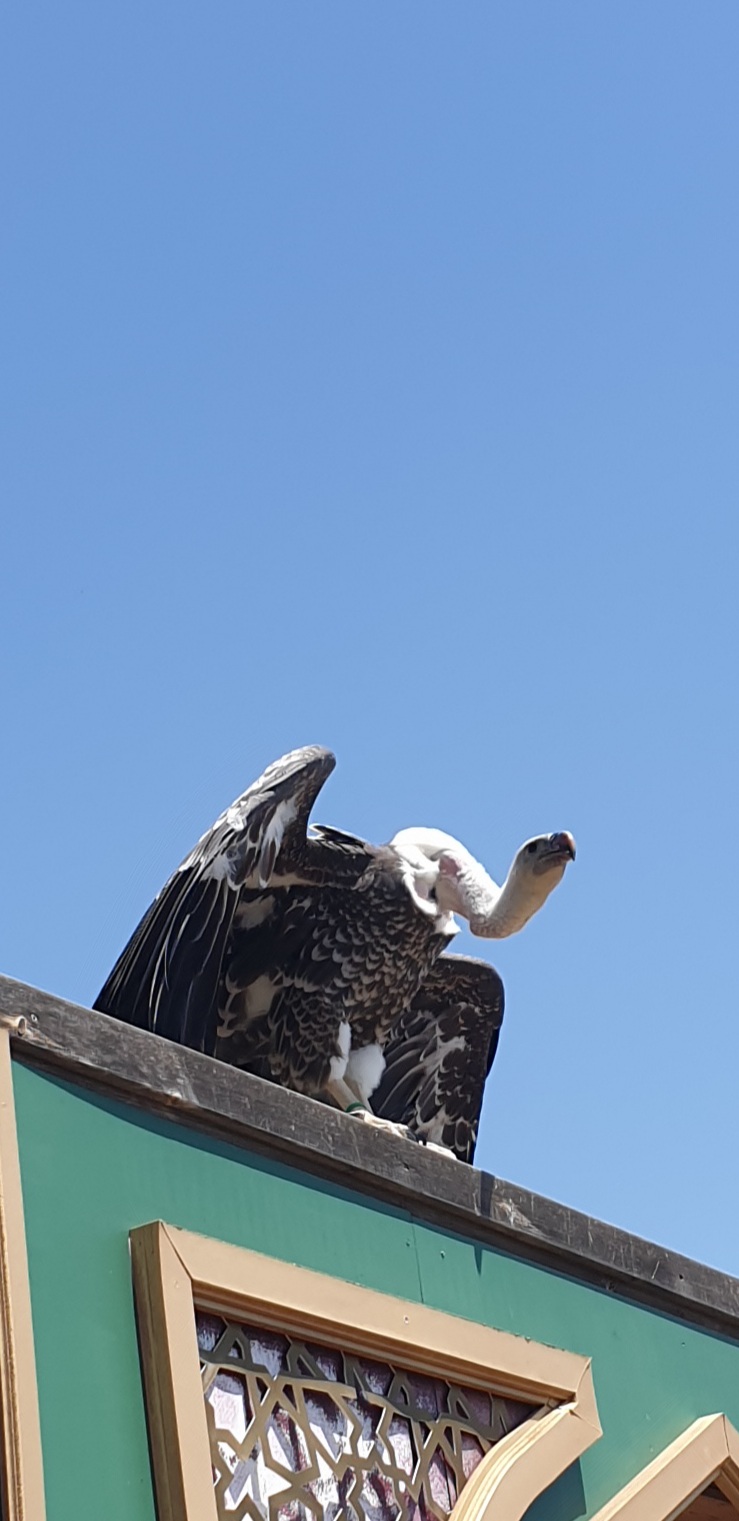
The next day, we enjoyed a series of performances. The first one was Cetrería de Reyes, which is an awesome falconry show. Unfortunately, midday in the Toledo sun in July made it, how can I say, blistering hot. But the show was cool, they brought out owls, hawks, falcons, vultures, even a Secretarybird stomping on a (fake) snake! At the end of the show, they released all the birds, and it was a grand finale!

A pluma y espada is a swashbuckling dramatized show of Lope de Vega, our most famous playwright of the Siglo de Oro (1600s Spain). Again they did the water thing where they danced and splashed about, and again they brought in the horses, which, given the indoor space, was surprising.

Allende la mar oceana recreates one of Columbus’s ships. You walk in and it looks and feels like you are in one of the galleons! You come out to a recreation of Hispaniola island!

Then we stopped for lunch, which is the weak spot of the park, but it was to be expected. After all, one is not there for a culinary experience. You can bring in your picnic, but the idea of carrying around lunch all day is not the most appetizing.

We finished the day with El último cantar, a show about El Cid. In this one, you get the horses and the dancing in a huge indoor space where the seats rotate to different parts of the fixed circular stage, impressive indeed.

There are many other shows, and they add about a show a year, but we were knackered, so we called it a day.

My recommendation? If it is not too hot, go enjoy the day. If it is hot, go to the night show. If you have the time, do the night show and then the next day go for the day. You are welcome.

La feria del libro in Madrid

Here is a bit of a paradox: I love literature (so much that I made it my livelihood), I love books, but I really do not like Madrid’s huge annual book fair: La Feria del Libro.

Every year, the first two weeks in June, hundreds of bookstores and publishers set up camp in Madrid’s beautiful Retiro Park. Every day, there are book signings, conferences, debates, colloquia, and, of course, bars, ice cream stands, and all sorts of other associated entertainment.

I try to avoid it, but I still go and walk around together with thousands of other folks who are looking for celebrity author sightings and signings and are willing to stand in line for hours to get a book signed.

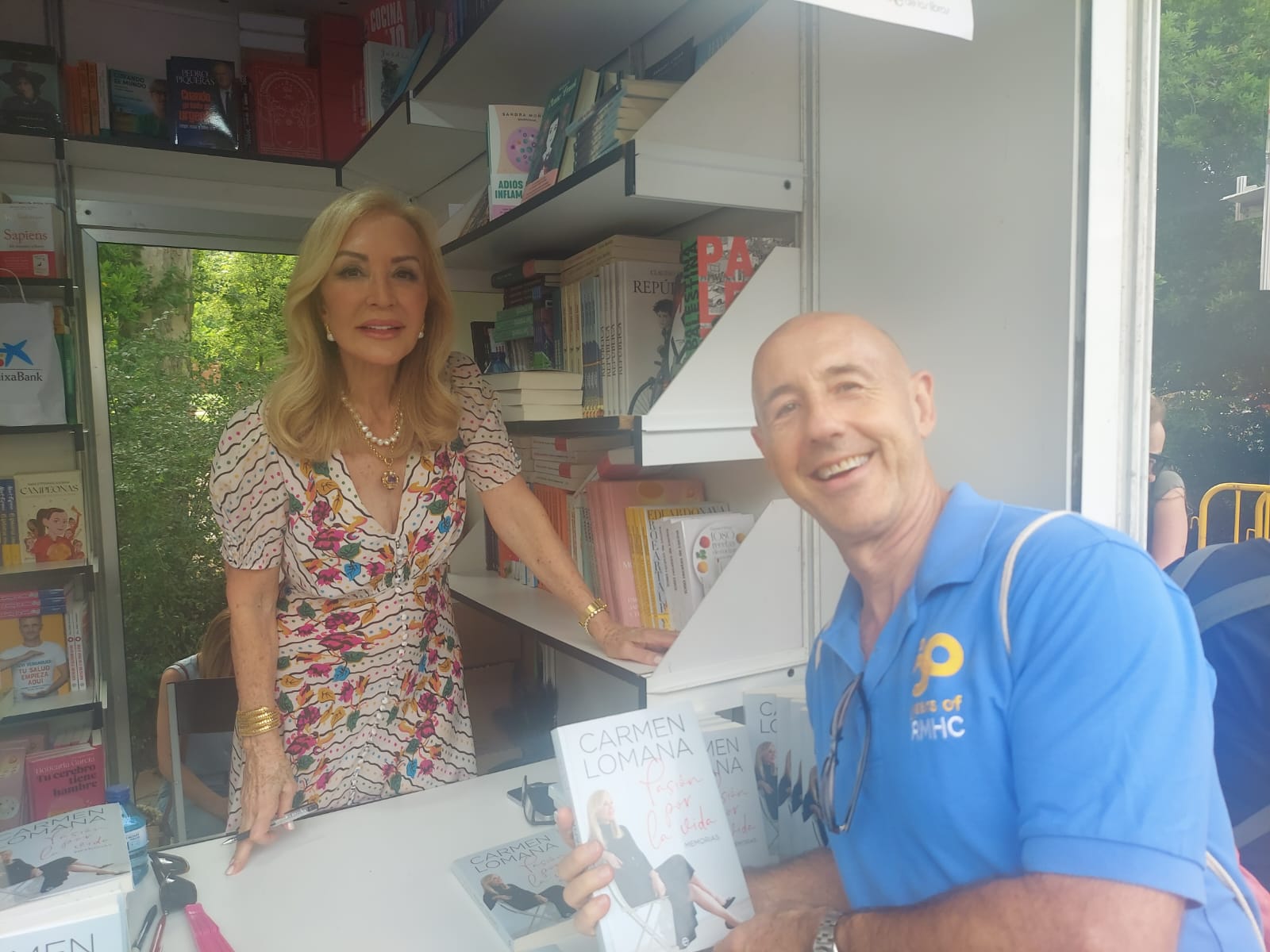
This year was a bit different for me. Celia found out that Carmen Lomana, an old employee of my dad’s in London, who is now a bit of a celebrity, was signing her memoirs. We went to her booth, chatted with her for a few minutes about life in London in the early 80s, and bought her book for Mom, which Lomana kindly signed.

We also walked around, bought a couple of books, some overpriced ice cream, and enjoyed the throngs of people.

So if you are in Madrid the first couple of weeks in June and you love books (or don’t), go to the Retiro Park and enjoy the Feria del Libro with hundreds of other book lovers.

PS: Statistics show that for the last few years, while book sales are up, book reading is down. Someone explain that to me -or don’t bother.