

Are you really living if you are not volunteering and/or helping others? Pancreatic Cancer Action Network – PanCAN

Last summer, my dear friend Paco gave me Stefan Zweig’s great 1922 short story “The Eyes of My Brother, Forever” (“Die Augen des ewigen Bruders”), and it confirmed what I have known for a long time: volunteering and helping others might be the best thing you can do not only to get out of your shell but also to live your fullest life.

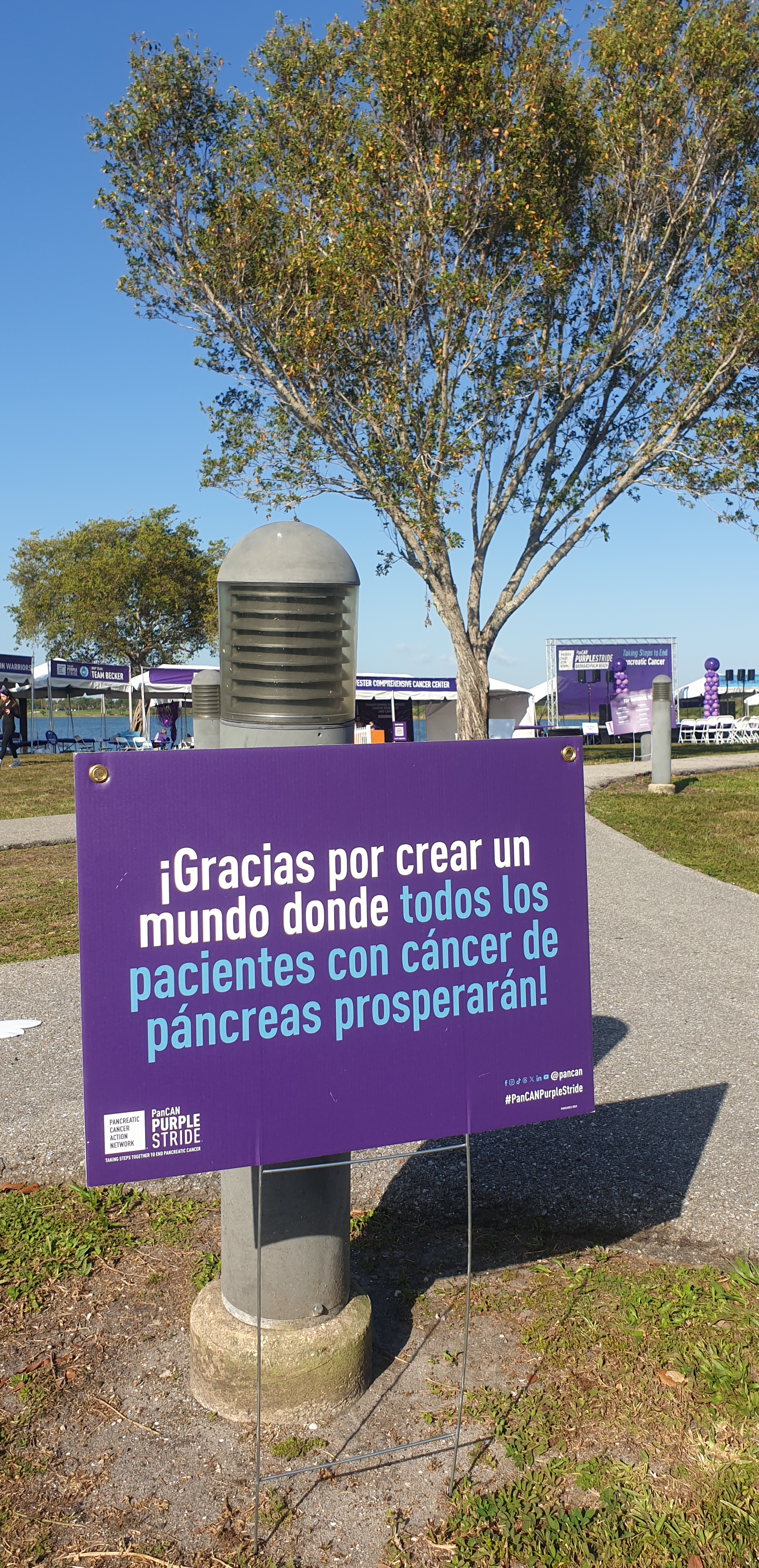
This was my third year volunteering for the Pancreatic Cancer Action Network – PanCAN. They host the national Purple Stride event every Spring, and it is a great time! I serve as the Registration Lead volunteer, so everybody who has not registered for the event has to come to our tent. I must get up at 4 in the morning to be in Boca Raton at 5, but it is worth it. I had a blast with my sidekick Rona, whose son, like me, went to Bentley. She is a hilarious New Yorker, and I have a great time collaborating with her.

Listening to the radio, I recently learned that only 20% of the US population participates in “formal” that is, organized volunteering, as opposed to mowing your elderly neighbor’s yard. That number seems to me terribly low. Yes, you must turn off the TV and get off the couch, but it is worth it!!

So, look for volunteering options in our neighborhood: soup kitchens, food banks, or helping children with their studies. Whatever it is, it will fill your heart with joy. You are welcome.

“Not all of us can do great things. But we can do small things with great love.” — Mother Teresa

Faith, Family, and Friends

Pondering the pillars of personal stability and growth, I thought of Faith, Family, and Friends. I was excited about my alliteration until I looked it up online and found a ton of “Faith, Family, and Friends,” so it’s nothing new; I am not that original.

But the concept is still good. These are the three pillars to base one’s life on:

Faith: that there is something bigger than oneself, that you are not the center of the universe. That you stop and realize, and appreciate, that you are grateful for what you have, the blessings that you enjoy, like being able to read this blog!

There is a really deep well inside me. And in it dwells God. Sometimes I am there, too…. Dear God, these are anxious times…. We must help You to help ourselves. And that is all we can manage these days, and also all that really matters: that we safeguard that little piece of You, God, in ourselves.

—Etty Hillesum, An Interrupted Life

Or

In God alone is my soul at rest.

God is the source of my hope.

In God I find shelter, my rock, and my safety.

—Psalm 62:5–6

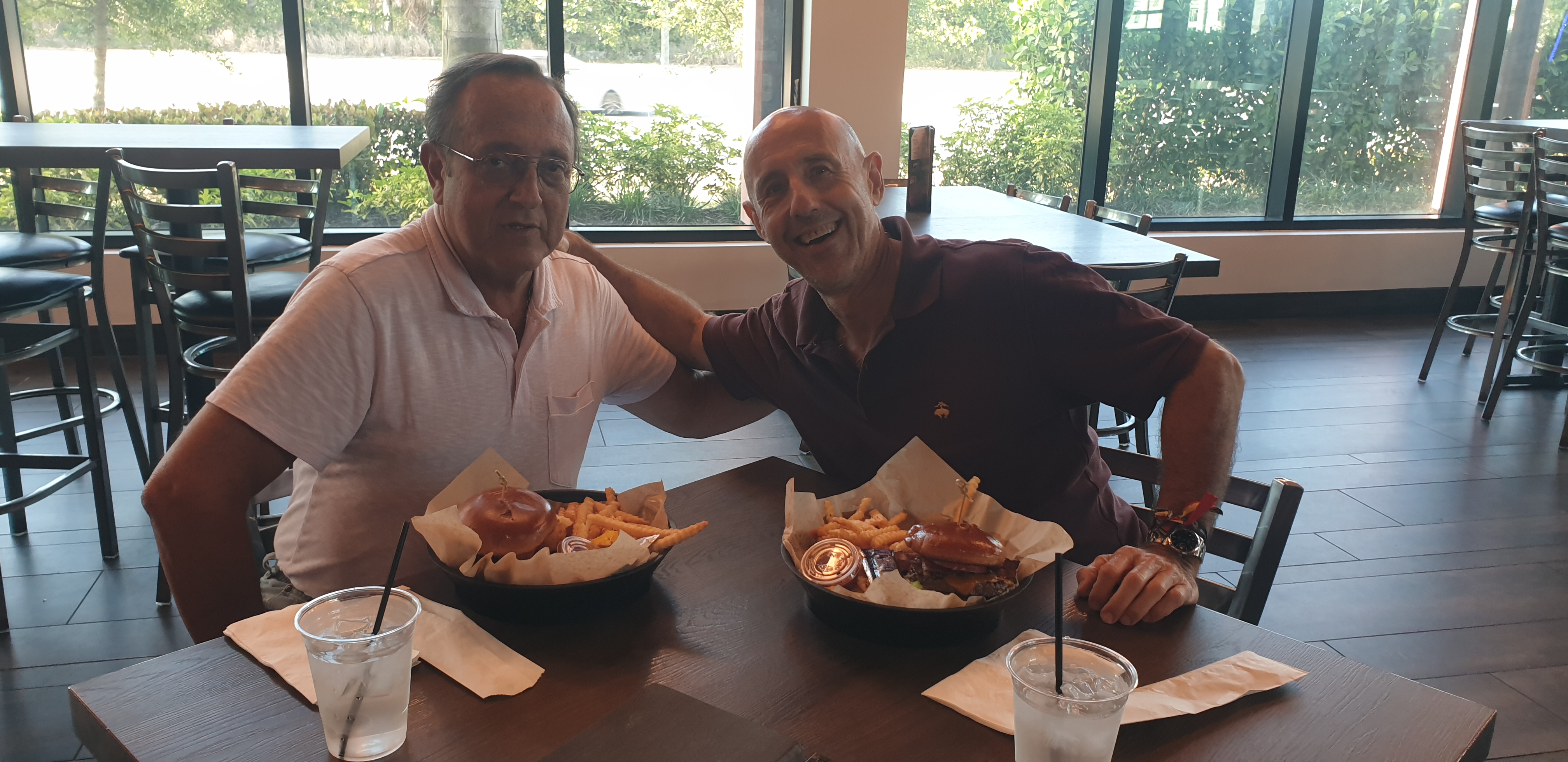
Friends: this is a situation where less is more, where quality is more important than quantity, where you can share and get advice, sometimes without asking for it! In fact, friends is the reason this blog post came about. I recently drove to Naples (the Florida one), my old stomping ground, to visit some friends: Lukas, my old student, and Edu, my old boss, now dear friends. Yes, I had a 2-hour drive each way, but it was worth it. As a follow-up, I am going to an Inter Miami game with Lukas, not so much for soccer as for friendship.

Family: goes without saying.

So, make sure you are working on your relationships, all three of them! You are welcome.

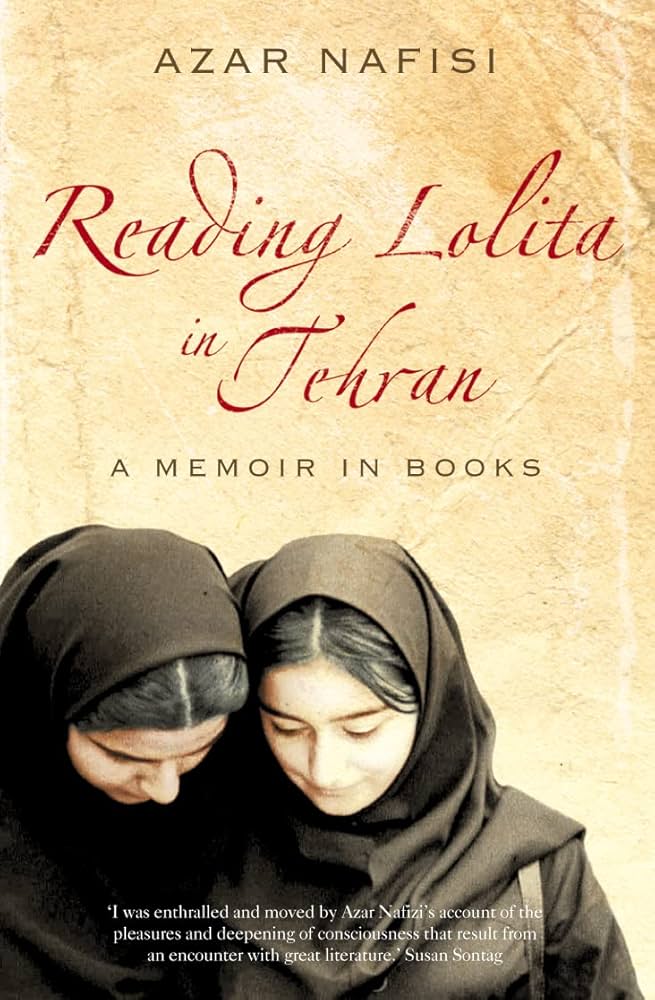
Reading Lolita in Tehran, four books in one.

Reading Lolita in Tehran

On a Sunday in January 1979, my dad and I were puttering around the garden, collecting, and chopping wood for the fireplace, listening to the radio. The news came on and explained that the Shah of Iran had fled the country into exile. I looked over at my dad, who had dropped the ax and was running up the stone stairs into the house. He took off to work at the bank -on a Sunday morning! My dad was a foreign exchange trader, and he knew the news of the Shah leaving Iran was going to cause a lot of market turmoil.

Growing up in London in the early 80s, there were many Iranian exiles. I remember going to school with a few of them. I also remember the SAS operation to liberate the Iranian embassy in 1980, a few blocks away from my best friend’s house. Even my mom’s English teacher was a beautiful, tall, elegant Iranian who brought me pistachio nuts and gave us a beautiful edition of the Rubaiyat of Omar Khayam.

After leaving London for college in Boston in 1983, I mostly forgot the Iranian revolution. A few weeks ago, I finally picked up a copy of Azar Nafisi’s Reading Lolita in Tehran, which had been waiting on my shelf for years, not knowing really what to expect. I loved every page. (Spoiler alerts)

The book is really four books woven into one magnificent narrative, like a-forgive the cheap simile-a fine Persian rug.

The main and overarching story is the author’s own story, her memoirs, from a child in Tehran, to studying in Europe and America, to teaching in Iran, and returning to the US. It is a fascinating life story.

The second thread of that biography is Nafisi´s job as a university professor of English literature, teaching: Lolita, The Great Gatsby, Pride and Prejudice, Emma, Daisy Miller, and Washington Square… in the classroom and eventually in her living room! which is where the name of the book comes from. But Nafisi does not stop at explaining that she taught (she still does); she gives her literary critiques of all the authors mentioned! It is a brilliant and amazing third layer, reading her interpretations of all these books. Yes, I felt jealous, as I have the same job as Nafisi, but I have nowhere near her capacity or talent.

The fourth story is the history of the Iranian revolution, the origins of the Islamic Republic, the persecutions, the disappearances, the crackdowns, etc. This story reminded me of Khaled Hosseini’s 2003 novel The Kite Runner, as he describes the crumbling of Afghanistan.

Yes, Reading Lolita in Tehran came out in 2003, but if you have not read it yet, I recommend it. You are welcome.

“Do not, under any circumstances, belittle a work of fiction by trying to turn it into a carbon copy of real life; what we search for in fiction is not so much reality but the epiphany of truth.”
― Azar Nafisi, Reading Lolita in Tehran: A Memoir in Books

The Quixotic in David Lynch’s The Straight Story

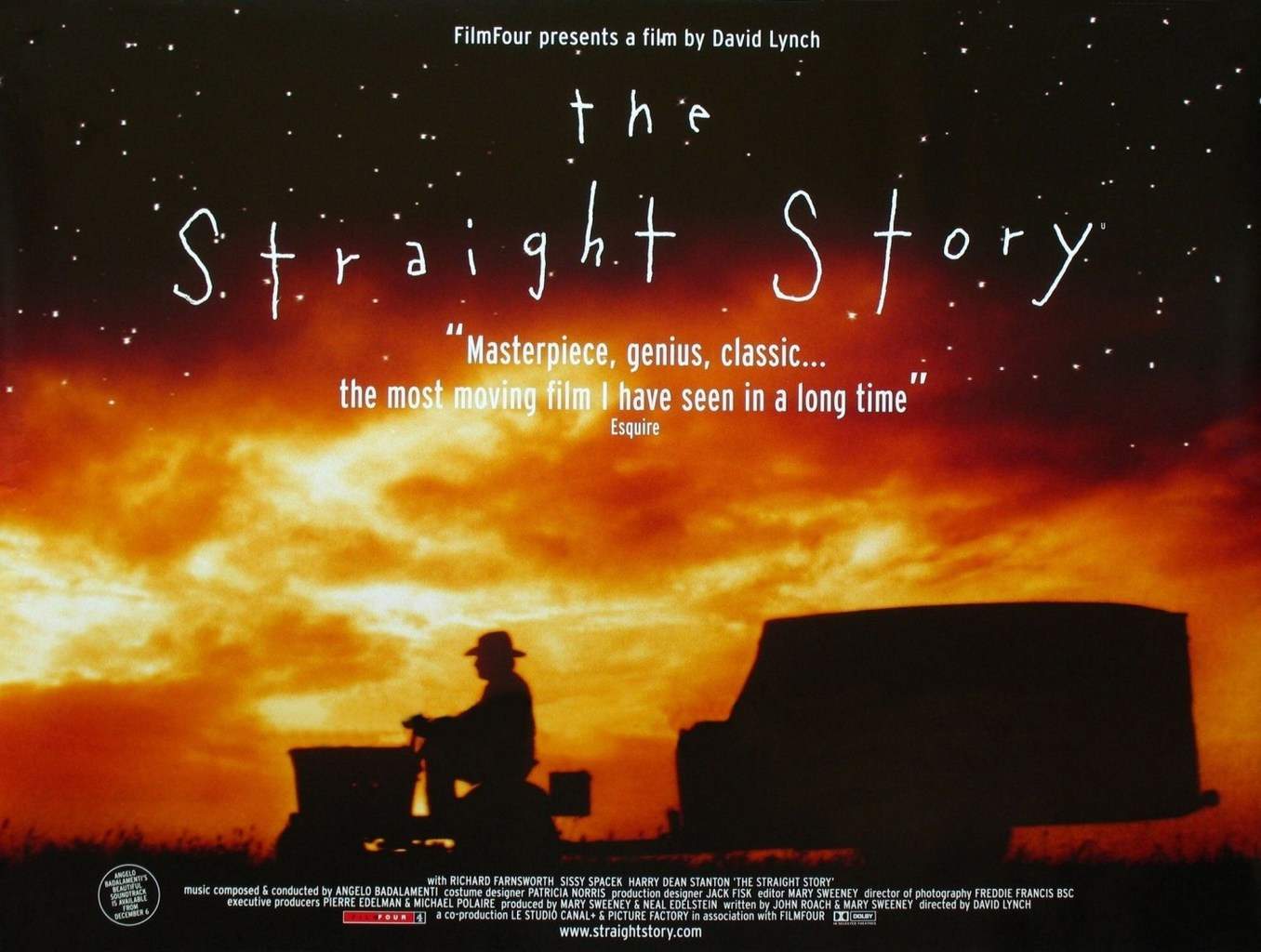
The Straight Story poster

When people think of David Lynch, they think of surreal, dream sequences and noir-style classics like Blue Velvet or Mulholland Drive. Because it is in essence a documentary, The Straight Story is the exception to the rule. It is based on the real story of a fellow, Alvin Straight—thus the name—who travels to visit his brother 300 miles away on a riding lawnmower!!

Due to Lynch’s recent passing, we just celebrated a David Lynch month in Film Club, and it was fantastic, a little homage, our tribute. We saw Elephant Man, Blue Velvet, The Straight Story, and Mulholland Drive.

One of the many things I learned during this month’s research is how much of a jokester Lynch was—what a character! But did he know how much of a Quixotic journey his film represents?

The few outward, visible clues that Straight Story is a Midwestern, late 20th-century Quixote story are that Straight is an older, skinny, rough-bearded fellow with an existential need to embark on this trip. Like Don Quixote, he has a false start to his adventure, returning home before starting his quest. He has a cohort of naysayers -hanging out at the local hardware store, the hardheadedness, a boring home life; although he has a loving daughter in Sissy Spacek, a phenomenal, but underrated actress.

The Straight Story poster

Along the way, he has many adventures: he encounters a group of cyclists, reminiscent of Quijote’s encounter with the herd of sheep, the lady who keeps running over deer, a few close encounters with 18-wheelers, giants? Etc.

But at the end of the day, this is a story of a man seeking his redemption, it is a physical representation of an inner journey, it is an existential, transcendental quest. It is important to know that while most road films represent an escape, in this case, like in Quijote, the journey is a necessary trip of personal realization.

The film is beautifully shot with great photography of the vast Midwest, not unlike the plains and hills of La Mancha. Straight camps out most nights, and like Quijote depends on the charity of strangers to progress on his trip.

One could argue that most road trip films are in some way Quixotic, but I argue that Lynch’s Straight Story is particularly so.